
Use of Antimicrobials and Clinical Events in Critically Ill Patients: Analysis of Mortality and Hospital Discharge
Received Date: September 17, 2026 Accepted Date: September 30, 2026 Published Date: October 05, 2026
doi:10.17303/jaaa.2026.3.102
Citation: Leandro Aparecido de Souza, Fernando de Sá Del Fiol (2026) Use of Antimicrobials and Clinical Events in Critically Ill Patients: Analysis of Mortality and Hospital Discharge. J Antibiot Antimicrob Agents 3: 1-9
Abstract
Antimicrobial Resistance (AMR) is the ability of a microorganism to resist the effects of an antimicrobial to which it was previously susceptible. The objective of this study was to identify the antimicrobial profile and the resistance indices of the unit, the relationship between antimicrobial resistance and the main microorganisms such as clinical events, mortality and hospital discharge in intensive care patients. This is an epidemiological, observational, cross-sectional study of a retrospective, quantitative and analytical nature. These are collected from two records of two patients hospitalized in the Intensive Care Unit of a large-scale hospital in the interior of the State of São Paulo, in the period from January to December 2024. The sample was composed of the records of 1787 patients hospitalized in the Intensive Care Unit in the period from January to December 2024, for the quais houve the prescription of antimicrobials and the collection of cultures during hospitalization in the sector. The results confirm the predominance of two microorganisms Klebsiella pneumoniae , Acinetobacter baumannii , Pseudomonas aeruginosa , Enterococcus faecium , Staphylococcus aureus and Enterobacter spp., responsible for more than 60% of the isolates, high levels of resistance, above 90%. gram negative and gram positive microorganisms.
From a clinical point of view, the analysis of the time of hospitalization and hospital accidents did not show a statistically significant difference between the groups (p=0.398), although patients infected with A. baumannii , K. pneumoniae and P. aeruginosa tended to remain hospitalized for longer periods of time. It is concluded that the investigation into the relationship between hospitalization time, isolated microorganisms and therapeutic adequacy suggests associations that can contribute to prolonged periods of hospitalization.
Keywords: Antibacterials; Bacterial Pharmacoresistance; UTI Discharge; Mortality; Intensive Care Unit
Introduction
Antimicrobial Resistance (AMR) is the ability of a microorganism to resist the effects of an antimicrobial to which it was previously susceptible. This phenomenon can be intrinsic, a natural characteristic of the bacterial species, or acquired, the result of genetic mutations or horizontal gene transfer [1]. A RAM constitutes a complex and multifactorial biological phenomenon, resulting from the adaptive capacity of two microorganisms to survive exposure to antimicrobial agents. This adaptation, which can occur naturally or acquired, represents one of the most serious threats to global public health, compromising the effectiveness of treatments and raising the rates of morbidity and mortality associated with infections [2].
Infections caused by bacterial agents are associated with high rates of hospital mortality, especially in critically ill patients. According to multicenter studies, mortality can vary between 30% and 60%, depending on the microorganism and the infectious site. In addition to the clinical impact, the presence of these pathogens results in an increase in the average hospitalization time up to 15 days and a significant increase in direct and indirect hospital costs [3].
The history of the use of antimicrobials in Brazil reflects the global trend of expansion in the consumption of these medications from the second half of the 20th century, especially after the popularization of penicillin and other broad-spectrum drugs. The indiscriminate use, both in the hospital environment and in the community, favors the emergence and spread of resistant microorganisms, configuring a growing challenge for the Brazilian health system [4]. No country, or facilitated access to antibiotics without medical prescription was, for many years, a determining factor for the increase in bacterial resistance. The absence of effective regulation contributes to inappropriate use, early interruptions of treatment and self-medication, practices still observed in some regions [5].
As an intention to contain this progress, the Resolution of the Collegiate Directorate (RDC) nº 44/2010, of the National Health Surveillance Agency (ANVISA), represents an important regulatory framework, to establish the obligation to retain medical prescriptions for the sale of antibiotics in pharmacies and drugs [6]. Updated by RDC 471 of February 23, 2021, which provides for the prescribing, dispensing, control, packaging and labeling of medicines based on substances known as antimicrobials [7]. Studies suggest that, after implementation, the temporary reduction in inadequate dispensation of these medications, there are persistent challenges in inspection and compliance throughout the national territory [4].
Another significant advance was the creation of the National Action Plan for Prevention and Control of Antimicrobial Resistance (PAN-BR), launched in 2018, aligned with the Global Action Plan on Antimicrobial Resistance of the World Health Organization. The PAN-BR proposes intersectoral actions that involve laboratory surveillance, rational use of antimicrobials, professional education and population awareness [8].
Meanwhile, the implementation of these strategies faces structural problems related to regional heterogeneity, limitations in laboratory diagnostic capacity and lack of full integration between hospital and community surveillance networks. These factors make it difficult to obtain consistent data on local resistance patterns, which reinforce the importance of regional studies, such as those carried out in ICUs, which provide essential information to subsidize public policies and institutional infection control protocols [9]. Thus, it is observed that RAM in Brazil reflects both the complexity of the health system and the need for continuous strengthening of the actions of microbiological surveillance, professional training and rational use of antimicrobials, in line with the global efforts coordinated by the WHO and international institutions (Rocha et al. .,2023).
Bacterial resistance in Brazilian ICUs is a known problem, there is a shortage of robust data that directly correlates the local resistance profile with the clinical failure of high mortality in these institutions. This study visa preencher essa lacuna ao recognise these indicators and consequently generate a profícuao gestão in the hospital institutions of Brazil and the world.
Aim
Identify the antimicrobial profile and the resistance indices of the unit, the relationship between antimicrobial resistance and the main microorganisms such as clinical events, mortality and hospital discharge in intensive care patients.
Method
This is an epidemiological, observational, cross-sectional study of a retrospective, quantitative and analytical nature. For data collected from two records of two patients hospitalized in the Intensive Care Unit of a large-scale hospital in the interior of the state of São Paulo, in the period from January to December 2024. The study was carried out in the interior of the state of São Paulo, in a private, philanthropic and non-profit hospital, treating patients 100% of the Unified Health System. Health. The hospital service is referred to in medium and high complexity care. The institution has 300 leitos, with 10% allocated to the Intensive Care sector. It carries out 1,110 hospitalizations, 220 surgical procedures, 190 normal and surgical deliveries, in addition to 2,300 Prompt Help referenced services and elective exams; it currently provides an average of 2,230 oncological care, including 229 patients undergoing chemotherapy treatment. The service does not include Antimicrobial Management Programs.
The sample was composed of the records of 1787 patients admitted to the Intensive Care Unit in the period from January to December 2024, for those who needed to prescribe antimicrobials and collect cultures in the period of permanence in the sector, to investigate two isolated microorganisms and antibiogram. Foram considered as lost, those records with insufficient information for the study, and those that do not have a collection of cultures, even in the use of antimicrobials, described in medical prescription.
Initially, the researcher obtains access to an institutional report containing information on the results of cultures and clinical events, such as hospital discharge or death. Next, a consultation was made to the Electronic Patient Record (PEP), integrated into the SOUL MV hospital management system (Sistema de Operações Únicas e Integradas). From this system, we proceed to analyze the laboratory variables, specifically two results of microbiological cultures and antibiograms. It should be noted that this stage was conducted manually, since the institution's laboratory system does not have automated reports without direct integration with the MV PEP module. Subsequently, the collected data were organized in electronic spreadsheets and submitted to statistical analysis.
The defects of the study are to evaluate the microbiological profile of the unit according to the Gram classification with their respective levels of resistance and hospitalization time in the Intensive Care Unit according to the patients who have been discharged from the hospital and those who have evolved to death second to the most prevalent bacterial microorganisms.
As categorical variations, including the prevalence and the percentuais two profiles of antimicrobial resistance between the bacterial species and the Gram classifications, are expressed in absolute frequencies and percentuais (n, %). The proportions are compared by means of the Pearson Qui-square test or the Fisher exact test, as appropriate. The normality of continuous variables (hospital admission time) was validated by the Shapiro-Wilk test. Due to an asymmetric distribution (not normal) two internal tempo data, non-parametric methods were applied.
The Kruskal-Wallis test was used to compare the median hospital stay time (expressed in days along with the interquartile interval [IQR]) between multiple independent groups. Specifically, this analysis was performed in a stratified manner for two clinical conditions: (1) patients who received discharge, evaluating the 10 most frequently isolated bacterial strains (Figure 1), and (2) patients who progressed to death, evaluating the respective 10 most common pathogens (Figure 2). Paired post-hoc comparisons were conducted using the Dunn test with Bonferroni correlation to determine specific statistical differences between individual bacterial groups. The omissos data (missing data) are treated by means of the analysis of complete cases, excluding the records with incomplete clinical defects or microbiological identification. The level of statistical significance was defined at p < 0.05. All statistical analyzes and graphical representations (boxplots) were performed using SPSS software (Versão 26.0, IBM Corp., Armonk, NY, USA).
The project was approved by the Research Ethics Committee of the University of Sorocaba (CAAE 86145224.7.0000.5500). For data collection strategies ensured confidentiality, anonymity and the possibility of interruption of the study at any time by the institution, in accordance with resolution 466/2012, and ou 510/2016.
Results and Discussion
The results in Table 1 demonstrate a panorama of high antimicrobial resistance, with emphasis on Gram-negative bacteria, especially Acinetobacter baumannii and Klebsiella pneumoniae . O A. baumannii has resistance greater than 96% to penicillins, carbapenems and quinolones, values that configure a pan-resistance profile similar to that described in recent international studies [10] reported taxa above 90% resistance to carbapenems in isolates of A. baumannii from Chinese ICUs, highlighting the global dissemination of clones carrying two genes blaOXA-23 and blaNDM-1. A similar situation was observed for K. pneumoniae , which showed resistance greater than 90% to penicillins and 79.8% to cephalosporins, as well as 69.2% to carbapenems, indicating the prevalence of carbapenemase-producing strains. Segundo [11]. The emergence of K. pneumoniae co-expressing NDM and OXA-48 has substantially elevated the rates of therapeutic failure, making the use of late-generation β-lactams, such as ceftazidime-avibactam and cefiderocol, indispensable. No study or profile found reflects the same trend observed in European and Asian hospitals, confirming that carbapenemics do not represent an effective option against the dissemination of two mechanisms of plasmid and chromosomal resistance to pathogenic organisms.
Source: Data provided by the Institution, 2024.
In relation to Gram-positive bacteria, a high rate of resistance was observed among coagulase-negative staphylococci, particularly Staphylococcus haemolyticus, S. epidermidis and S. capitis , with resistance greater than 90% to penicillins, quinolones and macrolide agents, configuring a generalized multi-resistance profile. This pattern has been widely documented in critical units, especially in patients with catheters and invasive devices, leading to colonization by endemic methicillin-resistant CoNS [12]. On the other hand, Staphylococcus aureus presents moderate resistance to penicillins (67.4%) and macrolides (63.8%), but maintains total sensitivity to glycopeptides, lipopeptides and oxazolidinones, a result compatible with recent studies carried out in South America [13]. Among the enterococci, or E. faecium, resistance is 100% to quinolones and 87% to penicillins, configuring a phenotype similar to the VRE strains described by [14]. These results reinforce the critical role of glycopeptides and oxazolidinones as the latest therapeutic alternatives for the treatment of multidrug-resistant Gram-positive infections and highlight the urgent need for surveillance strategies and rational use of antimicrobials to contain the spread of pathogens in highly complex hospital environments.
In table 2, the analysis of two resistance profiles indicates that, when identifying a Gram-negative bacteria, the empirical selection of antimicrobials must be done with caution, once the highest levels of resistance are observed precisely among the classes traditionally used in the treatment of these infections. In this study, cephalosporins, carbapenems and fluoroquinolones show average resistance between 46% and 68%, evidencing the dissemination of extended spectrum β-lactamases and carbapenemases among Klebsiella pneumoniae , Acinetobacter baumannii and Pseudomonas aeruginosa . This scenario, the empirical use of these classes should be reserved for cases in which the antibiogram demonstrates sensitivity. The aminoglycosídeos, with an average resistance of 35.9%, appear as one of the most effective classes for Gram-negatives, especially amikacin and gentamicin, which maintain activity against resistant Pseudomonas and Enterobacterales . Alternatives such as colistin, tigecycline or newer β-lactams (ceftazidime/avibactam, ceftolozana/tazobactam) should be considered in cases of infections due to multiresistant strains, as recommended by the international infection treatment guidelines by ESKAPE.
On the other hand, to identify a Gram-positive isolate, the observed resistance profile points to a high level of resistance to macrolides (86.6%) and lincosamides (77.6%), but low resistance to glycopeptides (3.9%) and oxazolidinones (0.2%). These results confirm the maintenance of the effectiveness of agents such as vancomycin, teicoplanin and linezolid, which remain as therapeutic pillars in the management of serious infections caused by methicillin-resistant Staphylococcus aureus (MRSA) and ampicillin-resistant Enterococcus faecium . The literature corroborates these findings, showing that resistance to glycopeptides and oxazolidinones among Gram-positives is still rare, increasing in some regions (Arias, Murray, 2012). Thus, the empirical approach to Gram-positive infections should prioritize glycopeptides or oxazolidinones in invasive infections, reserving penicillins and macrolipids only for provenly sensitive cases.
Note: The cell cores vary from red (high resistance) to green (lower resistance).
Legend : NT: Not tested.
Source: Data provided by the Institution, 2024.
A statistical analysis of the time of hospitalization in the second ICU or isolated microorganism in clinical failure (discharge or death) (Figures 1 and 2) did not demonstrate statistically significant differences between the groups (Kruskal–Wallis H = 6.23; p = 0.398). However, the mean values indicate a longer residence time in patients infected by Pseudomonas aeruginosa, Acinetobacter baumannii and Enterococcus faecalis , as the variations are not sufficient to constitute a significant difference. This result suggests that, within the universe studied, the hospitalization time is not determined in isolation by the type of microorganism, but rather by a combination of clinical, therapeutic and individual factors.
Despite the lack of statistical significance, the observed clinical pattern is compatible with that described in the international literature, in that infections by microorganisms of the ESKAPE group, such as A. baumannii and K. pneumoniae , are associated with more severe conditions, greater need for ventilatory support and greater consumption of hospital resources [15]. Likewise, the similarity between the hospitalization times of the two groups “discharge” and “death” reinforces the multifactorial nature of the illnesses in the ICU, in which the underlying clinical severity, as well as comorbidities and the response to antibiotic therapy play a determining role. These points reinforce the importance of an integrated approach between microbiology, pharmacotherapy and clinical management in the management of critically ill patients, prioritizing early diagnosis strategies and therapeutic individualization [16].
Source: Data provided by the Institution, 2024.
Source: Data provided by the Institution, 2024.
Conclusion
The results confirm the predominance of two microorganisms Klebsiella pneumoniae , Acinetobacter baumannii , Pseudomonas aeruginosa , Enterococcus faecium , Staphylococcus aureus and Enterobacter spp., responsible for more than 60% of the isolates, high levels of resistance, above 90%. gram negative and gram positive microorganisms.
From a clinical point of view, the analysis of the time of hospitalization and hospital accidents did not show a statistically significant difference between the groups (p=0.398), although patients infected with A. baumannii , K. pneumoniae and P. aeruginosa tended to remain hospitalized for longer periods of time. Likewise, in the absence of statistical significance, the clinical pattern reinforces the multifactorial nature of the ICU disorders, in which the therapeutic response, the severity of the underlying disease, and the adequate use of antimicrobials play a determining role.
The investigation of the relationship between hospitalization time, isolated microorganisms and therapeutic adequacy points to associations that can contribute to prolonged periods of hospitalization, however, the observational and retrospective delineation of the study does not allow establishing causal relationships without controlling potential confounding factors, such as clinical gravity of two patients.
Bacterial resistance, a phenomenon of a collective and systemic nature, demands an integrated response between health professionals, managers and society, based on the rational use of antimicrobials on shared responsibility in the face of one of the two greatest challenges of contemporary public health.
Thus, the results of this study must be understood as descriptive and exploratory evidence, capable of subsidizing critical reflections on antibiotic therapy in critically ill patients and generating hypotheses for future studies. As a main contribution, the work provides a diagnosis of the local scenario of antimicrobial resistance and use of antimicrobials, offering subsidies for the improvement of institutional protocols and for the strengthening of programs for the rational use of antimicrobials.
References
- Sanjeevan C, Bhat K, Sandhya (2022) Antimicrobial Resistance Surveillance among Patients with Sepsis In Intensive Care Units Of A Tertiary Care Center. Journal of Current Research in Scientific Medicine, 8: 129-134.
- Abushaheen, Manar Ali, Muzaheed, Fatani, Amal Jamil, et al. (2020) Antimicrobial Resistance, Mecha-Nisms and Its Clinical Significance. Disease-A-Month, V. 66: 6.
- Su Zhi, Zhang Weizhen, Shi Yu, Cui Tao, Xu Yongchang, et al. (2024) A Bacterial Methyltransferase That Initiates Biotin Syn-Thesis, An Attractive Anti-Eskape druggable pathway. Science Advances, 10: 51.
- Correa, Juliana Silva, Zago, Luiz Felipe, Silva-Brandão, et al. (2022) Antimicrobial resistance in Brazil: an integrated research agenda. USP Nursing School Magazine, 56: e20210589.
- Meirelles, Lúcia Collares, Martins, Vera Lúcia Milani, Pilger, Diogo (2024) Antimicrobial Prescription And Bacterial Resistance In A Brazilian Intensive Care Unit. Revista de Epidemiologia e Controle de Infecção , 14: 1.
- BRAZIL. National Health Surveillance Agency (ANVISA). RDC Resolution nº 44, of October 26, 2010. Disposal or control of medicines based on substances classified as antimicrobials, for use on prescription, isolated or associated. Diário Oficial da União: Brasília, DF, 28 out. 2010.
- BRAZIL. RDC Resolution No. 471, of February 23, 2021. Approves the technical regulation for registration, standardization and alteration of antimicrobial products for systemic use. Official Gazette of the Union: section 1, Brasília, DF, February 24. 2021.
- BRAZIL. Ministry of Health. National action plan for prevention and control of resistance to antimicrobials in the Single Health field – PAN-BR (2018-2022). Brasília: Ministério da Saúde, Secretaria de Vigilância em Saúde, Departa-mento de Vigilância das Doenças Transmissíveis, 2019.
- Rocha, João Marcos Rodrigues, Dutra, Aline Soares De Santana, Rafael Filipe Ferreira (2024) Irrational Use of Antibiotics and Bacterial Resistance in the Treatment of Neglected Infectious diseases: a literature review. Brazilian Journal of Implantology and Health Sciences, 6: 470-490.
- SUN Changli, YU Yunsong, HUA Xiaoting (2023) Resistance mechanisms of tigecycline in Acinetobacter baumannii . Frontiers in Cellular and Infection Microbiology, 13: 1141490.
- Tun Thanda, Baleivanualala Sakiusa C, Erdmann Mareike B, Gimenez, Gregory, Aung Htin Lin (2024) An Extensively Drug-Resistant Pseudomonas Aeruginosa Isolate From Myanmar. Journal Of Global Antimicrobial Resistance, 36: 1-3.
- Chamon, Raiane Cardoso, Iorio Natalia Lopes Pontes, Cavalcante, Fernanda Sampaio, et al. (2014) Linezolid-Resistant Staphylococcus Hae-Molyticus And Staphylococcus hominis : single and double mutations at the domain V of 23S rRNA among isolates from a Rio de Janeiro hospital. Diagnostic Microbi-ology and Infectious Disease, 80: 307-310.
- Seas Carlos, Garcia Coralith, Salles Mauro J, Labarca, Jaime, Luna Carlos, et al. (2018) on behalf of the Latin America Working Group on Antimicrobial Resistance. Staphylococcus aureus blood-stream infections in Latin America: results of a multinational prospective cohort study. Journal of Antimicrobial Chemotherapy. 73: 212-222.
- Iqbal Faiza, Alocious Arya, Joy Selin C, Stanly Elstin Anbu Raj, Rajesh V, et al. (2024) Vancomycin-Resistant Enterococci: A Rising Challenge To Global health. Clinical Epidemiology and Global Health, 28: 101663.
- De Prisco Marco, Manente Roberto, Santella Bruno, Serretiello, Ema-Nuele, Dell'annunziata, et al. (2024) Impact of Eskape Pathogens on bacteremia: a three-year surveillance study at a major hospital in southern Italy. Antibiotics (Basel), 13: 9.
- Gilbert, David N, Chambers, Henry F, Eliopoulos, et al. (2025) The Sanford Guide To Antimicrobial Therapy 2025. 55th ed. Superryville, VA: Antimicrobial Therapy, Inc., 2025. ISBN: 978-1930808980.
FIGURE 1
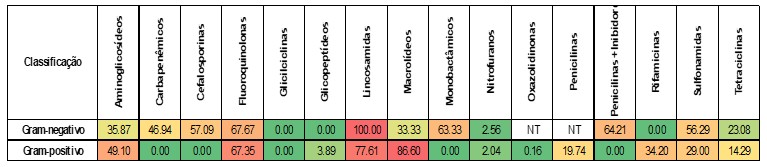
FIGURE 2
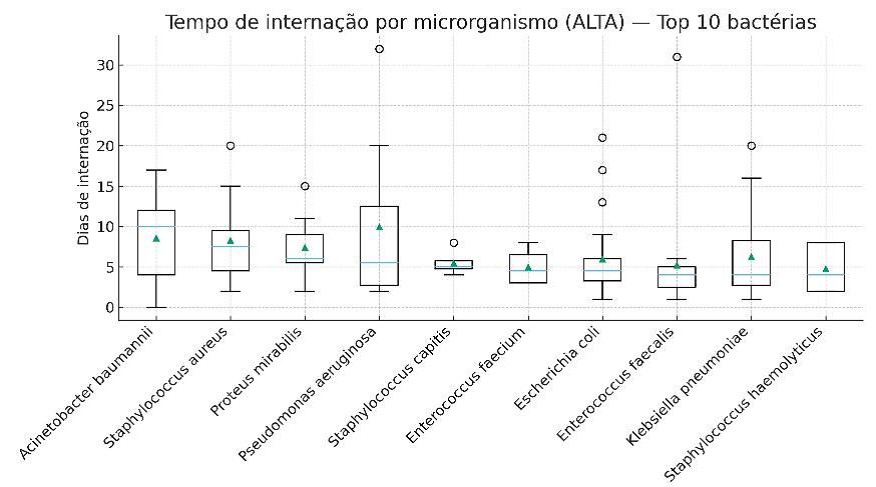
Figure 1: Time of hospitalization in the Intensive Care Unit according to the patients who have been discharged from the hospital due to the most prevalent bacterial microorganisms, SP. 2024
FIGURE 3
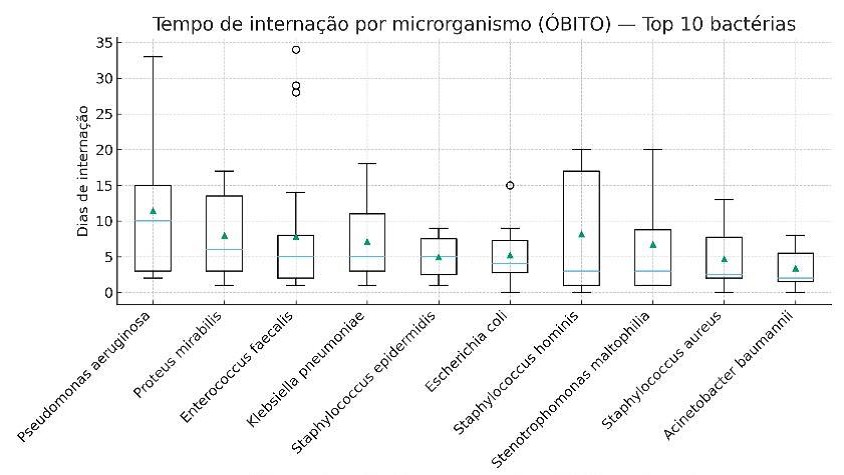
Figure 2: Hospitalization time of patients who evolve to second death from the most prevalent bacterial microorganisms, Intensive Care Unit, SP. 2024
Tables at a glance
Figures at a glance