
Effect of Different Packaging Materials and Calcium Chloride & Wax Coatings on Physical and Physiological Parameters of Mandarin
Received Date: February 19, 2025 Accepted Date: March 19, 2025 Published Date: March 22, 2025
doi:10.17303/jacs.2025.4.102
Citation: G. Bhrijavasi, Dr. Vijay Kumar, Dr. Deepti Patel, Dr. S.S. Porte, Dr. R.R. Saxena (2025) Effect of Different Packaging Materials and Calcium Chloride & Wax Coatings on Physical and Physiological Parameters of Mandarin. J Adv Agron Crop Sci 4: 1-11
Abstract
Postharvest losses pose a major challenge to the commercial viability of mandarins, making effective storage solutions essential. This study examines how calcium chloride and wax coatings, combined with different packaging materials, influence the physical and physiological quality of Nagpur mandarins during 25 days of storage. Fruits were treated with CaCl₂ (2% and 4%) and paraffin wax (10% and 12%) before being stored in various packaging materials, including LDPE, HDPE, CFB, gunny bags, newspaper, cling film, and liquid paraffin wax. Among the treatments, T10 (CaCl₂ 4% + Paraffin Wax 12% + CFB) significantly minimized physiological weight loss (3.47%, p < 0.05), maintained fruit length (4.85 cm, p < 0.05) and girth (6.47 cm, p < 0.05), and preserved fruit shape (index: 0.856, p < 0.05). T5 (CaCl₂ 2% + Paraffin Wax 10% + Cling Film) also demonstrated effective results, with a fruit length of 5.35 cm, girth of 6.7 cm, and a shape index of 0.850. Spoilage was lowest in T10 (42.09%), while the control group exhibited complete spoilage (100%). Specific gravity was best retained in T9 (0.94 g/cm³), followed by T10 (0.85 g/cm³). These results indicate that integrating CaCl₂ treatments with wax coatings and suitable packaging materials significantly reduces postharvest losses (p < 0.05) and extends fruit shelf life. This practical approach can help fruit producers, storage facilities, and retailers improve fruit quality, minimize wastage, and enhance market value, making it a viable solution for commercial mandarin storage.
Keywords: Mandarin; Packaging Materials; Calcium Chloride; Wax Coating; Physiological Loss; Postharvest Storage
Introduction
Citrus fruits, particularly mandarins, are highly valued for their economic and nutritional importance. They are rich in vitamins, antioxidants, and essential nutrients, making them a significant component of the human diet worldwide [1]. Mandarins are primarily grown in tropical and subtropical regions, with India being one of the leading producers [2]. However, due to their perishable nature, postharvest losses remain a major challenge, leading to economic losses and reduced consumer availability [3].
The postharvest quality of mandarins deteriorates due to physiological changes such as moisture loss, respiration, and microbial spoilage [4]. Various strategies, including waxing, calcium chloride application, and different packaging materials, have been adopted to improve storage potential [5]. Wax coatings help in reducing transpiration and respiration rates, while calcium chloride enhances cell wall integrity, thus delaying senescence [6]. Packaging materials provide a controlled environment, minimizing exposure to external deteriorating factors [7].
Several studies have reported that a combination of wax and calcium chloride, along with appropriate packaging materials, can significantly improve fruit quality and shelf life [8-10]. However, limited research has been conducted on their combined effect on the physical and physiological characteristics of Nagpur mandarin. Therefore, this study aims to systematically evaluate how different packaging materials, in combination with calcium chloride and wax coatings, influence the postharvest quality of Nagpur mandarins. By identifying the most effective treatment for reducing weight loss, spoilage, and quality deterioration, this research provides practical insights for enhancing commercial storage practices and minimizing postharvest losses.
Materials and Methods
This study was conducted at the Department of Fruit Science, IGKV, Raipur, during 2020-21, using a Completely Randomized Design (CRD) with three replications. Nagpur mandarin fruits were treated with two concentrations of CaCl2 (2% and 4%) combined with wax coatings (10% and 12%) and stored in different packaging materials, including LDPE, HDPE, corrugated fiberboard (CFB), gunny bags, newspaper, cling film, and liquid paraffin wax. The untreated fruits served as the control. All fruits were stored at room temperature (25–30°C) with ambient relative humidity (50–70%) for 25 days. Observations were recorded at 5-day intervals up to 25 days to evaluate various physiological and biochemical parameters. Fruit length and girth were measured using a digital Vernier caliper with an accuracy of ±0.01 mm. The fruit shape index was calculated as the ratio of fruit length to fruit width, while fruit spoilage percentage was determined by counting the number of spoiled fruits and expressing it as a percentage of the total fruits. Specific gravity was measured using the water displacement method, whereas physiological loss in weight (PLW) was calculated by weighing the fruits at each interval and comparing them to the initial weight using the formula PLW (%) = ((Initial weight - Final weight) / Initial weight) × 100. Total Soluble Solids (TSS) were determined using a digital refractometer (ATAGO, 0-32% Brix), and titratable acidity was measured by titration with NaOH (0.1N) using phenolphthalein as an indicator. Ascorbic acid content was determined using the 2,6-dichlorophenol-indophenol visual titration method, and pH was measured using a calibrated digital pH meter. The TSS: Acid ratio was calculated by dividing TSS values by corresponding titratable acidity. Total, reducing, and non-reducing sugars were estimated using the Lane and Eynon volumetric method. All data were statistically analyzed using ANOVA, and significant differences among treatments were determined at a 5% significance level.
Results and Discussion
Fruit Length and Girth
The best preservation of fruit length and girth was recorded in T5 (CaCl₂ 2% + Paraffin Wax 10% + Cling Film), with an average fruit length of 5.35 cm and a girth of 6.7 cm after 25 days. These measurements were significantly greater than those of the control, which had a length of 2.98 cm and a girth of 3.2 cm. The wax coating played a crucial role in minimizing moisture loss, which helped prevent shrinkage and maintained the integrity of the fruit’s cell walls. Similar results were reported by [11], who found that wax coatings reduced transpiration, helping to retain fruit firmness and prevent shrinkage [12].
Fruit Shape Index
T2 (CaCl₂ 4% + Paraffin Wax 12% + LDPE) retained the fruit shape index best, with a value of 0.925, followed by T10 (CaCl₂ 4% + Paraffin Wax 12% + CFB) at 0.856. In contrast, the control showed a much lower value of 2.77. This suggests that these treatments provided structural support, helping to reduce moisture loss and prevent mechanical damage to the fruit [13,14].
Fruit Spoilage Percentage
The lowest spoilage rate was observed in T10 (CaCl₂ 4% + Paraffin Wax Emulsion 12% + CFB) at 42.09% after 25 days, followed by T5 (CaCl₂ 2% + Paraffin Wax Emulsion 10% + Cling Film) at 49.62%. In contrast, the control group showed complete spoilage (100%). The antimicrobial properties of calcium chloride, combined with the protective paraffin wax coating and the physical barrier of CFB, helped limit microbial growth and fruit decay. The higher spoilage in the control samples was likely due to a weaker defense against fungal infections and increased respiration, which led to shriveling [15,16].
Specific Gravity
Specific gravity was best maintained in T9 (CaCl₂ 2% + Paraffin Wax Emulsion 10% + CFB) at 0.94 g/cm³, followed by T10 (CaCl₂ 4% + Paraffin Wax Emulsion 12% + CFB) at 0.85 g/cm³. In contrast, the control showed a much higher value of 2.53. The improved retention in treated samples was likely due to the coating’s ability to seal lenticels, reducing water loss and preventing dehydration [13,17]. Over time, the breakdown of structural polysaccharides led to a decrease in pulp concentration, which contributed to the decline in specific gravity [18].
Physiological Loss in Weight (PLW)
The lowest physiological loss in weight (PLW) was observed in T10 (CaCl₂ 4% + Paraffin Wax Emulsion 12% + CFB) at 3.47%, followed by T9 (CaCl₂ 2% + Paraffin Wax Emulsion 10% + CFB) at 4.02%. In contrast, the control experienced the highest weight loss at 9.46%. The combination of CaCl₂ and wax helped reduce transpiration and respiration rates, effectively minimizing weight loss [19]. PLW primarily resulted from water evaporation, respiration, and degradation, but these processes were significantly restricted by the applied coatings [20,21].
Conclusion
This study demonstrates the effectiveness of postharvest treatments combining calcium chloride and wax coatings with suitable packaging in reducing weight loss and preserving the quality of Nagpur mandarins. Among the tested treatments, T10 (CaCl₂ 4% + Paraffin Wax 12% + CFB) showed the most promising results, showing the minimum weight loss (3.47%), maintaining fruit dimensions (length: 4.85 cm, girth: 6.47 cm), and preserving fruit shape (index: 0.856). T5 (CaCl₂ 2% + Paraffin Wax 10% + Cling Film) also performed well, highlighting the role of coating formulations in prolonging fruit freshness. In contrast, the control exhibited complete spoilage and significant weight loss (9.46%), underscoring the importance of postharvest interventions. These findings reinforce the potential of coatings and optimized packaging in extending shelf life and enhancing the commercial viability of mandarins. Future research should focus on optimizing storage conditions over longer durations and exploring alternative coating materials to further improve postharvest fruit preservation techniques.
- Saini MK, Capalash N, Varghese E, Kaur C, Singh SP (2022) A Targeted Metabolomics Approach to Study Secondary Metabolites and Antioxidant Activity in ‘Kinnow Mandarin’during Advanced Fruit Maturity. Foods, 11: 1410.
- Zhong G, Nicolosi E (2020) Citrus origin, diffusion, and economic importance. The citrus genome, 5-21.
- Acharya Y, Upadhyaya N, Sapkota S (2023) Socioeconomic Assessment of Mandarin Postharvest Loss: A Case of Gandaki Province, Nepal. Research on World Agricultural Economy, 4: 1-9.
- Haider STA, Ahmad S, Anjum MA, Naz S, Liaqat M, Saddiq B (2021) Effects of different postharvest techniques on quality management and shelf life of ‘Kinnow’mandarin fruit. Journal of Food Measurement and Characterization, 15: 2549-61.
- Shahat MS, Elsalhy AM, El-Khawaga AS, Abdel-Rahman MM (2024) Effects chitosan, calcium chloride, and paraffin wax on storage and quality of “Ewaise” mango fruits. SVU-International Journal of Agricultural Sciences, 6: 42-54.
- Baldwin EA, Brecht JK (2020) Advances in the use of barrier coatings and additives in the preservation of fresh horticultural produce. In Advances in postharvest management of horticultural produce (pp. 91-116). Burleigh Dodds Science Publishing.
- Han JW, Ruiz‐Garcia L, Qian JP, Yang XT (2018) Food packaging: A comprehensive review and future trends. Comprehensive Reviews in Food Science and Food Safety, 17: 860-77.
- Sahu SK (2016) Effect of postharvest coatings on fruit quality and storage life of citrus. Indian Journal of Horticulture, 73: 532-8.
- Netravati SG, Jagadeesh SL (2018) Calcium chloride and wax influences the postharvest behaviour of custard apple fruits. Journal of Pharmacognosy and Phytochemistry, 7: 79-84.
- Seleshi G, Woldetsadik K, Azene M (2019) Effect of calcium chloride dipping and beeswax coating on the shelf life and quality of Nectarine (Prunus persica (L.) Batsch var. nucipersica) fruits. Agriculture and Food Sciences Research, 6: 71-8.
- Kader AA (2005) Increasing food availability by reducing postharvest losses. Acta Horticulturae, 682: 2169-76.
- Salunkhe DK, Desai BB (1984) Postharvest technology of fruits. CRC Press.
- Ben Yehoshua S, Pereiz J, Moran R, Lavie B, Kim JJ (2001) Reducing the incidence of superficial flavedo necrosis (noxan) of 'Shamouti' oranges. Postharvest Biology and Technology, 22: 19-27.
- Abdel Aziz-Atiat S, El-Hefnawi SM, Habashy SI (2002) Effect of some postharvest treatments and packaging types on Ponkan tangerine fruit quality during and after cold storage. Zagazig Journal of Agricultural Research, 29: 845-75.
- Ismail HA, El-Menshawy EA (1997) Effect of polyethylene seal packaging on storage quality of lemon and grapefruit. Annals of Agricultural Science Moshtohor, 35: 511-9.
- Bhullar JS, Dhillon BS, Randhawa JS (1985) Effect of wrappers on the storage of Kinnow mandarin. Journal of Research Punjab Agricultural University, 22: 663-6.
- Henriod RE (2006) Postharvest storage of navel oranges. Australian Citrus Journal, 29: 205-12.
- Egwim CE, Ogudoro AC, Folashade G (2013) The effect of pectinase on the yield and organoleptic evaluation of juice and wine from banana and paw-paw. Annals of Food Science and Technology, 14: 206-11.
- Rokaya PR, Baral DR, Gautam DM, Shrestha AK, Paudyal KP (2016) Effect of postharvest treatments on quality and shelf life of mandarin (Citrus reticulata Blanco). American Journal of Plant Sciences, 7: 1098-105.
- Gill PPS, Jawandha SK, Sangwan A, Singh NP, Kaur N (2016) Influence of post-harvest calcium chloride treatment and shrink film packaging on storage life of pear fruits. Applied Biological Research, 18: 71-5.
- Namsri S, Pongprasert N, Srilaong V (2018) Effect of coating solution containing rice bran wax on postharvest quality of dragon fruit. Acta Horticulturae, 1208: 385-92
FIGURE 1
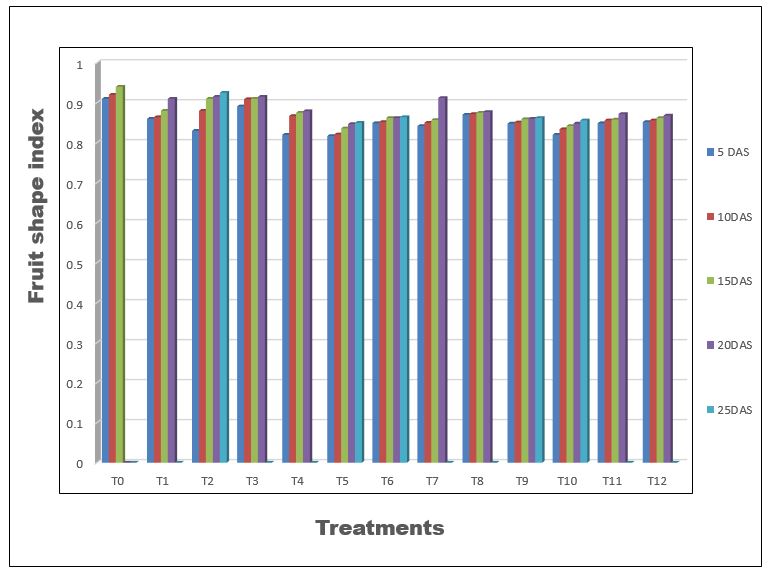
Figure 1: Effect of different packaging materials on "Fruit shape index (cm)" in Nagpur mandarin
FIGURE 2
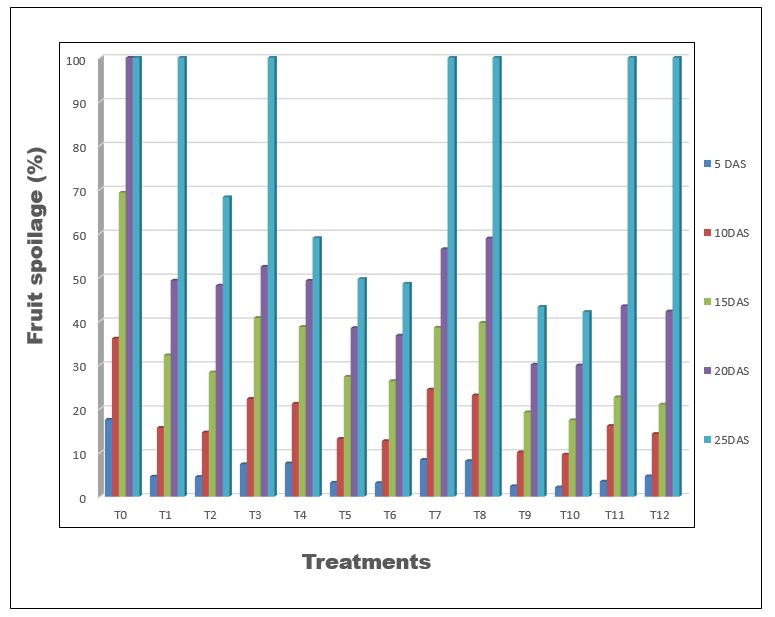
Figure 2: Effect of different packaging materials on "Fruit spoilage (%)" in Nagpur mandarin
FIGURE 3
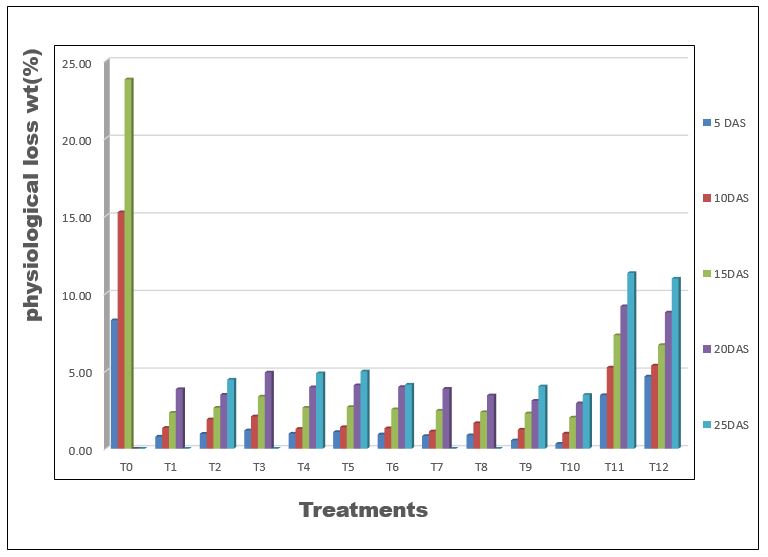
Figure 3: Effect of different packaging materials on "Physiological loss in weight (%)"in Nagpur mandarin
Tables at a glance
Figures at a glance