
Effect of Different Fertility Level and Sulphur on Nutrient Uptake and Yield of Cluster bean [Cyamopsis tetragonoloba (L.) Taub.]
Received Date: July 10, 2025 Accepted Date: July 26, 2025 Published Date: July 29, 2025
doi:10.17303/jacs.2025.4.202
Citation: Ram Karan, Auti YA, Prajapat AL, Tomar A (2025) Effect of Different Fertility Level and Sulphur on Nutrient Uptake and Yield of Cluster bean [Cyamopsis tetragonoloba (L.) Taub.] . J Adv Agron Crop Sci 4: 1-7
Abstract
The present study was conducted at the Research Farm of Vivekananda Global University, Jaipur, during the Kharif season of 2024 to investigate the impact of different fertility levels and sulphur doses on nutrient uptake and yield performance of cluster bean [Cyamopsis tetragonoloba (L.) Taub.]. The experiment employed a factorial randomized block design with 16 treatment combinations, encompassing four fertility levels and four sulphur applications. Findings revealed that application of 75 % RDF + vermicompost 2.0 t/ha recorded higher growth yield and quality attributes while it was found at par with 100 % RDF. The higher net return and B: C ratio was obtained with 100% RDF (20: 40 NP kg/ha). Therefore it is suggested to apply 100% RDF (20 : 40 NP kg/ha) .The superior growth, development and yield parameters were recorded due to the application of 60 kg S ha-1. It was also found superior in respect of gross and net monetary returns but it was at par with 40 kg S ha-1. Hence it is recommended to apply 40 kg S ha-1 to cluster bean crop as a recommended dose. Results suggest that a balanced nutrient supply involving organic and inorganic sources, along with adequate sulphur supplementation, is essential for sustainable cluster bean cultivation in semi-arid regions.
Keywords: Cluster bean; Nitrogen; Phosphorus; Sulphur; Nutrient; Yield
Introduction
Cluster bean (Cyamopsis tetragonoloba), also known as guar, is a drought-tolerant legume crop that thrives under semi-arid and arid climatic conditions. Its seeds are a rich source of guar gum, which has wide industrial applications ranging from food processing to oil drilling. Despite its economic importance, the productivity of cluster bean remains low due to poor soil fertility, Despite its economic importance, the productivity of cluster bean remains low due to poor soil fertility, inadequate nutrient management, and low organic matter in the soil. Chemical fertilizers alone have proven insufficient in maintaining long-term soil health. Organic amendments such as vermicompost enhance microbial activity, nutrient availability, and soil structure. Sulphur, an essential secondary nutrient, plays a vital role in protein synthesis and enzymatic functions and is often deficient in Indian soils. Integrating organic manures with chemical fertilizers and sulphur can significantly improve nutrient uptake, growth, and yield of cluster bean. This study aimed to evaluate the effects of different fertility and sulphur levels on nutrient uptake and yield of cluster bean. Sulphur is being considered as the fourth major nutrient whose deficiency has especially been observed in soils of Jaipur, Jodhpur and Udaipur [1]. Research work done in different parts of the country indicated that application of sulphur to oilseeds and pulses is highly profitable and seems essential for boosting the crop production. Sulphur plays an important role in many physiological processes of plant like synthesis of sulphur containing amino acids (Cystine, Cystein and Methionine), synthesis of certain vitamins (biotin and thiamine) and coenzyme-A, metabolism of carbohydrates, proteins and fats. Sulphur also has an essential role in development of root nodules in pulses and increase drought tolerant in pulses and oilseeds by the process of disulphide linkage. Crop removal is the major cause of sulphur depletion in soil. It has been reported that, on an average, production of one tonne of pulses require 12 kg S/ha [2]. This suggests that maximum economical crop production cannot be expected from 3 the use of NPK fertilizers alone, but that sulphur must be included in the fertilization programme.
Materials and Methods
The experiment was conducted during the Kharif season of 2024 at the Research Farm of Vivekananda Global University, Jaipur (Rajasthan). The experimental soil was loamy sand, alkaline in reaction, and low in organic carbon and nitrogen. The study followed a factorial randomized block design with 16 treatment combinations involving four fertility levels (control, 50% RDF + vermicompost 2.0 t/ha, 75% RDF + vermicompost 2.0 t/ha, and 100% RDF) and four sulphur levels (0, 20, 40, and 60 kg/ha). Each treatment was replicated thrice. The cluster bean variety RGC 1066 was sown at a seed rate of 25 kg/ha. Growth parameters, yield attributes, nutrient content in seed and stover, total nutrient uptake, and economics were recorded and analyzed statistically using standard methods. The climate of this place is semi-arid characterized by aridity of the atmosphere and extremity of temperature both in summer (45.5 ºC) and winter (4ºC). The average rainfall of this region is between 500-700 mm per annum which is mostly received during July to September. The sporadic showers in winters are also common. The mean weekly data for temperature, relative humidity, evaporation and total rainfall for the crop season are presented and graphically represented. There was rainfall of 494.7 mm during the crop season 2024-25.
Result
The study showed that both fertility levels and sulphur application significantly influenced nitrogen (N), phosphorus (P), and sulphur (S) uptake in cluster bean.
The uptake of nitrogen by crop exhibited significant increase due to fertilizers. Application of 75 % RDF + Vermicompost 2.0 t ha-1 resulted in the highest uptake of 53.99 and 34.51 kg N/ha in grain and straw, respectively which remain at par with the application of 100 % RDF.Uptake of nitrogen was also improved significantly due to sulphur treatments. The highest uptake of 53.42 kg N/ha in grain and 34.04 kg N/ha in straw was recorded under application of 60 kg sulphur ha-1 which found superior over all other treatments and at par with the application of 40 kg sulphurha-1.
The uptake of phosphorous by crop significant increase due to different levels of fertility. Application of 75 % RDF + Vermicompost 2.0 t ha-1 resulted in the highest uptake of 8.26 and4.37 kg P/ha in grain and straw, respectively which remain at par with 100 % RDF.Uptake of P was also improved significantly due to sulphur treatments. The highest uptake of 8.39 kg P/ha in grain and 4.54 kg P/ha in straw was recorded under application of 60 kg sulphur ha-1 which found superior over all other treatments and at par with the application of 40 kg sulphur ha-1.
The uptake of sulphur by crop significant increase due to application of various fertility levels in clusterbean. Application of 75 % RDF + Vermicompost 2.0 t ha-1 resulted in the highest uptake of 2.08 and 2.48 kg sulphur/ha in grain and straw, respectively which remain at par with 100% RDF (20 : 40 NP kg/ha).Uptake of sulphur was also improved significantly due to sulphur treatments. The highest uptake of 2.11 kg S/ha in grain and 2.69 kg S/ha in straw was recorded under application of 40 kg sulphur ha-1 which found superior over all other treatments and at par with the application of 40 kg sulphur ha-1.
The experiment demonstrated that both fertility and sulphur levels significantly influenced the growth and yield of cluster bean.
The grain yield of cluster bean was improved significantly with every increase in level of fertilizers upto 75% RDF + Vermicompost 2.0 t ha-1. It provided the grain yield of 1409 kg ha-1 with a remarkable increase of 10.77 and 32.54 per cent over 50 % RDF + Vermicompost 2.0 t ha- 1 and control, respectively. However, it was found at par with 100 % RDF with the respect value of (1349 kg ha-1).It is also evident from the data presented in table that application of 60 kg sulphur ha-1 increased the grain yield significantly over rest of the treatments. All the treatments of sulphur significantly increased the grain yield over control. Application of 60 kg sulphur ha-1 registered the maximum grain yield of 1401 kg ha-1. It improved the grain yield to the extent of 10.66 and 30.69 per cent over 20 kg sulphur ha-1 and control, respectively and found at par with application of 40 kg sulphur ha-1 which registered the (1354 kg ha-1) yield.
Straw yield of clusterbean was influenced with increasing levels of fertilizers in the same manner as was noted in grain yield . Every addition in level of fertility significantly increased the straw yield of clusterbean over preceding level upto 75 % RDF + Vermicompost 2.0 t ha-1. It recorded the highest straw yield of 2409 kg ha-1 and thus increased it to the tune of 14.17 and 35.87 per cent over 50 % RDF + Vermicompost 2.0 t ha-1 and control, respectively. Further increase in fertilizers level upto 100% RDF (20 : 40 NP kg/ha), though not maximized the straw yield (2305 kg ha- 1) but the difference in straw yield between these two levels was not of statistical significance. A perusal of data presented in table that application of 60 kg sulphur ha-1 increased the straw yield significantly over rest of the treatments. 60 kg sulphur ha-1 registered the maximum straw yield of 2380 kg ha-1. It improved the straw yield to the extent of 13.33 and 29.91 per cent over 20 kg sulphur ha-1 and control, respectively. This was found at par with yield (2284 kg ha-1) obtained in 40 kg sulphur ha-1.
Fertilization at 75 % RDF + Vermicompost 2.0 t ha-1 recorded highest biological yield of 3817 kg ha-1 of clusterbean. Remaining at par with 100% RDF (3654 kg ha-1). This increased the biological yield quantitatively by 12.86 and34.59 over 50 % RDF + Vermicompost 2.0 t ha-1 and control, respectively. A perusal of data presented in table that application of 60 kg sulphur ha-1 increased the biological yield significantly over rest of the treatments. 60 kg sulphur ha-1 registered the maximum biological yield of 3781 kg ha-1. It improved the biological yield to the extent of 12.32 and 30.15 per cent over 20 kg sulphur ha-1 and control, respectively. This was found at par with yield (3638 kg ha-1) obtained in 40 kg sulphur ha1.
Discussion
Among the fertility treatments, 75% RDF + vermicompost significantly enhanced N, P, and S content and uptake, which was comparable to 100% RDF. Both treatments outperformed 50% RDF + vermicompost and the control, likely due to increased biomass and nutrient accumulation in seed and stover. These findings align with Chaurasia et al. (2009), emphasizing the synergistic effect of combined nutrient sources. Qualitative parameters also improved with integrated nutrient management. The highest protein content (23.72%) was observed with 75% RDF + vermicompost, followed by 100% RDF. This improvement is attributed to better nutrient availability, root development, and microbial activity, supporting findings by Meena and Nagar (2004) and [3].
Sulphur application had a significant effect on the yield attributes of cluster bean. The highest number of pods per plant (65.97), seeds per pod (10.61), and pod length (6.06 cm) were recorded with 60 kg S/ha, followed by 40 kg S/ha. This enhancement is likely due to improved root development and nutrient uptake. Similar findings were reported by Kaisher et al. (2010) and Karche et al. (2012).Grain yield (1401 kg/ha), stover yield (2380 kg/ha), and biological yield (3781 kg/ha) were also highest at 60 kg S/ha, significantly outperforming lower sulphur levels. These results support the role of sulphur in enhancing photosynthesis and overall productivity, in line with Deshbhratar et al. (2010) and Karche et al. (2012).
Acknowledgment
I express my sincere gratitude to Dr. A. L. Prajapat, Assistant Professor and Major Advisor, Department of Agriculture, Vivekananda Global University, Jaipur, for his invaluable guidance and support throughout the course of this study. I am thankful to Prof. (Dr.) Hoshiyar Singh, Dean, and Mr. Raju Singh Jakhar, Head, Department of Agriculture, for providing necessary facilities. I also acknowledge the support of advisory committee members, university staff, and my family for their encouragement and assistance during this research work.
Conclusion
On the basis of present investigation it can be concluded that;
Application of 75 % RDF + vermicompost 2.0 t/ha recorded higher growth yield and quality attributes while it was found at par with 100 % RDF. The higher net return and B: C ratio was obtained with 100% RDF (20: 40 NP kg/ha) . Therefore it is suggested to apply 100% RDF (20: 40 NP kg/ha).
The superior growth, development and yield parameters were recorded due to the application of 60 kg S ha-1. It was also found superior in respect of gross and net monetary returns but it was at par with 40 kg S ha-1. Hence it is recommended to apply 40 kg S ha-1 to cluster bean crop as a recommended dose. Above conclusions are based on single season research and its needs further confirmation by repeating the trial for at least one more season.
- Tandon HLS (1986) Sulphur Research and Agricultural Production in India. FDCO, New Delhi. Jackson, M.L (1967) Soil Chemical Analysis. Prentice Hall of India Pvt. Ltd., New Delhi.
- Reddy TY, Reddy GHS, Reddy KS (2021) Sulphur and zinc management in legumes. Journal of Soil and Crops. 312: 45–50.
- Ram M, Yadav RK, Singh Y (2013) Effect of sulphur and biofertilizers on growth and yield of greengram. Legume Research. 366: 548–53.
- Singh RP, Singh K (2017) Effect of sulphur on cowpea yield and quality. International Journal of Plant Sciences. 121: 123–7
- Bahadur R, Yadav RS, Singh D (2009) Effect of sulphur on protein content of green gram. Indian Journal of Agronomy. 542: 210–14
- Punia SS, Meena RL, Sharma K (2011) Integrated nutrient management in field crops for sustainable agriculture. Research Journal of Agriculture and Biological Sciences. 71: 1–12
FIGURE 1
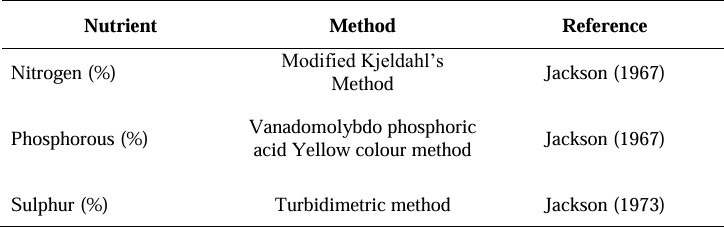
Figure 1: Methods of Nutrient Measurement in Seed and Stover
FIGURE 2
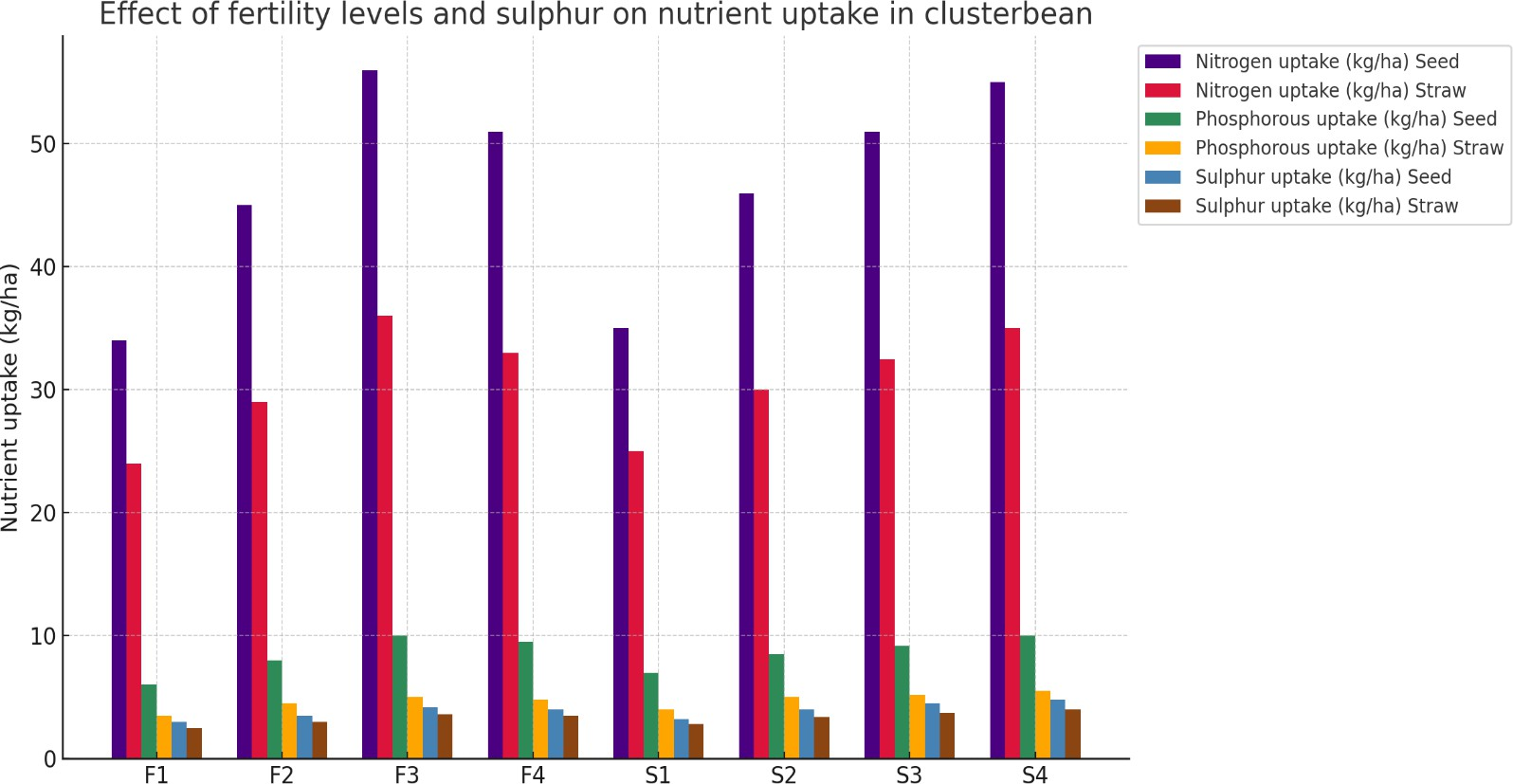
FIGURE 3
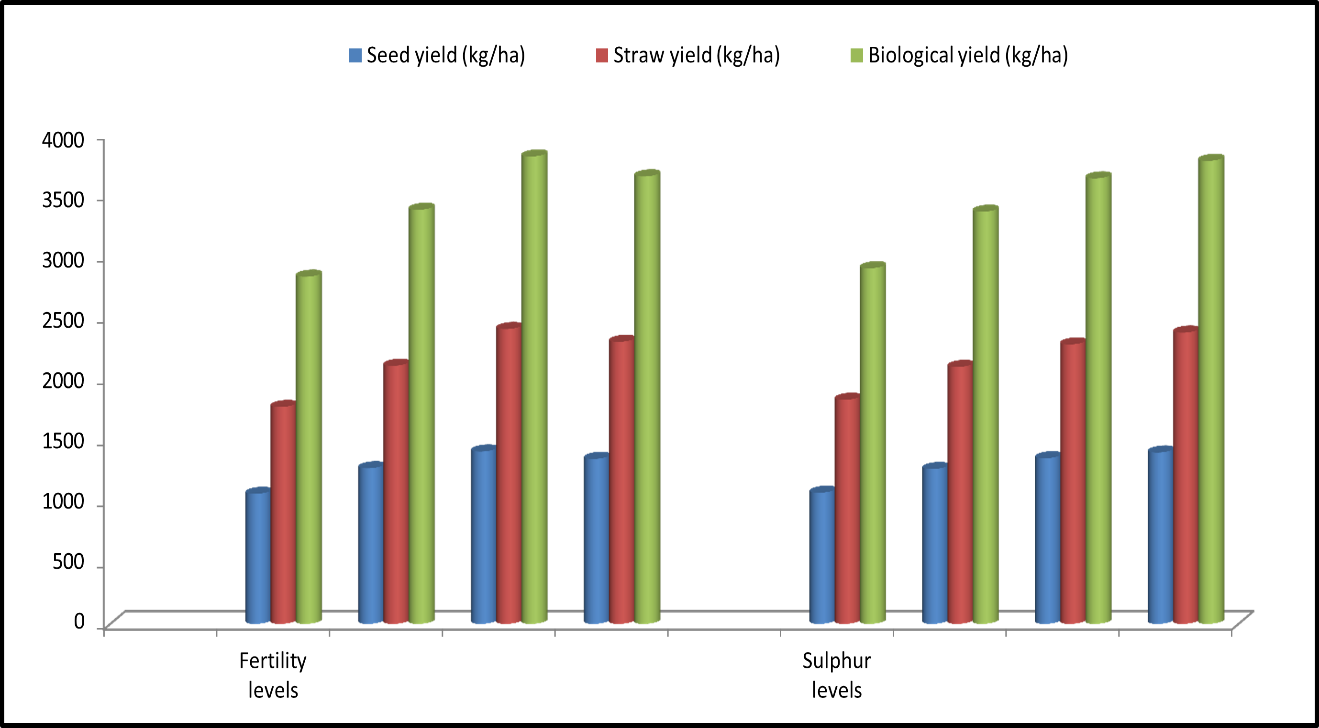
Figure 3: Effect of Fertility Levels and Sulphur on Yields of Cluster Bean.
Tables at a glance
Figures at a glance