
The Value Chain of Muscovado Industry in Polangui Albay
Received Date: October 20, 2025 Accepted Date: November 03, 2025 Published Date: November 10, 2025
doi:10.17303/jacs.2025.4.205
Citation: Alvin P. Musca (2025) The Value Chain of Muscovado Industry in Polangui Albay. J Adv Agron Crop Sci 4: 1-15
Abstract
The study was conducted to assess the value chain management of muscovado industry in Polangui, Albay. A total of 75 respondents were randomly chosen from eight (8) barangays in the municipality of Polangui, Albay and were interviewed using a guide questionnaire. These barangays are Balaba, Itaran, Pinagdapugan, Maynaga, Anopol, Pintor, Cepres and Buyo. The study was conducted from December 2019-2010.
The result of the study revealed that the most of industry players in the municipality were both male and female are engaged in muscovado processing, middle age, reached elementary education, had a household size of four (4) to (6) members, and tenants of the land they cultivate, with less than two (2) hectares planted sugarcane. They had been in the industry for more than 16 years.
For sugarcane farms, farmers do not use high yielding varieties (HYV). Land preparation is done man-made and machine/equipment. Some use fertilizers while some do not. Harvesting of sugarcane is done year-round using selective methods.
Muscovado processing was done by sugarcane manual juice extractor powered by the carabao or an engine and using bagasse as fuel for cooking in an open field. The sugarcane grower is also a processor of their own produce. No sanitation and hygienic practices were observed and they depend only on the public market of their produce.
The major problems identified were lack of technical knowledge, limited processing technology, lack of product development, disorganized group or “kanya-kanya” practices, lack of markets and linkaging, poor quality of products and lack of sanitation and hygienic practices. Opportunities were also identified such as availability of technology from Sugar Regulatory Administration (SRA) and Department of Science and Technology Region 5, market demand for the product development such as muscovado powder and cubes as organic-based products.
Likewise, availability of business development service intervention from government and non-government agencies such as training, financial, technical, product development and market assistance was observed.
Keywords: Muscovado; Product development; market linkages
Introduction
Value chain is a series of chains bound together for a common purpose. It applies to all industries, whether it is information technology, agriculture, manufacturing, and electronics. According to Michael Porter (1985) value chain is a concept derived from business management. It is a chain of activities where each activity has added value or tangible value [7]. The value chain approach is an ideal vehicle for addressing issues like pro-poor growth and making use of them potentials of the industry. Thus, whenever poor industry players are able to participate in value chain development, their industry can be developed.
Value chain analysis also helps in identifying and understanding the constraints, linkages, relationship and benefits along the industry chains of the different players. This concept/tool could effectively create the route to profit maximization of the industry players.
As a tool, value chain management of the muscovado industry is of big help to the different players particularly in identifying problems/constraints, opportunities, benefits and linkaging. Value chain analyses of the muscovado industry in Polangui Albay could be helpful in identifying chain, strengths, weaknesses and opportunities of the muscovado industry.
Muscovado locally known as “sangkaka” is a product made from boiling the juice extracted from sugarcane plant (Saccharrum officinarum L.) until it evaporates then dried and allowed to solidify. It has been identified with various industry users locally as a sweetener for coffee as well as other beverages; it is also used for cooking “kakanin” and as an ingredient in various native delicacies. The term muscovado came from the Spanish word “mascavad” meaning unrefined sugar. In Southeast Asia, it is known as “Gur”, “Jaggery” and “Khanosari”. In Columbia it is called “Chancaca” and in Latin America, it is known as “Rapadura”’ “Pamela” or “Piloncillo”. The export potential of muscovado is a factor to consider in expanding the industry. The export of muscovado has fluctuated since then, depending on the local supply and importer’s demand. Japan, Switzerland, Austria, Hawaii, USA, Canada are the major muscovado importers. In terms of muscovado consumption, the local and export markets are the main muscovado consumers.
The local muscovado industry is still facing various problems/constraints. Undetached from the crisis of the muscovado industry, this industry is beset with a greater degree of cyclical industrial chain confusion. An effort among industry leaders/stakeholders must be in order to restrain the problem plaguing the local muscovado industry. Thus, researchers are tasked with research initiatives to develop the industry to a more competitive level.
Objectives of the Study
The study was aimed to determine the value chain and competitiveness of the muscovado industry in Polangui, Albay.
Specifically it aims to:
Review of Related Literature
Value Chain Management
- Describe the demographic and socio-economic profile of producers, processors, producers-processors and middleman in Polangui, Albay;
- Determine the value chain of the different players (producers, processors, producers- processors, and middleman in the muscovado industry;
- Identify the market opportunities of muscovado industry; and
- Identify the problems/constraints encountered in the value chain of the muscovado industry.
A value chain added activities and firms involved in taking a product from its inception to consumers. It is a systematic, industry-based approach for the design and implementation to improve the growth potential of value chains with large numbers of small firms, enhance small firm contributions to value chain growth and ensure benefits to small firms for economic growth and poverty reduction [9]. The SDCAsia in partnership with USAID is the pioneer prime mover here in the Philippines. The bulk of their work is in Davao and other areas in Mindanao focusing on agriculture.
The Centro Internacional de Agricultura Tropical (CIAT) stated there should be better understanding of the role and costs of knowledge management, learning and communication in value chains and their impact on farmers’ ability to integrate successfully into high value markets. PAPECAFES is a smallholder coffee growers’ association in the southern highlands of Ecuador. The case study contains the analysis of information needs, know-how, communication and knowledge flows, as well as the assessment of transaction and opportunity costs [4].
[3] Stated that improvement of industry will result in efficient production and will likely raise the income of the industry players. Chain management is integrated firms, where each channel operates independently; therefore coordination between the various players in the chain is the key to effective management. The essence of chain management is a strategic weapon/tool to develop sustainable competitive advantage by reducing investment without sacrificing customer satisfaction. Each level of industry chain focuses on a compatible effort. Industry chain players openly share information and facilities to jointly meet end-users’ needs. Also stated that supply chain management is pursued to develop and improve the industry operation. The importance of chain management practice in an industry is to increase satisfaction of end customers, gain a strategic market position, reduce production cost and enhance revenue.
Sugarcane Production
According to the [1], the country in 2007 had 385,956 hectares planted to sugarcane with aggregately produced 22,235,297 tons of canes valued at Php28, 905,880.00. The top 3 highest producing provinces (production/yield) were Negros Occidental, Bukidnon, and Negros Oriental which respectively contributed 45.2%, 11.5%, and 11.5% to total production.
In 2007, the Bicol region contributed 1.1% to total Philippines production. Among the sugarcane producing provinces in the Philippines, Camarines Sur ranked 14th.
(185,747 MT) and Albay 17th. In Region V, the province of Camarines Sur is the major producer contributing 75% of the total production.
As per data from the [2], sugarcane production from Albay, Catanduanes, and Sorsogon is processed into muscovado or panocha, while sugarcane harvested from Camarines Sur is milled/processed into brown sugar. Out of the total sugar cane production of the Region in 2008, approximately 79.77% is processed into brown sugar via Centrifugal production of PENSUMIL (is commercial sugar milling company) and only 20.23% is processed into muscovado or panocha utilizing traditional and semi-mechanical milling processes. Likewise, from the total area planted to sugarcane, 84.34% is devoted to brown sugar and only 15.66% (approximately 1040 hectares) are for muscovado processing.
The province of Camarines Sur is the only province that has a commercial scale growing area for sugarcane in the Bicol region. After the devastation in 2007 due to Typhoon Reming, the province was able to recover rapidly in 2008 with a 32% increase in production over 2007 figures. Albay has remained steady in terms of production volume and area planted/harvested to sugarcane.
Area planted and harvested for sugarcane also increased by 11% in the region with Camarines Sur increasing its production area by 14% (from 4,900 hectares in 2003 to 5,600 hectares in 2008. As of 2008, total area harvested for sugarcane was 6,640.11 hectares.
Muscovado Industry
In the Philippines, there are around 3,000 farmers who are dependent on the muscovado industry. Antique has the greatest number of muscovado farmers, followed by Negro Occidental, Tarlac, Pangasinan, and Sultan Kudarat. In Bicol region, the sugarcane growers are concentrated in the area of Camarines Sur near the Sugar Milling of PENSUMIL and some backyard growers (Processing muscovado or Sangkaka) in Albay and Camarines Norte [7].
The production has always been an integral part of the Philippine sugar-agro industry. So widespread and dispersed are the production locales in the country, such that muscovado of equivalent local teemed in every market outlet during or even after production peaks. Dating back from Spanish times, this backyard industry has survived years of sugar industry turmoil. Positively, the industry requires relatively low capital to operate and maintain. It promotes closer interaction within the family as it is a household centered and is rural-based. Muscovado has been identified with various industry users locally [8].
The muscovado industry was in a slump until a few years ago when consumer preferences looked towards natural and healthy products. This increased market interest breathed back life to the almost dying industry. Since then, there has been renewed interest in developing and expanding production and distribution.
Methodology
Research Design
The study employed the descriptive analytical research design to be able to gather the desired information to answer specific problems of the study. Documentary analysis was done to assess the productivity and sustainability of muscovado stakeholders in Polangui, Albay.
Data Collection Techniques
In collecting data, survey method using the guide questionnaire. This was conducted through personal or direct interview with the respondents. Aside from data gathering, actual documentation photos and videos of the products and the operation of the players in the industry were taken. Secondary data from the Office of the Agriculture Officer in Polangui, Albay were taken to identify the players in muscovado industry.
Sampling Method
The respondents were randomly selected using simple random sampling techniques.
Data Analysis Procedure
The study employed the descriptive method using frequency counts, percentages and weighted means to describe the responses of the respondents.
Results and Discussion
Demographic and Socio-Economic Profile of Respondents
Sugarcane Grower
The study revealed that the sugarcane growers had age range from middle age to old age. More are females and married. Most of them reached elementary grades and with a household size of 4-6 members. They stayed in the community for considerable time. Cultivate farm which are less than 2 hectares devoted for sugarcane. They were amortizing (with CLT) of the land they cultivate. They have been in the industry for more than 10 years and having monthly income of Php5, 000.00 (Table 2).
Sugarcane Producers-Muscovado Processors
Based on the finding of the study, it was observed that the sugarcane growers at the same muscovado processors were middle age, females, married, finish elementary level, had a household size of 4-6 members. They stayed in the community for more than 10 years with sugarcane farm of less than 2 hectares and they were tenants or as owner-cultivator. They have monthly income of less than Php5, 000.00.
Muscovado Processors
The data and observation on muscovado processors indicated that they were of middle age, male and female, married, pursued elementary and secondary grade, had a household size of 4-5 members, stayed in the community for more than 20 years. They have no farm to cultivate, less than Php5, 000.00 monthly income and have been for more than 16 years in the industry.
Middleman
The data on demographic and socio-economic profile of middleman showed that they were middle age, female, married and reach only elementary level. They had a household size of 4-6 members. They stayed in the community for more than 40 years. A monthly income of less than Php5, 000.00 and they were engaged in the industry for more than 16 years.
Map of the Different Player in the Muscovado Business
Sugarcane Growers
The sugarcane producers have less than 2 hectares planted to sugarcane. They employ natural production methods without addition of any form of inputs such as fertilizers, pesticides, etc. They do not know what varieties to be used. Harvesting is done manually using selective method of harvesting at two (2) – three (3) times a week. Average production per harvest is 31.6 “latas” at 18 liters per “lata”.
This is done by the family members or minimal hired labor for any production and post operation activities. The sugarcane was sold to muscovado processors at thirty-five (35) pesos per “lata”.
Sugarcane Grower-Muscovado Processors
The sugarcane producers at the same time muscovado processors planted sugarcane in an average farm size of less than two (2) hectares.
They employed natural cultural production methods of farming. No addition of any form of inputs such as fertilizers, pesticides, etc. Harvesting is done manually using selective method. These sugarcane growers are also the ones that process their own solidified muscovado or “sangkaka” either in their household or in a barangay common milling facility. They employed traditional processing technology utilizing manual extraction of sugarcane juice powered by a carabao and utilized open pan cooking (2-3 vats) fired by bagasse from sugarcane stalks.
Muscovado processors process at barangay common milling service facility utilizing a mechanical extraction and common processing area in the barangay where the grower-processors can bring their harvested sugarcane stalks to be processed and pays via product sharing of five (5) is to one (1) basis (5:1 ration) wherein for every 6 pieces “kaob” produced, 5 pieces for the processor and one (1) piece for the facility. The operation is done with four (4) open cooking vats (cast iron).
Each muscovado processors produced with an average of fifteen (15) pieces or “kaob” of muscovado per cooking and usually five (5) to seven (7) times a day. Cooking is done usually three (3) to four (4) hours. Scum removal during juice boiling is done through skimming.
The thickened sugarcane juice is manually scooped forwardly from the first vat to the succeeding vats “kawa” where the final cooking takes place.
The muscovado processors can produce two types of muscovado products. The special or angko/malagkit and ordinary or “lagting”. The special is a sticky texture and dark brown color. However, according to them, they can only determine if the sugarcane producers the said type only at cooking time. Based on their knowledge and experience, sugarcane grown from fertile and well- nourished soil can produce better quality muscovado “sangkaka”. Particularly special or “angkon/malagkit”.
They sell their produce to the barangay traders or direct to the public markets.
Muscovado Processors
The industry players are engaged in muscovado processing without sugarcane planted. They process muscovado using the sugarcane plant of sugarcane growers that re unprocessed to muscovado at sharing basis of one (1) is to (1) (1:1 ratio) from the products produced. The processors harvest the sugarcane manually using the selective method. This is done two (2) – (3) times a week. Usually, the processing is done at barangay common milling facility. The employ traditional processing technology. They sell their shared products after processing at the barangay traders or direct to the buyers in the public market.
Muscovado Middlemen
The barangay traders and consolidators play a major role in bringing the muscovado products of the processors from the barangay or in the production areas to the public market wholesalers and retailers. Most of the muscovado processors brought their produce to the public market particularly intended for “kakanin” processors who use the muscovado as the main ingredient for local native delicacies, usually during peak months such as fiestas and holiday season.
The Value Chain of Industry Players
In Polangui Albay, there are two (2) types of muscovados milling facilities that are operating at present. These are manual or traditional mill which uses carabao to drive the mills and motorized mills driven by motorized equipment or diesel engine utilizing cast iron for evaporating and cooking.
A tolling facility operates where the muscovado processors do the processing activities with the help of family members. The payment system is made via product share basis at the ratio of five (5) is to one (1) basis (5:1) or 30 percent of muscovado produced goes to the facility owner. Usually, the processing of the processors is done two (2) – three (3) times a week.
Sugarcane Producers
They employ natural farming method. The activities are as follows: Land preparation where they clean the area and removed the undesirable vegetation, preparation of planting materials where they are cut the sugarcane plant using the young part of sugarcane stalks. This came from the harvested sugarcane. Planting is done using slanting or “tusok” method with no varied planting distance. Fertilization is not practiced in the area. Weeding is done when there is abundant growth of competing vegetation and during harvesting. Harvesting is done anytime of the day using the selective method. The harvest all year round at two (2) – three (3) times a week. Harvested sugarcane are sold to the muscovado processors in the area on cash basis after milling at Php35.00 per “lata”.
Muscovado Processors
The industry players are managed in muscovado processing without sugarcane planted. Sugarcane is generally sourced from sugarcane growers in the area.
They employ traditional processing technology on muscovado production with the following activities: weeding, harvesting and filing, hauling, milling, cooking, molding, packaging and selling.
Weeding is done before harvesting of sugarcane plant. Harvesting is done using the selective method. Piling and bundling of the cut sugarcane stalks are done manually. Hauling is also done manually or by cart powered by carabao. Sugarcane milling, cooking and packaging are done usually at the barangay common milling facility with the payment schemes of product share at 5:1 ratio. They process muscovado using the sugarcane plant of sugarcane producers that are unprocessed at sharing basis of one (1) is to one (1) (1:1 ratio).
They sell their shared products after the processing to the barangay traders or direct to the buyers in the public market.
Sugarcane Producers-Muscovado Processors
There are the industry players who planted sugarcane at the same time processed their sugarcane into muscovado with the following activities: Land preparation, planting, weeding, harvesting and hauling, milling, cooking, cooling, molding, packaging and selling. In sugarcane farming, they employ natural production methods and no addition of any form of inputs such as fertilizers, pesticides, etc. is done. They process their own muscovado either in their household or in a barangay common milling facility. They employ traditional processing technology utilizing manual extraction of sugarcane juice powered by a carabao and utilized open pan cooking (2-3 vats) fired by bagasse from sugarcane stalks or they utilized a mechanical extraction and common processing area in the barangay where the growers-processors can bring their harvested sugarcane stalks to be processed and pay via product sharing of five (5) is to one (1) basis (5:1 ratio) for every six (6) pieces “kaob” produced, 5 pieces for the processor and one (1) piece for the facility as service fee.
Sugarcane is harvested manually using selective method. Harvested stalks are piled on the ground and delivered to the mill manually or in carabao carts for immediate crushing.
Extracting the juice utilize the juice extractor either traditional powered by carabao drawn or motorized mills driven by an engine. Sugarcane juice is placed in recycled plastic basins and the juice extractions are in an open field/area.
The furnace “pugon” is made of hardened mud with two (2) to three (3) pan/cast-iron “kawa” for evaporation and cooking utilizing half frum to prevent over boiling is done through skimming. Sugarcane bagasse and coconut leaves “palapa” are used as fuel.
The concentrated juice is transferred to the molders, usually coco shells with approximately 1.25 kilos per piece or “kaob”. Air drying is done in wooden crates. The molded muscovado is pack manually using the pre-heated banana leaves.
Sacks are used for muscovado “sangkaka” at 50 pieces per sack. Others use wooden crates where the muscovado produced are piled. Muscovado is sold to the barangay traders. Processors also sell it directly to public markets and others are picked-up from site after manufacture or consolidated.
Middlemen
Muscovado middlemen/traders from Polangui are generally within the barangay and usually purchase on a cash basis upon delivery or pick up the products. They sellthe product either wholesale or retail within the public market.
The activities are as follows: buying, consolidating, sacking and selling. Buying either is delivered by the processors or picked up by the traders. Sacks are used for muscovado “sangkaka” at 50 pieces per sack. Delivery is done once a week to their markets on cash basis or product consignment of 15 days.
Price Trends
The retail price of muscovado products in Polangui, Albay are from the processors up to retail price of middlemen in the markets. Average mark-up of traders is about 32 percent for ordinary and 16 percent for special muscovado and the margins of retailers in public markets is about 20 percent for ordinary muscovado and 13 percent mark-up for special.
Markets Opportunities of Muscovado Industry in Polangui, Albay
The focus can be on the production of the special sangkaka or “anokon” or “malagkit” for the Bicol markets. Existing appearance can be preserved to conserve its natural and indigenous look but the packaging should be improved to match with safety standards as well as to make the product better-looking. Product development should be had to improve the product so that it would attract more buyers like producing muscovado powder.
The muscovado products from Polangui can be attractive to healthy food sections of institutional buyers such as hotels, restaurants, supermarket, shops and manufactures of processed food both local, national and export selling in bulk. However, as a healthy product and to penetrate markets nationwide and export the product should be approved by the Food and drugs Authority (FDA).
Product development should be undertaken particularly to the muscovado powder. This product is in demand nowadays due to its high fiber and other nutrients. There is high demand by institutional buyers like restaurants, shops, supermarkets, hotels and has great potentials for export market.
At present, there is an increasing demand for organic muscovado by importing countries and the unset local demand for muscovado is a good market opportunity for the industry.
Availability of sugarcane production technology (package of technology) is advocated by the Sugar Regulatory Administration (SRA) which provides technical trainings/assistance. SRA is also source of High Yielding Varieties (HYV) of sugarcane.
Recommended processing technology for muscovado production is also available from the Department of Science and technology (DOST) region V.
Muscovado products have been identified in 2005 and to this time by the Philippine s Export Development Plan as one of the priority export commodities.
Muscovado “sangkaka” is the One Town One Product (OTOP) of Polangui, Albay where the small and medium enterprises (SME) are provided with technical assistance and marketing linkaging through trade fairs, exhibits, etc.
Business development service intervention should be provided by the government and non- government agencies.
Problems/Constraints
Based on the data gathered from the industry players interviewed, the following problems/constraints were identified.
Competitiveness
- Lack of proper sugarcane management production practices to optimize production. Among their practices were: use of old sugarcane varieties, no proper land preparation method, absence of fertilizer and pest and diseases managements, selective harvesting, dependence on rain water for irrigation, limited access to resources; financial and services that would motivate the adoption of a proper cultural management practices in sugarcane farming;
- Lack of access to updated muscovado processing technology and limited capital resources for updating processing facilities;
- Low muscovado product quality due to poor sanitation and hygienic practices and food safety. There is also none compliance for any license/permit/certification;
- Lack of awareness of market information and limited markets. Most of them are dependent only on public markets as sales outlets;
- Inadequate access to process and product development such as food safety, good manufacturing practices (GMPP, packaging and labeling, marketing management and development of other forms of products made from muscovado products; and
- Lack of needed facilities like source of potable water and appropriate heating equipment to improve product quality.
The industry players in Polangui, Albay forecasted that in the next three (3) years, the industry would experience the following: Product concentration are on muscovado powder “sugar” and muscovado lumped or “sangkaka” made from organic based grown sugarcane; technical improvement or upgrading directions are organic based production and environmentally sound practices; comply with good manufacturing practices (GMP) and food safety and standards for quality and productivity improvement; and aspire for national and export markets.
Enhanced collaboration, partnership and collective efforts from private and government institutions to ensure the supply chain of the muscovado industry in Polangui, Albay is desired.
Recommendations
Based on the finding of this study the following recommendations are made:
1. The business development services providers such as government and non-government institutions can significantly increase the economic and income opportunities of muscovado dependents by improving the quality of the products and productivity, technical assistance, product standardization, trainings and access to expand the markets. The business development service intervention for the muscovado industry in Polangui, Albay should be ordered as social enterprise in which the providers act with dual role as market consolidator and value chain facilitator.
2. As facilitator, the providers should manage trainings on upgrading, product development, improvement of packaging, marketing/linkaging, distribution and sales functions of muscovado in order to penetrate domestic and export markets.
3. For product promotion and upgrading process, it is recommended that providers not perform the delivery of services but should only facilitate the development of support services to build up the localized capacity of learning and innovation.
4. Financial assistance by the providers should be on installment basis to ensure that the services are used for muscovado production operations.
5. The development of muscovado community-based business development services system, should involve the proper cultural management practices for sugarcane production, upgrading of existing facilities, product development, production technology, quality standards and food safety.
6. The providers for muscovado processing should be tapped to provide quality control services, product consolidation, and the distribution of labels/packages. The providers should be in-charge of the distribution of labels/packages to producers whose products should pass the quality control.
7. Product development, as muscovado processors are able to meet basic quality and food safety standards, it is recommended for providers to present samples to prospective buyers and to get their specific product requirements. The product recipes should then be downloaded to the trainers who will in turn train the households in the industry. To generate quick wins to sustain interest of all parties involved, it is suggested to start with buyers requiring muscovado in bulk packaging and basic quality requirement.
8. Muscovado or “sangkaka”-based confectionery making, should be promoted since the major product of most upland communities of Polangui, Albay is muscovado. This could be very favorable and productive actively of family particularly the women in the area that they could earn additional income without necessarily being out of their homes while performing the household activities. This would contribute to upland household food safety, good health and additional value of muscovado products.
9. It is recommended that the providers in industry are provided with marketing channels of the muscovado in bulk buying and retailing to institutional buyers, domestic and export markets.
- Bureau of Agricultural Statistics (2007) Philippine sugarcane production data. Quezon City, Philippines: Department of Agriculture.
- Bureau of Agricultural Statistics, Department of Agriculture Region V (BAS-DA Region V). (2008). Regional sugarcane production and processing report. Legazpi City, Philippines: Department of Agriculture – Region V.
- De Vera R (2004) Supply chain management practices and industry competitiveness in the Philippines. Manila, Philippines: Department of Trade and Industry.
- Dodjii J (2007) Information and knowledge management in agricultural value chains: A case study of Papecafes Coffee Growers’ Association, Ecuador. Cali, Colombia: Centro Internacional de Agricultura Tropical (CIAT).
- Porter ME (1985) Competitive advantage: Creating and sustaining superior performance. New York, NY: Free Press.
- Saccharum officinarum L (2022) scientific classification of sugarcane. Botanical taxonomy reference. (L. = Carl Linnaeus, plant authority).
- SDCAsia (2009) Value chain analysis and development for small enterprises in the Philippines. Davao City, Philippines: SDCAsia in partnership with USAID.
- Sugar Regulatory Administration – Industry Research and Development Office (2004) Muscovado industry profile and development program. Quezon City, Philippines: Sugar Regulatory Administration.
- United States Agency for International Development (2009) a guide to value chain analysis and development. Washington, D.C: USAID.
- Pensumil Sugar Milling Company (2020) Company profile and operations overview. Camarines Sur, Philippines.
FIGURE 1
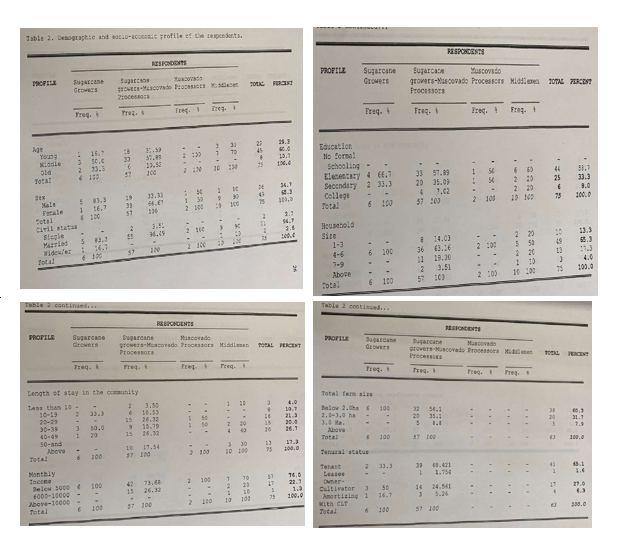
Figure 1
FIGURE 2

Figure 2
FIGURE 3
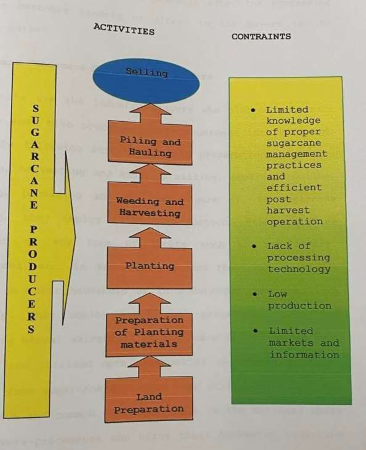
Figure 3
FIGURE 4
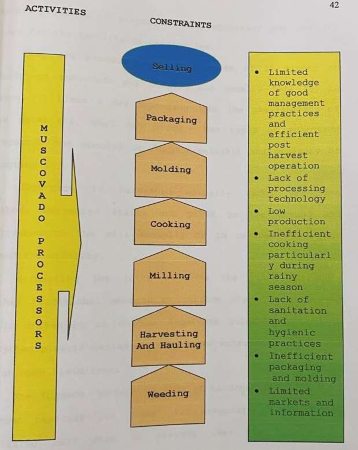
Figure 4
FIGURE 5
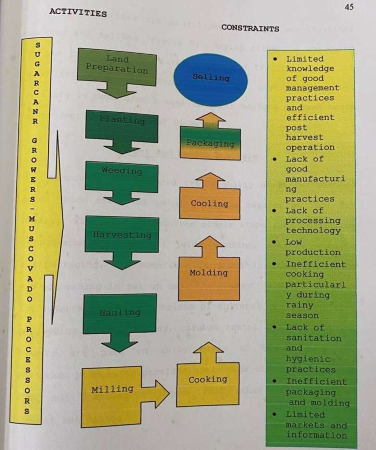
Figure 5
FIGURE 6
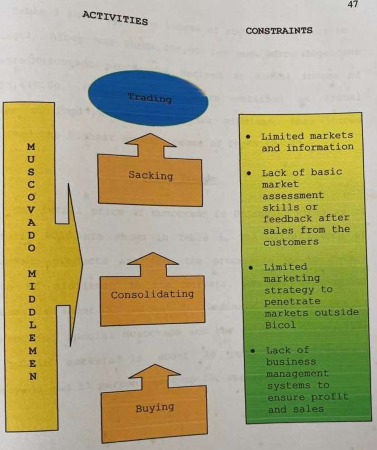
Figure 6
FIGURE 7
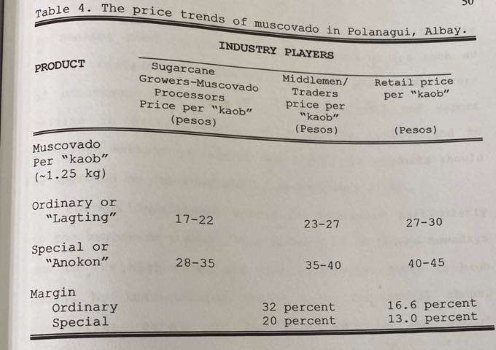
Figure 7
FIGURE 8
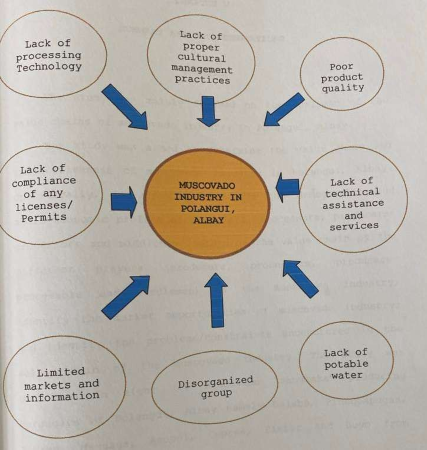
Figure 8
FIGURE 9
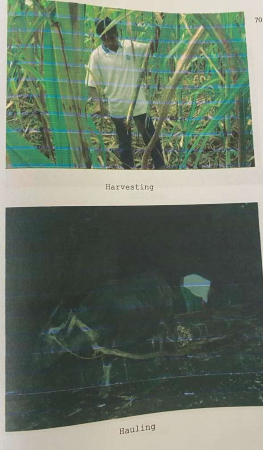
Figure 9
FIGURE 10
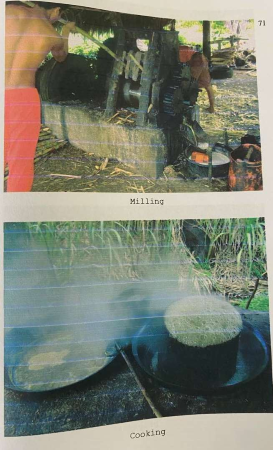
Figure 10
FIGURE 11
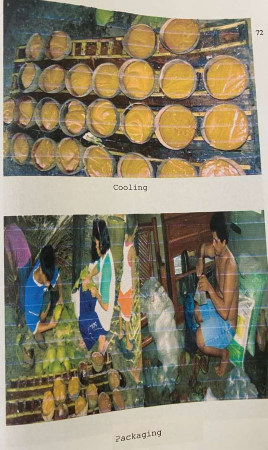
Figure 11
FIGURE 12
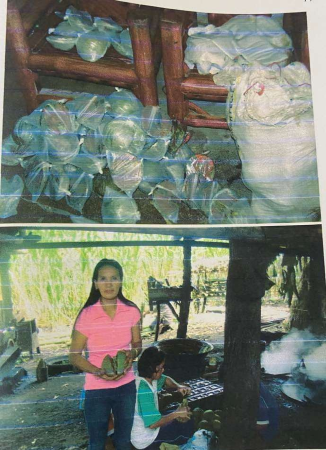
Figure 12
Figures at a glance