Host factors


HIV-1 genes

ADCY1*

adenylate cyclase 1

env, tat, nef

AKT3

v-akt murine thymoma viral oncogene homolog 3

env, tat

ATM

ataxia telangiectasia mutated

pol, rev

CBX5

chromobox homolog 5

vpr

CCR5*

chemokine (C-C motif) receptor 5

env

CEBPB

CCAAT/enhancer binding protein

tat

EP300

E1A binding protein p300

tat, vpr

PIK3CA

phosphatidylinositol-4,5-bisphosphate 3-kinase, catalytic subunit alpha

env, tat

PIK3CB

phosphatidylinositol-4,5-bisphosphate 3-kinase, catalytic subunit beta

env, tat

PIK3R1*

phosphoinositide-3-kinase, regulatory subunit 1 (alpha)

nef, tat

POU2F1

POU class 2 homeobox 1

tat

PRKAR2A*

protein kinase, cAMP-dependent, regula- tory, type II, alpha

gag, vpr, nef

PRKAR2B*

protein kinase, cAMP-dependent, regula- tory, type II, beta

gag, vpr, nef

PRKD1

protein kinase D1

tat

PTPRC

protein tyrosine phosphatase, receptor type, C

env

REL*

v-rel reticuloendotheliosis viral oncogene homolog

tat

SP1

Sp1 transcription factor

tat, vpr

SP3

Sp3 transcription factor

tat

*, asterisk represents host factor identified in both 0.004% and 0.04% CSC

Table1:HIV-1 associated host factors after 0.004% CSC treatment.

Host factors


HIV-1 genes

ADCY1*

adenylate cyclase 1

env, tat, nef

BCL2

B-cell CLL/lymphoma 2

pol

CCNT1

cyclin T1

gag, tat

CCR5*

chemokine (C-C motif) receptor 5

env

ICAM1

intercellular adhesion molecule 1

env, gag

ITGB3

integrin, beta 3

tat

MME

membrane metallo-endopeptidase

tat

NCOA3

nuclear receptor coactivator 3

tat

NFATC2

nuclear factor of activated T-cells, cytoplas- mic, calcineurin-dependent 2

tat

PIK3CG

phosphatidylinositol-4,5-bisphosphate 3-kinase, catalytic subunit gamma

nef, tat

PIK3R1*

phosphoinositide-3-kinase, regulatory subunit 1 (alpha)

nef, tat

PRKACB

protein kinase, cAMP-dependent, catalytic, beta

gag, vpr, nef

PRKAR2A*

protein kinase, cAMP-dependent, regula- tory, type II, alpha

gag, vpr, nef

PRKAR2B*

protein kinase, cAMP-dependent, regula- tory, type II, beta

gag, vpr, nef

PRKDC

protein kinase, DNA-activated, catalytic polypeptide

vpu

REL*

v-rel reticuloendotheliosis viral oncogene homolog

tat

RPA4

replication protein A4

pol

SDC2

syndecan 2

env, tat, gag

SDC4

syndecan 4

env, tat, gag

SERPINA1

serpin peptidase inhibitor, clade A

env, gag

TCERG1

transcription elongation regulator 1

tat

TGM2

transglutaminase 2

env, rev

*, asterisk represents host factor identified in both 0.004% and 0.04% CSC treatments.
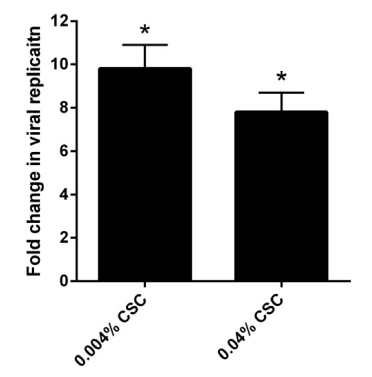
Table2: HIV-1 associated host factors after 0.04% CSC treatment.

Figure 1: The effects of CSC treatment on HIV-1 replication in PBMCs. Fold change in viral replication was calculated by comparing the replication efficiency of HIV-1 in CSC-treatment groups to that of DMSO-treated cells. Mean fold change is depicted with standard deviation. *, p < 0.05, Student’s t test (n=2)

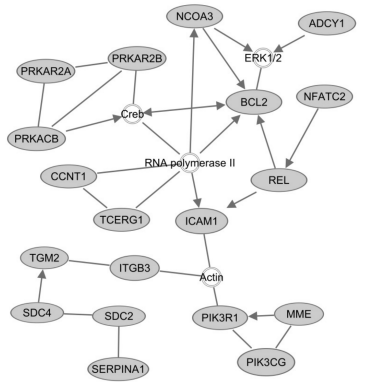
Figure 2: Network analysis of HIV-1 associated host factors modulated by 0.04% CSC treatment. Nineteen of the 22 host factors (grey oval) in Table 2 belong to a highly scored network. Among the host factors, CCR5, PRKDC and RPA4 are not present in this network. Key cellular proteins (white circle) related to the host factors are shown.

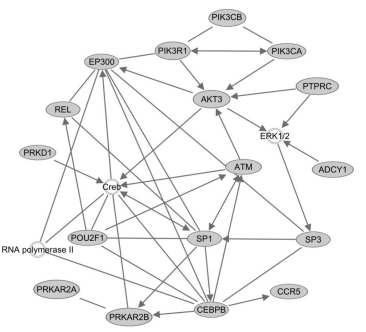
Figure 3: Network analysis of HIV-1 associated host factors modulated by 0.004% CSC treatment. Seventeen of the 18 host factors (grey oval) in Table 1 belong to a highly scored network. Among the host factors, CBX5 is not present in this network. Key cellular proteins (white circle) related to the host factors are shown.