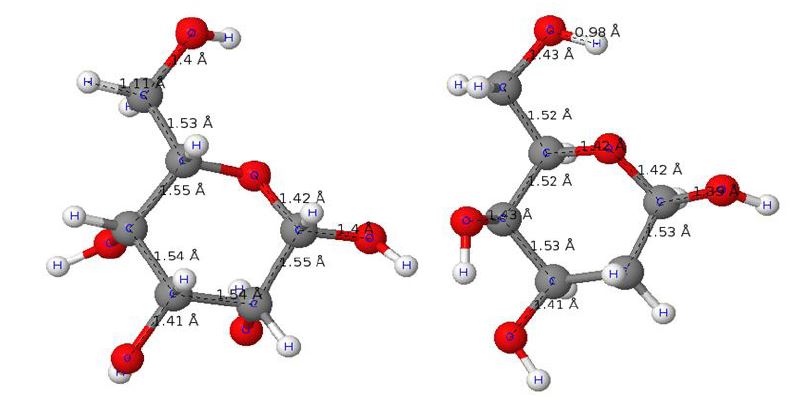
Figure 1: Structural configuratio of (a) D-Glucose and (b)Glucose 2DG
| S.No. | Energy States | D-Glucose | Glucose 2DG | ||
| I. | Highest peak in velence band |
0(2p) Orbital of Oxl'- gen at -3.98 eV |
H(ls), C(2p) and 0(2p) Orbital at -2.36 eV |
||
| 2 | Highest peak in conduction band |
ls Orbital of Hdrogen at 3.86 eV | Is Orbital of Hdrogen at 3.86 eVJs Orbital of Hdro- gen at 3.86 eV 2.76 eV |
||
| 3 | DOS Analysis | sp-hybridization betwee C-H and 0-H, Sigma bond between 0(2s) and H (ls) | sp-hybridization betwee C-H and 0-H, Sigma bond between 0(2s) and H ( ls) |
||
| 4 | Hghest occupied molecular orbital (HOMO) |
-1.71 eV | -2,13 eV | ||
| 5 | lowest un-occupied molec- tJar orbital (LUMO) |
2.81 eV | 2.20 eV | ||
| 6 | Forbidden Energy gap | 4.52 eV | 4.33 eV | ||
| 7 | Ranging of Velence band | -5.0 eV to - 1.71 eV | -5.0 eV to -2.16 eV | ||
| 8 | Ranging of conduction band |
2.8leV to SeV | 2.18 to SeV |
Table 1 : Comperision of structural analysis of D-glucose and 2-DG
Figure 1: Structural configuratio of (a) D-Glucose and (b)Glucose 2DG
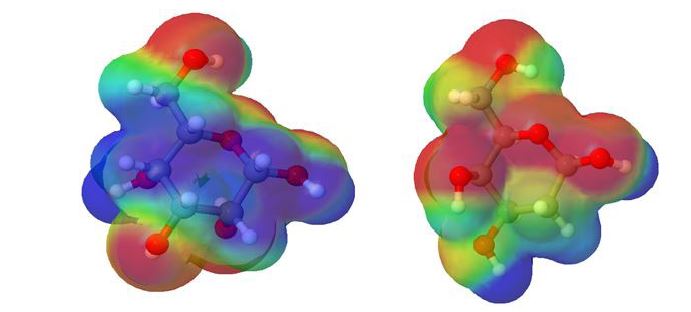
Figure 2: Molecular electrostatic potential surface (MEP) of (a)Glucose-D (b)Glucose-2DG
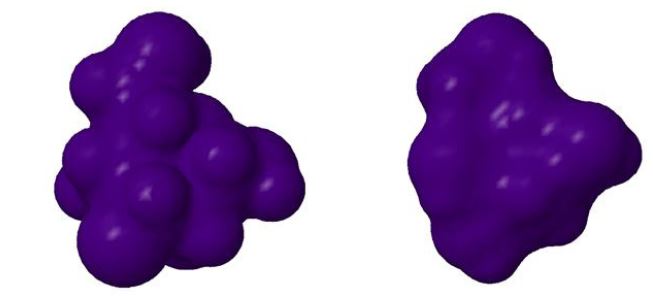
Figure 3: Total electron density of (a)Glucose-D (b)Glucose-2DG
Figure 4: Position of different atoms with molicular surface: (a) D-Glucose (b) Glucose -2DG
Figure 5: Distribution of Charge density of D-Glucose
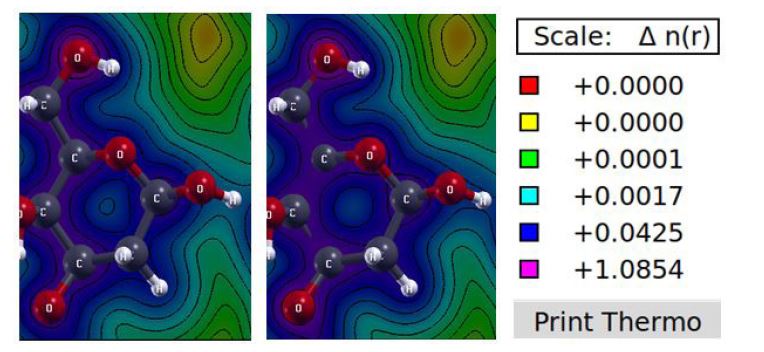
Figure 6: Distribution of Charge density of Glucose 2DG
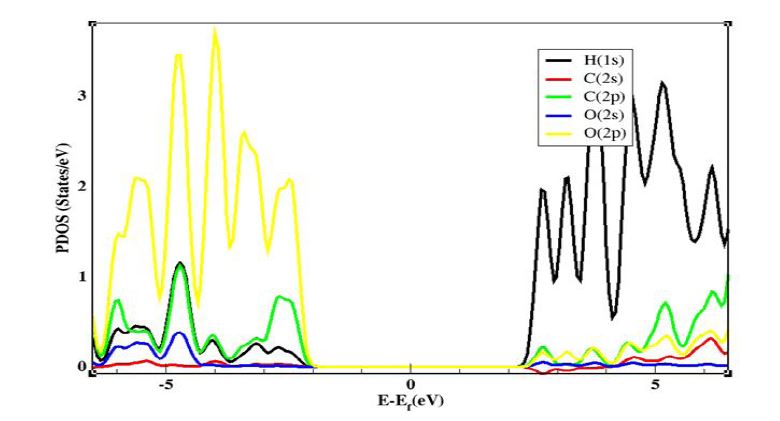
Figure 7: (a) PDOS and (b) DOS analysis of D- glucose
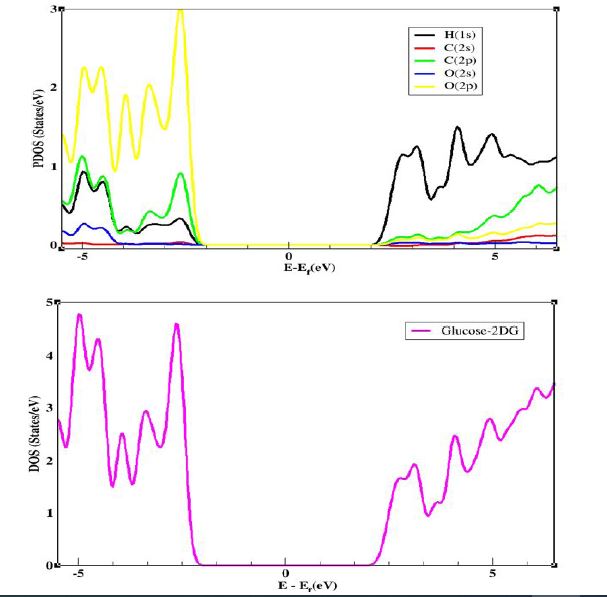
Figure 8: (a) PDOS and (b) DOS analysis of glucose-2DG
Tables at a glance
Figures at a glance