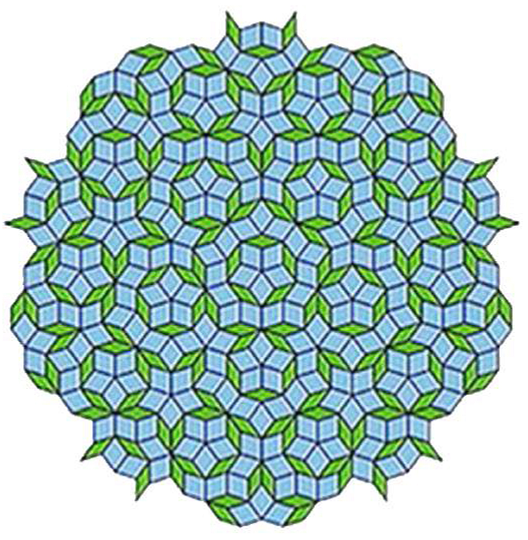
Figure 1: Original Penrose tile
Figure 1: Original Penrose tile
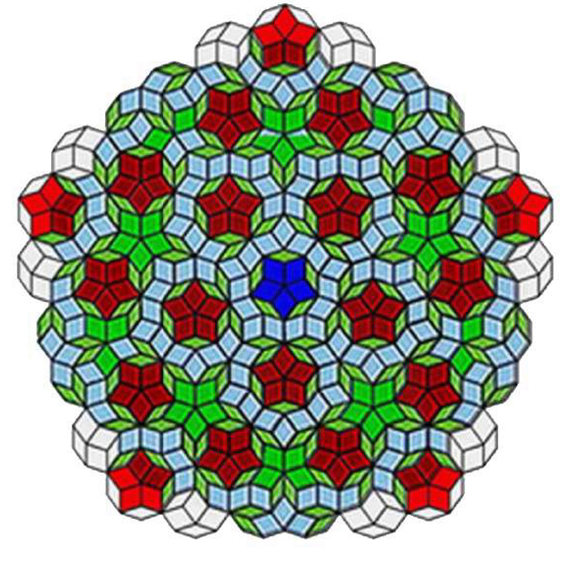
Figure 2: Superposition coincidence of the original Penrose tile and a pentagonal shape trinary Penrose tile
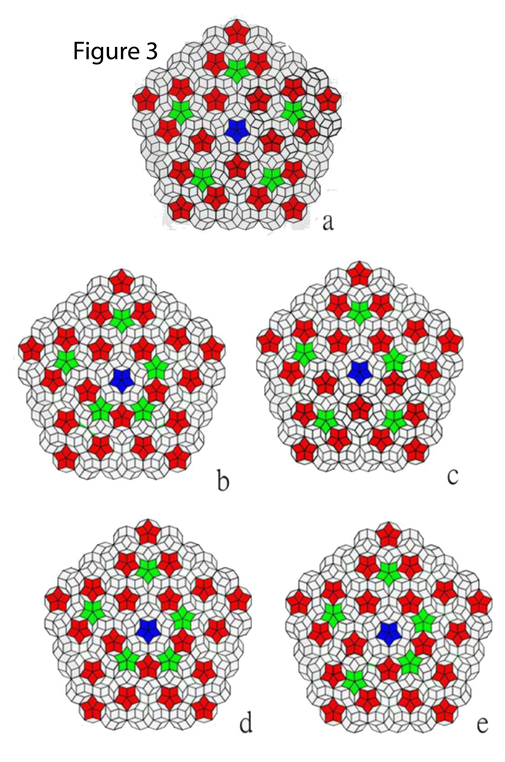
Figure 3: Convert of trinary Penrose pentagonal tile in to binary Penrose pentagonal tile (a) symmetry, (b,c,d,e) asymmetry
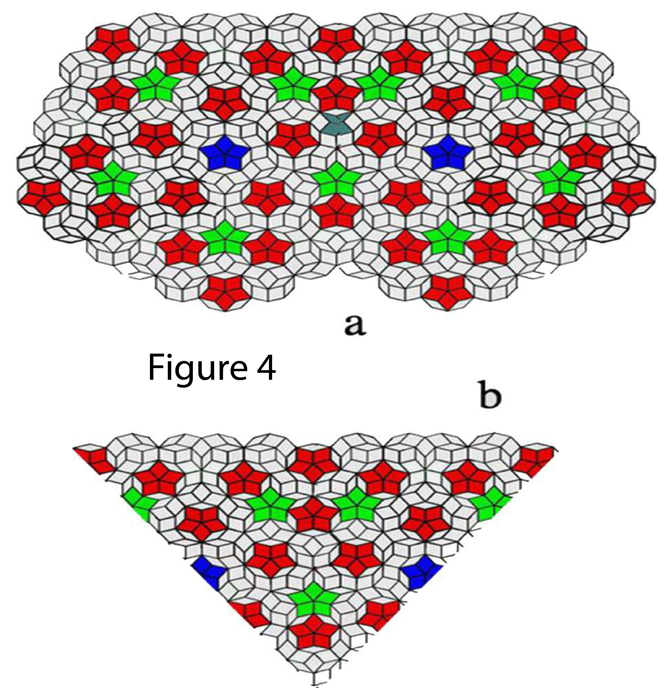
Figure 4: (a) The pentagonal shape Penrose tile with proper coupling on center of top right most (the far ) end right, (b) a symmetric triangle by appropriated cutting through the blue dark star in figure 4 (a), with ten decagons on one side.With a defective decade marked as dark grey
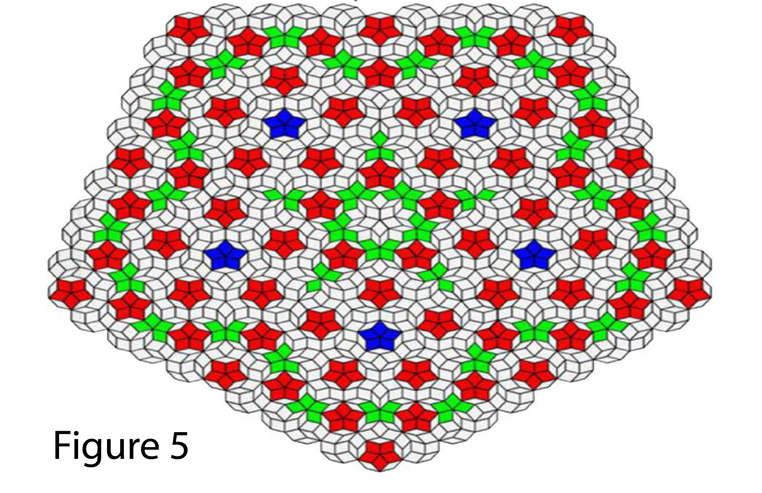
Figure 5: Further splice coupling of figure 4 (b) resulting a pentagonal shape Penrose tile with ten decagons per side
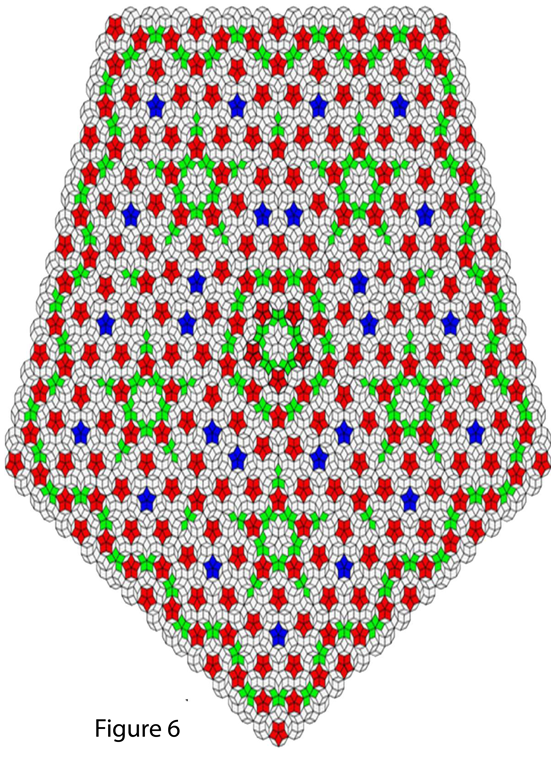
Figure 6: Further coupling resulting in pentagonal shape five-fold symmetry Penrose tile with twenty decagons per side
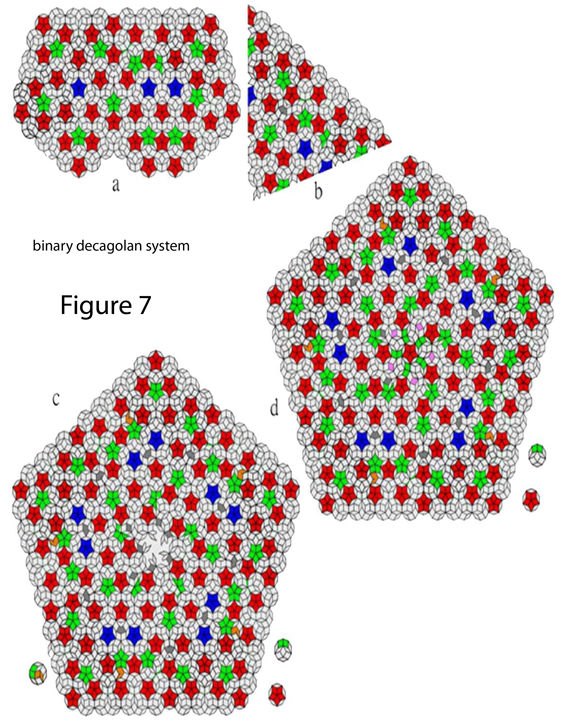
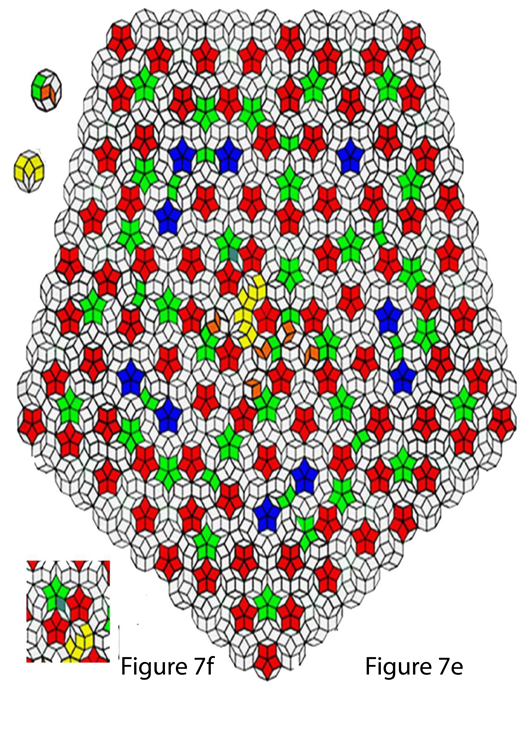
Figure 7: (a) Appropriate coupling of three asymmetric Penrose tiles in x-direction. (b) Cutting through the center of blue star in figure 7a to form an asymmetric triangle. (c) Five splice of rotation asymmetric graph is figure 7(b) to form a symmetric Penrose tile with a complicated center region. (d) Center region of figure 7(c) is repaired to form a convention binary Penrose tile, but with five defective decagons marked as grey color. (e) Asymmetry Penrose tile formed by splice of figure 7(a), containing other types of decagons type-d and type-e as well as a seemly unavoidable defect marked as grey color
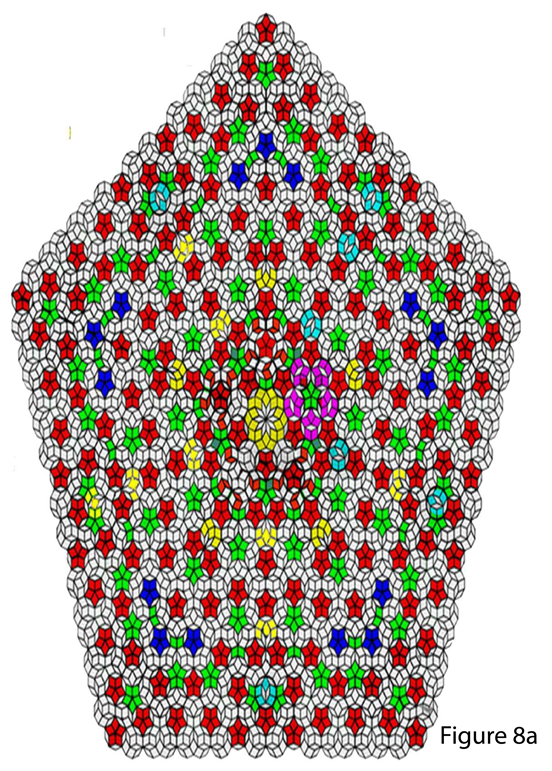
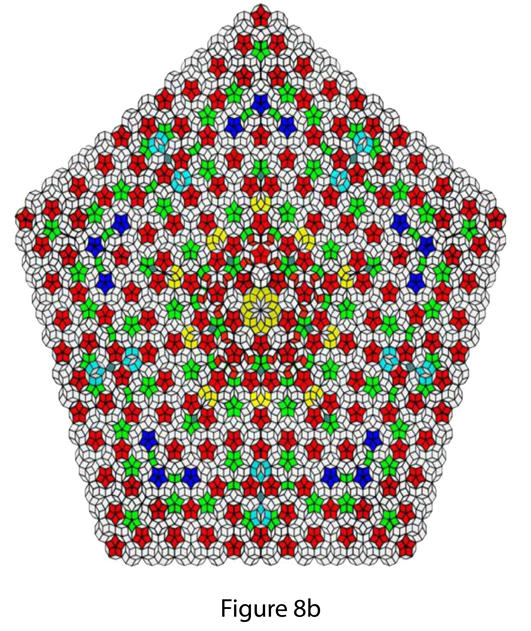
Figure 8
Figures at a glance