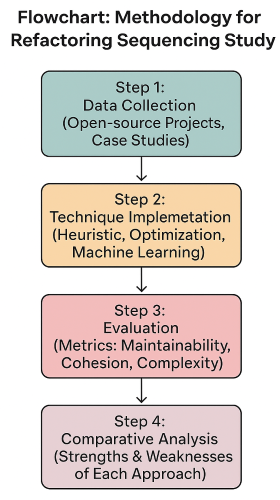
Figure 1: Flowchart of methodology showing data collection → implementation → evaluation → comparative analysis
| Dimension | Non-Hybrid Approaches (Heuristic / Optimization / ML) | Hybrid Models (Metaheuristic + ML / Multi-Hybrid) | Observations |
| Accuracy in Code Smell Detection | ML approaches (CodeT5, RefT5) improved detection accuracy by 25–30% by Armijo et al. [22]. | Maini et al. [20] (Optimized Refactoring Sequence using PSO + DL): reported +30% accuracy improvement compared to rule-based. | Hybrid achieves higher precision, especially for complex systems. |
| Maintainability Improvement | Heuristics improved maintainability index by 20–25% by Kannangara et al. [23]. NSGA-II optimization improved modularity by 35% by Mkaouer et al. [24]. | Maini et al. [19] HSHEP achieved +42% maintainability gain across benchmarks; Maini et al. [20] further showed enhanced scalability in OO systems. | Hybrid’s superior maintainability outcomes. |
| Effort Reduction | Decision Tree Forest sequencing reduced effort by 94.9% by Tarwani et al. [25]. | Maini et al. [20] hybrid sequencing approach reduced sequencing search cost by ~15% vs standalone optimization. | Hybrids are less radical than some ML-only models but provide balanced efficiency + quality gains. |
| Scalability | Heuristics limited to small projects; NSGA-II scales better but with high computation. | Maini et al. [19] HSHEP successfully scaled sequencing to industrial-scale systems (JHotDraw, JFreeChart, Xerces, JEdit, Gantt Project) with stable results. | Hybridization (as shown in HSHEP) enables scalability while preserving quality. |
| Statistical Validation | Regression/classification (non-hybrid) reached R² = 0.877, F1 = 0.882 by Badru et al. [26]. | Maini et al. [20] PSO+DL: MAPE reduced from 24.8% → 9.7%, p < 0.001 (statistically significant). | Hybrid models, especially in Ritika Maini’s work, show rigorous empirical and statistical validation. |
| Limitations | Heuristics lack adaptability; optimization needs parameter tuning; ML lacks explainability. | HSHEP & PSO+DL face complexity in setup, higher runtime cost, and reduced transparency. | Non-hybrids easier to implement; hybrids more powerful but harder to operationalize. |
Table 1: Comparative Analysis: Non-Hybrid vs. Hybrid Models

Figure 1: Flowchart of methodology showing data collection → implementation → evaluation → comparative analysis

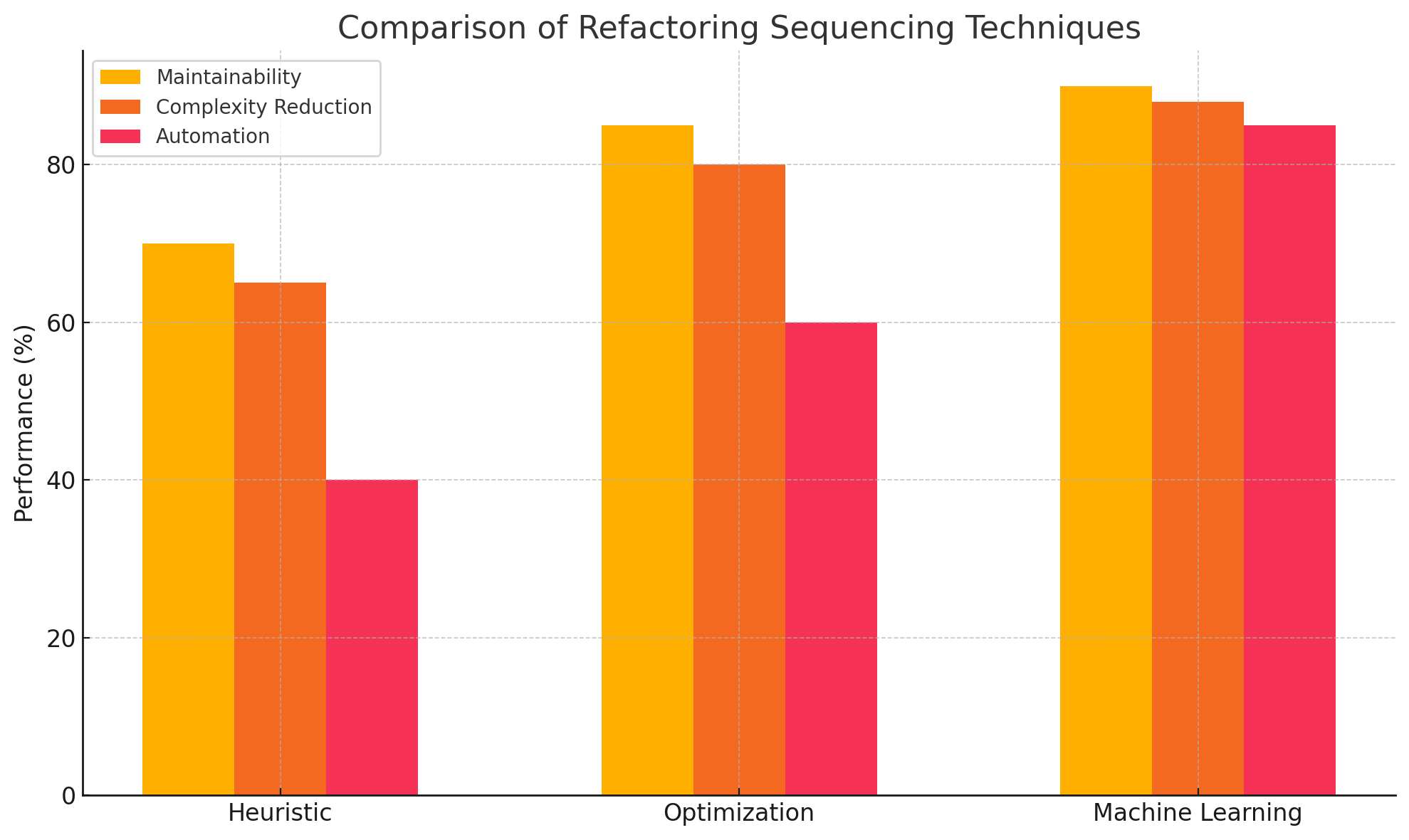
Figure 2: Bar chart comparing heuristic, optimization, and ML approaches across maintainability, complexity reduction, and automation effort.
Tables at a glance
Figures at a glance