
Evaluation of Factors Associated with the Poor Nutritional Status of Chronic Heart Failure Patients by Measuring the Brachial Circumference in the Cardiology Department of the Ignace Deen National Hospital
Received Date: January 05, 2026 Accepted Date: February 05, 2026 Published Date: February 09, 2026
doi: 10.17303/jcvm.2026.12.102
Citation: Sana Samoura, Morlaye Soumaoro, Aly Samoura, Alpha Koné1, Ibrahima Condé, et al. (2026) Evaluation of Factors Associated with the Poor Nutritional Status of Chronic Heart Failure Patients by Measuring the Brachial Circumference in the Cardiology Department of the Ignace Deen National Hospital. 12: 1-8
Abstract
Introduction: Nutritional status affects the progression of chronic heart failure. It is common to find in chronic heart failure an alteration of the nutritional state characterized mainly by the presence of nutritional deficiencies. The objective of our study was to contribute to a better knowledge of the nutritional status of patients with chronic heart failure in the cardiology department of the Ignace Deen National Hospital.
Material and Methods: We conducted a cross-sectional analytical study, including all chronic heart failure patients for 12 months from July 15, 2023 to June 15, 2024.
Results: We recorded at the service 513 patients who consulted for chronic heart failure during the study period. Among which, 273 patients had a poor nutritional status either (53.22%) with a male predominance of 60.43% (sex ratio at 1.52) and an average age at 53.55 years 20.3 [18-89]. All of our patients reported losing weight in the last 3 months preceding the survey, that is 100% of cases; we noted a prominent clavicle in 74.72% and hollow or sunken eyes in 73.62%.
Our study showed that the unfavorable socio-economic level and advanced age with a (P=0.008) as well as bad eating habits with the (P<0.001) were strongly associated with the poor nutritional status of our patients. Anemia was observed in 167 cases, or 61.17%.
Conclusion: It emerges from this study that the impairment of nutritional status during chronic heart failure is common in the cardiology department of the Ignace Deen National Hospital; in general among elderly people with a high hospital prevalence.
Keywords: Chronic Heart Failure; Poor Nutritional Status
Introduction
The state of undernutrition is a prognostic factor and frequently described during chronic heart failure; it is defined as an imbalance between the body’s energy intake and protein requirements, with a negative net balance [1]. The evaluation of this malnutrition in cardiac insufficiency allows for comprehensive care.
Heart failure is a major public health problem worldwide, it affects about 26 million people [2].
In the United States, a prospective study conducted by Kerley CP. In 2018, focusing on fruit and vegetable consumers reported a 20% decrease in the risk of HF among the highest consumers compared to the lowest [3].
In France, a study conducted by N.A Carime et al. Between 2012 and 2016 showed an increase in malnutrition among CHF patients (from 8.4% in 2012 to 12.3% in 2016) [4].
In Ethiopia, a study conducted by H. Amare et al. In 2015, out of 284 patients suffering from HF, 221 of them suffered from malnutrition (77.8%) [5].
In Africa, there are very few data to describe the eating habits of specifically urban African patients with HF [6].
Given the place occupied by nutrition in the evolution of HF and the insufficiency of data on the nutritional profile of patients with HF in Africa, we proposed to address this research theme whose objectives were to determine the hospital frequency of chronic heart failure patients based on nutritional status and factors associated with poor nutritional status in patients with insufficiency chronic cardiac.
Patient and Method
This monocentric work took place in the cardiology department of the national hospital CHU Ignace DEEN, it was a cross-sectional analytical study lasting 12 months from July 15, 2023 to June 15, 2024.
The methods usually used (BMI; the serum albumin assay; etc... ) were not applicable in our context due to the fluid infiltration in chronic heart failure patients and the difficulties encountered for achieving serum albumin. So we used a simple and less expensive alternative anthropometric method which is the measurement of the brachial circumference (CB), thus we deduced that a CB 27cm meant a good nutritional state and a CB<27cm meant poor nutrition. With as inclusion criteria the patients admitted to the chronic heart failure department and having a brachial circumference (BC) less than 27 cm. The limit and difficulty of this work was related to difficulties in accessing certain fundamental exploration examinations such as albuminemia and BNP on one hand, and the high cost of these examinations on the other hand were our main limitations and difficulties encountered.
Our variables were qualitative and quantitative. The qualitative variables were expressed in numbers and percentages while the quantitative ones were expressed in mean and standard deviation. A first step consisted of performing univariate logistic regression to determine the factors that were associated with the poor odds ratio and the 95% confidence intervals were calculated and the P values less than or equal to 0,05 were considered statistically significant. Nutritional status of chronic heart failure; the variables that were significant in a univariate (P less than or equal to 0.02), were introduced into the multivariate model for a second analysis; the
Results
Characteristic of the studied population: Our study involved 513 patients with CHF, among whom 273 had an CCI associated with poor nutritional status, a frequency of 53.22%. The average age of our patients was 53.55 20.3 years with extremes of 18 and 89 years. The most represented age group was between 58-77 years old, or 45.78%. The male sex was the most affected, at 60.43%, with a sex ratio of 1.52 in favor of men.
Discussion
The study took place in the cardiology department of the Ignace Deen National Hospital for 12 months from July 15, 2023 to June 15, 2024. Its main objective was to contribute to a better knowledge of the nutritional status in the population of patients with chronic cardiac insufficiency, but we encountered some difficulties, notably the lowsocio-economic which did not allow all our patients to perform certain examinations.
During the study period, we collected 513 patients with CHF, among whom 273 had an CCI associated with a poor nutritional state, representing a frequency of 53.22%.
Our result is lower than that of H. AMARE et al [5]. In 2015 in Ethiopia, which had reported 77.8% but higher than that of Y KAWAKUBO and col [7]. In 2022 in Japan, which had obtained 42.6%. This could be explained by the pathophysiology of heart failure itself and the medications used during its treatment that could alter the nutritional status of the patients.
The average age of our patients was 53.55 20.3 years with extremes of 18 and 89 years. The most represented age group was between 58-77 years old, or 45.78%.
Our observation could be justified by the fact that older age is a common risk factor for HF and poor nutritional status.
In our study, all of our patients reported losing weight in the last 3 months preceding the survey: 100% of cases, prominent clavicles (74.72% of cases) and hollow or deep-set eyes (73.62% of cases) obtained in our study, could justify the degree of muscle wasting experienced by our patients living with chronic heart failure.
Most of our patients were feeding alone but with difficulty, i.e. 46.52%. Which could be explained by the decrease in energy experienced by our patients due to CHF and poor nutritional status, both of which are disabling pathologies.
Two meals/day was the highest number of meals taken by our patients, with 43, 96% and 19.78% taking one meal per day. Which could demonstrate the degree of anorexia in our patients, which is the consequence of gastrointestinal and hepatic edema by fluid overload in malnutrition during IC.
The study of factors associated with poor nutritional status in multivariate analysis leads to results similar to those from univariate analyses.
The unfavorable socio-economic level and advanced age with one (P=0.008) as well as poor eating habits with the (P<0.001) were strongly associated with the poor nutritional status of our patients. This could be explained by the low standard of living for most of our patients.
The chronic pathology was also associated with poor nutritional status either (P=0.020). Which could be explained by the fact that the chronic pathology would lead to a fragility of the immune system, especially in elderly subjects; and this could lead to a poor nutritional state.
Anemia was observed in 167 cases, or 61.17%; this could be explained by an iron deficiency during chronic heart failure and renal loss secondary to the use of diuretics.
Conclusion
It emerges from this study that the impairment of nutritional status during chronic heart failure is common in the cardiology department of the Ignace Deen National Hospital; in general among elderly people with a high hospital prevalence of poor nutritional status. From a nutritional point of view: The unfavorable socio-economic level; advanced age; poor eating habits and chronic pathology were the factors associated with the poor nutritional status of our patients. The vast majority of our patients were emaciated; anorexic and asthenic. Most fed themselves but with difficulty and took only two meals a day. All of our patients reported weight loss in the last three months prior to the survey and the majority had prominent clavicles and sunken or sunken eyes.
- Melchior JC, Hanachi M, Hankard R (2016) Methods for assessing nutritional status and risk. In: Clinical nutrition treaty, SFNEP, Paris, 647-68.
- S Guha (2018) CSI Position Statement on Management of Heart Failure in India /India Heart Journal 70S, S1-S72.
- Kerley CP A (2018) Review of Plant-based Diets to Prevent and Treat Heart Failure. Card Fail Rev. 4: 5461.
- N Abdoul Carime (2022) Impact of nutritional status on heart failure mortality: a retrospective cohort study. Nutrition Journal, 21: 2.
- H Amare, L Hamza (2015) Malnutrition and associated factors among heart failure patients on follow up at Jimma university specialized hospital, Ethiopia. BMC Cardiovascular Disorders, 15: 128.
- Pretorius S, Sliwa K (2012) Feeding the emergence of advanced heart disease in Soweto: a nutritional survey of black African patients with heart failure. Cardiovasc J Afr. June, 23: 245-51.
- Y Kawakubo, Y Shiraishi (2022) Potential association with malnutrition and allocation of combination medical therapies in hospitalized heart failure patients with reduced ejection fraction. Review, 12: 8318.
FIGURE 1
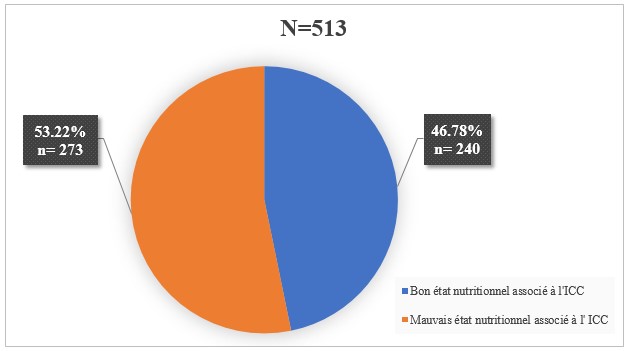
Figure 1: Frequency of Chronic Heart Failure Based On Nutritional Status
Tables at a glance
Figures at a glance