
A Randomized Comparative Clinical Study Evaluating the Efficacy of a New Automatic Toothbrush Versus to a Sonic Toothbrush
Received Date: February 24, 2025 Accepted Date: March 24, 2025 Published Date: March 27, 2025
doi: 10.17303/jdoh.2025.12.103
Citation: Joanna Palubicka, Agatha Wagner, Benjamin Cohen, Christophe Cadot (2025) A Randomized Comparative Clinical Study Evaluating the Efficacy of a New Automatic Toothbrush Versus to a Sonic Toothbrush. J Dent Oral Health 12: 1-10
Abstract
Purpose: Effective daily brushing is key to prevent dental diseases. This study aimed to evaluate the efficacy of a new automatic toothbrush (Y-Brush®, YB) in removing dental plaque compared to a sonic toothbrush.
Materials and Methods: This study was a single-center, randomized, comparative, examiner-blinded trial conducted over one month under the supervision of a dentist. One hundred and ten healthy adults with an Index plaque score >1 were included in the study and randomly assigned to either YB toothbrush (n=55) or a sonic toothbrush (n=55). The subjects had to use the allocated toothbrush twice daily for 30 days at home, in accordance with the manufacturer's instructions. Plaque index was assessed on D0, D7 and D30 using the index of Löe and Silness. Adverse events (AEs) were monitored on a daily log throughout the study.
Result: YB was effective in removing plaque after 30 days of twice-daily use, as demonstrated by a significant decrease in plaque index score by 25% on D7 and 48% on D30 (p< 0.0001), with improvements reported in 91% and 100% of subjects, respectively. No significant difference between the two toothbrushes was observed on both time points (p>0.05). No serious AEs were observed.
Conclusion: The new automatic toothbrush YB is effective in removing dental plaque, providing thorough brushing in half the time of a sonic toothbrush with similar efficacy
Keywords: Automatic Toothbrush; Mouthpiece Toothbrush; Sonic Toothbrush; Dental Plaque; Plaque Index
Introduction
Dental plaque is a community of microbial cells embedded in an extracellular matrix, forming a polymicrobial biofilm. The accumulation of this plaque in the oral cavity leads to the development of caries, periodontitis and other oral diseases [1]. Effective oral hygiene involving regular brushing, flossing and professional dental cleanings are crucial to maintain oral and general health.
Toothbrushing is recommended twice daily, once in the morning and once in the evening for a duration of two minutes to achieve an effective cleaning of all tooth surfaces [2]. Several factors influence the efficacy of toothbrushing, such as the frequency, duration, and method of brushing, the choice of an appropriate toothbrush, as well as individual’s behavior [3].
There are diverse brushing techniques, including the horizontal method, the rolling method, the modified Stillman method, and the widely recommended Bass (modi- fied Bass method) [3,4]. In this method, bristles are positioned at a 45-degree angle toward the gumline on the gingiva, allowing thorough and gentle teeth cleaning without causing harm to the gingival tissue [3-5]. Manual toothbrushes have constituted the only option for several years until 1939, when the prototype of the first electric toothbrush was developed [6]. The adoption of electric or 'powered' toothbrushes has surged recently, prompting numerous clinical trials assessing their efficacy compared to manual toothbrushes, with findings demonstrating their efficacy for children and adults in both short-term and long-term periods [7-9].
Presently, the two types of powered toothbrushes that are mostly used are the sonic toothbrush and the oscillating toothbrush. their distinction lies in the movement of their brush heads, with the sonic toothbrush vibrating side-- to-side at high speeds, while the oscillating toothbrush rotating backward [3].
Y-Brush® (Fasteesh, France) is a novel automatic toothbrush based on sonic vibration. The toothbrush is Ushaped and covered with soft Nylon bristles that clean all faces of the teeth for one dental arch simultaneously without causing harm to the gums or enamel.
The objective of this study was to assess the clinical efficacy and tolerability of this new toothbrush compared to a gold standard sonic toothbrush.
Material and Methods
Study DesignThis was a single-center, randomized, comparative, examiner-blinded trial conducted over one month under the supervision of a dentist. the study was conducted from March 2023 to July 2023 under the responsibility of Eurofins Dermscan Poland in accordance with the Declaration of Helsinki and in compliance with Good Clinical Practice guidelines [10]. the study was non-interventional and did not require approval from the Ethics Committee or authorization from the Competent Authority. Written informed consent was obtained from all participants.
SubjectsThe study enrolled 110 healthy subjects aged between 18 and 59 years. In addition, to be eligible for participation, subjects had to possess six natural teeth (2 incisors, 2 premolars and 2 molars), maintain a healthy gum status, have a jaw size compatible with Y-Brush® and an Index Plaque (IP) score >1.0. Pregnant or nursing women or women planning to get pregnant during the study were excluded. Subjects suffering from pathology in the studied zone or who were planning to have any dental care during the study or having undergone a surgery under general anaesthesia within the previous month were also excluded from the trial.
Tested ToothbrushesThe experimental product was an automatic toothbrush (Y-Brush® NylonStart) – hereinafter named YB (Figure 1A). YB toothbrush features a flexible and rounded head composed of 35,000 nylon filaments. The toothbrush uses sonic technology and reproduces the Bass technique.
It was compared to a sonic toothbrush (Phillips ® Sonicare 3100) – hereinafter named SC (Figure 1B). Subjects were instructed to follow the instructor's recommendations for brushing their teeth, gums and soft tissues [11,12]. Toothbrushing was conducted with a standard toothpaste (Y-Brush Organic toothpaste), provided by the Sponsor, twice daily for both products.
Study ScheduleParticipants meeting the inclusion criteria were randomly divided into two groups: Group YB and Group SC.
Subjects in the YB group used the toothbrush for the first time under technician supervision, while subjects in the SC group continued their regular oral hygiene routine for 2-3 days before inclusion on Day 0 (D0).
Subjects were instructed to use the allocated toothbrushes as recommended, for 1 minute for YB and for 2 minutes for SC and they documented any unpleasant sensations or medications on a daily log from D0 to day 30 (D30). Assessments were conducted on day 7 (D7) and D30 by a trained dentist who was blinded to the products.
A wash-out period of 3-6 hours in brushing teeth was required before visits.
AssessmentsDental plaque was assessed blind by an expert dentist on each visit using the Löe and Silness index, a dental plaque scoring system which records both soft debris and mineralized deposits on six specified teeth (12, 16, 24, 36, 32, and 44) [13].This index was shown to be useful in a clinical context as it records the thickness of plaque deposits along the gingival margin, i.e., where they are more influent on the development of inflammation [14].
In this index, each tooth's four surfaces (buccal, lingual, mesial, and distal) receive a score ranging from 0 to 3 (0=No plaque, 1=Thin plaque layer at the gingival margin, 2=Moderate layer of plaque along the gingival margin, 3=Abundant plaque along the gingival margin). The cumulative scores from these four areas are summed and divided by four to derive the plaque index for that particular tooth. To determine the plaque index for the subject, the indexes for all six teeth are added together and divided by six. Toothbrush efficacy was assessed by calculating the change from baseline in the subject’s plaque index on D7 and D30.
Possible adverse events (AEs) were collected by analyzing subjects’ daily logs for sensations or observations of potential intolerance during the study. AE severity was classiffed as not severe (0) mild (1), moderate (2) or severe (3). A more specific description of AEs was conducted in case of cutaneous/ocular AE.
Statistical AnalysisQuantitative variables were summarized using descriptive statistics (mean, standard deviation (SD), standard errors of the means (SEM), minimum and maximum values, percentage, frequency and 95% confidence intervals (95% CI).
For each group, the normal distribution of the outcome (Change from baseline) was evaluated using a Shapiro-Wilk test (=0.01). Efficacy assessment was conducted using a paired Student test (or Wilcoxon signed-rank test if normality was rejected). For the comparison between the two toothbrushes on change from baseline, an unpaired ttest was performed, with the non-parametric Mann-Whitney test applied if the normality assumption was rejected. The type I error was set at =0.05. Data was analysed using Excel and SAS® v9.4 software.
Results
Demographic and Baseline CharacteristicsA total of 110 healthy subjects participated in the study (55 per group). the subjects’ baseline characteristics are described in Table 1. the mean age was 35 (±1) years for the YB group and 33 (±1) years for the SC group. Females were predominant in both groups, constituting 87% of the YB group and 76% of the SC group. All participants were of Caucasian ethnicity. Only a few subjects in both groups had sensitivity in teeth or oral cavity. All subjects completed the whole study period, except one subject in the SC group who had a herpes on the upper lip and was withdrawn from the study as evaluation was not possible.
efficacy on Plaque RemovalBoth products demonstrated a signiffcant reduction in dental plaque (p< 0.0001) (Figure 2). Following twice-daily use of YB, the mean plaque index score decreased from 1.47 to 1.1, achieving a 25% reduction (-0.37, p< 0.0001) on D7, and reaching 0.76 on D30 with a 48% reduction in dental plaque (-0.71, p< 0.0001) (Table 2). Similarly, a significant decrease of the plaque index score was observed with SC. No significant difference in plaque removal was observed between the two products after 7 days (p=0.2845) and 30 days (p=0.1045) (Figure 2).
By D30, all subjects (100%) in both groups demonstrated an improvement.
Global Tolerance and Adverse EventsOverall, 5 subjects out of 110 experienced AEs during the study period: 4 subjects in the YB group (7.27%) and 1 subject (1.82%) in the SC group (Table 3). AEs experienced in the YB group included 2 cases of bleeding in the gums, 1 case of burning sensation and 1 case of oedema in the gums. All AEs were not severe and resolved within 30 minutes. In the SC group, one subject had a herpes on the upper lip unrelated to the product.
Discussion
Toothbrushing is a pivotal self-care practice essential for the preservation of oral health. thus, the careful choice of an effective toothbrush is of paramount importance. Powered toothbrushes, employing diverse technologies such as oscillation and sonic movements, have consistently demonstrated superior efficacy over manual toothbrushes in terms of plaque removal [7-9].
this study specifically evaluated the efficacy of a newly developed automatic toothbrush, YB, in comparison to a commonly used electric toothbrush based on sonic technology. We opted for a sonic toothbrush as a comparator instead of a conventional manual toothbrush, as it was more relevant to compare YB with an electric toothbrush employing similar sonic technology. Our findings demonstrated that YB effectively removed dental plaque after twice-daily use, with a significant reduction in the plaque index score by nearly 50% after 30 days (p< 0.0001). Noteworthy improvements were reported in 91% of subjects after 7 days of use and reaching 100% at D30. Interestingly, the mean plaque index scores were similar for all evaluated surfaces (buccal, lingual, distal and mesial) of each tooth, thus demonstrating the efficacy of YB in cleaning all surfaces equally (data not shown). When compared to the sonic toothbrush, no significant difference was observed on both time points between the two products. Sonic technology integrates acoustic vibrations and dynamic fluid movements around the bristles, complemented by direct mechanical scrubbing of tooth surfaces, thus allowing for a comprehensive and effective cleaning action that reaches beyond the bristle contact [3].
Although there was no control over the actual duration of brushing, subjects were instructed to use the allocated toothbrushes as recommended, i.e. for 1 minute for YB and for 2 minutes for SC. YB achieved comparable results to SC but in half the time, aligning with general population practices. Studies have consistently shown that, although the general consensus amongst oral health care professionals is that individuals should spend at least 2 minutes brushing their teeth at least twice a day to achieve effective plaque removal, the actual duration of toothbrushing is considerably shorter [15]. According to the French Union for Oral Health (UFSBD), 70% of individuals in France brush their teeth twice a day for only one minute [2]. YB proved to achieve effective plaque removal in a shorter duration, and thus could particularly benefit individuals seeking both effective and rapid toothbrushing. In addition, YB could constitute an effective option for people experiencing disabilities or motor difficulties.
In contrast to our study, previous investigations into the efficacy of automatic toothbrushes, notably those with silicone bristles, have yielded mixed results. Nieri et al. found that a U-shaped automatic toothbrush with silicone bristles was not as effective in plaque removal compared to manual and electric toothbrushes [16]. Similarly, Saghiri et al. reported limited plaque removal efficacy using an automatic toothbrush [17]. The disparity in efficacy observed in earlier commercial automatic toothbrushes may be attributed to the use of silicone bristles. In contrast, YB, characterized by Nylon filaments, potentially enhances the efficacy of this new automatic toothbrush. In a recent study, Y-brush® for 5 seconds and 15 seconds per jaw was compared to a manual toothbrush with a recommended usage time of 3 minutes. the results showed that full-mouth plaque reduction was higher with manual toothbrushing than with auto-- cleaning when Y-brush® was used for 5 seconds per jaw. However, increasing the brushing time of auto-cleaning to 15 seconds per jaw resulted in a comparable full-mouth plaque reduction as with manual toothbrushing (p=0.177) [18].
Safety and tolerability are paramount considerations in evaluating any oral care product. Our study showed that YB is safe and well-tolerated, with only four subjects experiencing non-severe AEs. These reactions promptly resolved, either during brushing or within 30 minutes.
This study presents potential limitations. Firstly, it was conducted over a relatively short period of one month and the observed efficacy might not be indicative of the toothbrush performance over an extended period. In addition, assessment of efficacy relied on a single plaque assessment scale, which, while widely accepted, may not capture the full spectrum of plaque characteristics. Furthermore, the study primarily focused on assessing plaque removal efficacy, and did not evaluate patient-centered outcomes such as user satisfaction, comfort, or the impact on overall oral hygiene practices. Previous studies have consistently demonstrated high levels of satisfaction and adherence among subjects using this innovative brushing technology (data not shown). Finally, the study was conducted in a single site, which might limit the generalizability of the findings to a broader population and did not account for any potential variability in oral health practices across different locations. Despite these limitations, these preliminary results are of clinical relevance and warrant further studies to validate and extend our findings.
Conclusion
Both toothbrushes remove plaque effectively. YB provides similar efficacy than a sonic toothbrush in half the time.
Ethics Approval and Informed Consent
In Poland, an electric toothbrush is considered as a domestic electric apparatus. Conducting a clinical study with such devices did not require any approval by an Ethics Committee nor to be registered in a public trial registry. However, the study was conducted in accordance with the Declaration of Helsinki and in compliance with Good Clinical Practice guidelines. Written informed consents for participation in the clinical study were obtained for all participants.
Funding
The financial support for this study was provided by Fasteesh (B. Cohen and C. Cadot), Lyon, FRANCE.
Competing Interests
J. Palubicka is employee of Eurofins Dermscan Poland, a CRO that conducted the clinical study for Fasteesh; A. Wagner is a clinical investigator for Eurofins Dermscan Poland; B. Cohen and C. Cadot are respectively President and Technical Director of Fasteesh, the company that commercialized Y-Brush.
Authors' Contributions
All authors contributed to the design of the study, the data analysis and interpretation, the drafting or revising the article. they all gave final approval of the version to be published and agree to be accountable for all aspects of the work. Moreover, J. Palubicka coordinated the study and collected the clinical data. A. Wagner performed the clinical examinations throughout the study.
Acknowledgments
The authors acknowledge the writing assistance of Emna El Hammi (Into Evidence, France) and Anne Sirvent (Eurofins Dermscan-Pharmascan, France)
Disclosure
the authors report no conficts of interest in this work.
- Valm AM (2019) The Structure of Dental Plaque Microbial Communities in the Transition from Health to Dental Caries and Periodontal Disease. J Mol Biol. 431: 2957-69.
- UFSBD (2013) Nouvelles recommandations l'UFSBD réactualise ses stratégies de prévention. Pratiques dentaires Novembre. 13: 28
- Van der Weijden GAF, C van Loveren (2023) Mechanical plaque removal in step-1 of care. Periodontol.
- Wainwright J, A Sheiham (2014) An analysis of methods of toothbrushing recommended by dental associations, toothpaste and toothbrush companies and in dental texts. Br Dent J. 217: E5.
- Ausenda F, et al. (2019) The Effect of the Bass Intrasulcular Toothbrushing Technique on the Reduction of Gingival Inflammation: A Randomized Clinical Trial. J Evid Based Dent Pract. 19: 106-14.
- Tadinada A (2015) The Evolution of A Tooth Brush: From Antiquity to Present- A Mini-Review. J Dent Health Oral Disord Ther. 2
- Graves A, et al. (2023) Systematic Review and Meta Analysis of the Relative Effect on Plaque Index among Pediatric Patients Using Powered (Electric) versus Manual Toothbrushes. 11.
- Yaacob M, et al. (2014) Powered versus manual toothbrushing for oral health. Cochrane Database Syst Rev. 2014: Cd002281.
- Thomassen T, FGA Van der Weijden (2022) the efficacy of powered toothbrushes: A systematic review and net work meta-analysis. 20: 3-17.
- World Medical Association Declaration of Helsinki: ethical principles for medical research involving human subjects. J Am Coll Dent. 2014, 81: 14-8.
- Cohen B. User guide (2021) Available from: https://y-brush.com/products/brosse-a-dents-nylonstart.
- Philips. User manual (2020) Available from: https://www.philips.com/cp/HX6223_61/sonic-electric-tooth brush/support
- Silness J, H Loe (1964) Periodontal disease in pregnancy. ii. correlation between oral hygiene and periodontal condtion. Acta Odontol Scand. 22: 121-35.
- D'Elia G, et al. (2023) Methods for Evaluating the Effectiveness of Home Oral Hygiene Measures—A Narrative Review ofDental Biofilm Indices. Dent J. 11: 172.
- Creeth JE, et al. (2009) the effect of brushing time and dentifrice on dental plaque removal in vivo. J Dent Hyg. 83: 111-6.
- Nieri M, et al. (2020) Efficacy of a U-Shaped Automatic Electric Toothbrush in Dental Plaque Removal: A Cross-Over Randomized Controlled Trial. Int J Environ Res Public Health. 17
- Saghiri MA, et al. (2021) Dental plaque removal ability of different power toothbrushes: a preliminary study of a novel automated toothbrush. Medical Devices & Sensors. 4: e10157.
- Keller M, et al. (2023) Cleansing efficacy of an auto-- cleaning toothbrushing device with nylon bristles: a randomized-controlled pilot study. 27: 603-11.
FIGURE 1
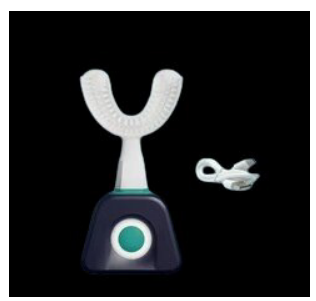
Figure 1A: Tested toothbrushes. A) Y-brush® features a single-sided and flexible mouthpiece equipped with six rows of Nylon bristles positioned at the occlusal, oral, and vestibular sides of the jaw. These bristles are angled at 45° against the tooth surfaces to simulate the bass method [11].
FIGURE 2
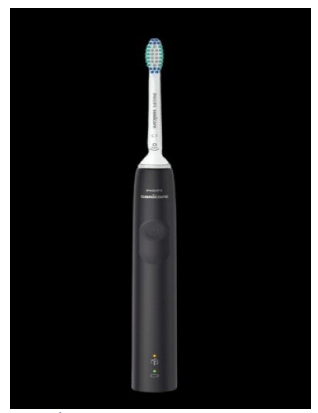
Figure 1B :Phillips® Sonicare 3100 is an electric toothbrush featuring a conventional brush head with scalped bristle lengths. The toothbrush operates at a frequency of 260 Hz (31000 brush movements/minute) with an up-and-- down brushing motion [12].
FIGURE 2
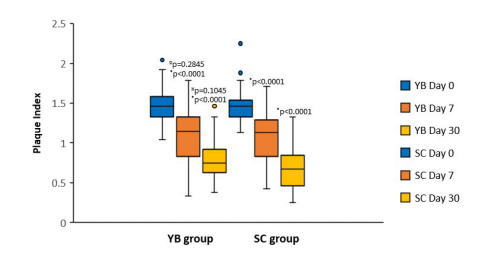
Figure 2: Plaque index reductions for tested YB and SC toothbrushes
Tables at a glance
Figures at a glance