
Studies on Organoleptic Attributes of Fortified Burfi by Using Shredded Bottle Gourd (Lageneria siceraria), Carrot (Daucus carota) and Beetroot (Beta vulgaris)
Received Date: March 18, 2025 Accepted Date: April 18, 2025 Published Date: April 21, 2025
doi:10.17303/jfn.2025.11.105
Citation: Shalini Shukla, Shanker Suwan Singh, Sakshi Gupta (2025) Studies on Organoleptic Attributes of Fortified Burfi by Using Shredded Bottle Gourd (Lageneria siceraria), Carrot (Daucus carota) and Beetroot (Beta vulgaris). J Food Nutr 11: 1-8
Abstract
This research study was conducted to evaluate the impact of incorporating carrot or beetroot into traditional bottle burfi on its organoleptic attributes. The objective of study is to evaluate sensory analysis of burfi prepared by fortifying bottle gourd burfi in different proportions (15,25,30 and 35) with carrot (10,15.20,25) and beetroot (10,15,20,25). Considering, the nutritional and therapeutic properties of carrot and beetroot, a fortified burfi was developed by incorporating varied proportion of bottle gourd, carrot, beetroot and sugar. The control sample T0 was prepared by incorporating 70% khoa, 30% sugar. Developed sweet was prepared with 15 different combinations of bottle gourd, carrot, beetroot and sugar i.e. 25:10:00:30:35 (T1), 25:00:10:30:35 (T2), 30:10:00:25:35 (T3), 30:00:10:25:35 (T4), 35:10:00:20:35(T5), 35:00:10:20:35 (T6), 15:20:00:30:35 (T7), 15:00:20:30:35 (T8), 15:25:00:25:35(T9), 15:00:25:25:35 (T10), 25:20:00:20:35 (T11), 25:00:20:20:35 (T12), 25:15:00:25:35 (T13), 25:00:15:25:35 (T14),. Among the different treatments the Treatment T14 (25:00:15:25:35) ratio of bottle gourd, beetroot , sugar and khoa has achieved the highest scores in sensory evaluation specifically colour, taste, flavour, texture and appearance and overall acceptability. It was concluded that incorporation of 15% beetroot to bottle gourd burfi resulted in good quality burfi, with improved softer texture, appealing taste and flavour, better appearance and highest overall acceptability. Based on the overall acceptability scores, T14 was favored by the panel members. Result was also verified by t-test at a significance level of p<0.05. Therefore, it can be concluded that beetroot can be effectively utilized in developed sweet at (30:00:20:25) T14.
Keywords: Burfi, Khoa; Nutritional Properties; Therapeutic; Fortifications
Introduction
Burfi is one of the most popular khoa based sweet admired by everyone and has fudge like consistency. Since ancient times khoa burfi has been fortified with fruits, nuts, legume and spices to enhance nutritive value as well as flavour thus increasing overall acceptability. Bottle gourd belongs to gourd family (Cucurbitaceae), originally from tropical Africa but cultivated preferably in warmer climate. It is hard shelled fruit as well as ornamental. Bottle gourd is also known as white flowered gourd / calabash. Scientific name is Lagenaria Siceraria. When young they are edible and used as vegetable. Its colour is yellowish green and shape resembles as of bottle. Major bottle gourd producing countries of the world are India, Sri Lanka, South Africa, Philippines, Indonesia and Malaysia. Major bottle gourd producing states of India are Bihar, Uttar Pradesh, Haryana and Madhya Pradesh. Bihar ranks first and yields 24.34% of total bottle gourd production. Uttar Pradesh yields 16.03% of bottlegourd production (Source: agriexchangeapeda.gov.in). Bottle gourd is composed of 96.1% moisture, 0.1% fat, 2.25% carbohydrates, 0.5% ash and 3.9% total solids. It is rich in and is rich in calcium, phosphorus and dietary fibre. It contains niacin-0.3mg, vitamin C – 12mg, potassium -87mg, calcium 12mg and phosphorus 37mg per 100g. Bottle gourd juice is of highly beneficial for cardiac disorders, liver disease and ulcers. It also helps to maintain blood pressure because of rich content of potassium and losing weight as well due to high dietary fibre and low cholesterol [1]. Bottle gourd burfi can be prepared by incorporation of bottle gourd shreds in khoa and sugar [2]. Beetroot contains 1.68g protein, 9.96g carbohydrate, 0.18g fat, 1.216 amino acid, 0.119g fatty acids, 0.025g phytosterols, 0.483g minerals and 2g fibres. Beetroot contains bioactive phytonutrients that act as key ingredient in treatment of cardiovascular disease, cancer, diabetes, serious respiratory disease and cerebrovascular disease. It also contains antioxidant. Beetroot juice is rich source of nitrate. It is also used as a colourant in food [3]. Beetroot burfi requires process of standardisation as well as quality control since it is not much popular due to lack of knowledge [4]. Carrot (Daucus carota) is rich source of carotenoid, flavonoid, antioxidant, vitamins and minerals, anticarcinogens and immunity builder. It also has antidiabetic properties. Studies show that carrot are a boon for heart patient and have excellent wound healing properties. It can be processed in form of juice, concentrate, dried form, pickle, candy, halwa, burfi etc. [5]. Incorporation of bottle gourd burfi with shredded carrot can help develop burfi with combined benefit of vegetables as well as dairy composite food [6].
Bottle gourd is highly recommended by nutritionist but its bland taste and distinct flavour makes it less relishable among people especially children. Production of Bottle gourd burfi at house hold level has been common practice since long but is not found on marketing shelves [7]. This research aims to increase nutritive value of bottle gourd burfi by adding carrot or beetroot and comparing them. Adding beetroot or carrot to bottle gourd will not only result in high nutrient food but also add to its appearance and taste thus enhancing its acceptability. The present study was carried out to further analyse sensory properties with having a high nutrient profile by incorporating carrot and beetroot into burfi without affecting sensory attributes of the product.
Treatment combinations (Bottle gourd: Carrot: Beetroot: Sugar) T1 (25:10:00:30), T2 (25:00:10:30), T3 (30:10:00:25), T4 (30:00:10:25), T5 (35:10:00:20), T6 (35:00:10:20), T7 (15:20:00:30), T8 (15:00:20:30:25), T9(15:25:00:25), T10 (15:00:25:25), T11 (25:20:00:20), T12 (25:00:20:20), T13 (25:15:00:25), T14 (25:00:15:25).
Material and Methods
Raw Materials
Bottle gourd, carrot and beetroot were selected by visual appearance of fresh vegetables obtained from local market of Prayagraj. Milk, ghee and sugar procured from local market of Prayagraj. The entire experimental studies conducted in the Warner College of Dairy Technology, Department of Food science and Technology, SHUATS, PRAYAGRAJ.
The process began with selecting and preparing the bottle gourd, beetroot and carrot. Fresh, mature, and disease-vegetables were peeled, and shredded to ensure consistent cooking. By supplementing traditional bottle gourd burfi with carrot or beetroot, the study explores potential health benefits alongside improvements in the physical and sensory qualities of burfi.
Production of Experimental Burfi
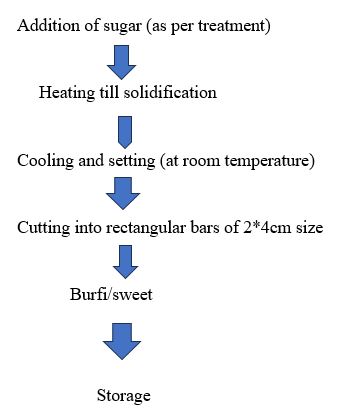
Milk was procured from local market. It was preheated at 35-400C and then filtered with clean muslin cloth. Milk was heated continuously till it appeared semi duff. For control sample 70 g of khoa was added to ghee in pan. It was stirred for continuously for 15 minutes till khoa changed its colour slightly. 30g sugar was added and cooked on low flame till it got mixed uniformly. The process begins with stir frying of bottle gourd shreds in ghee for 10 minutes. The mixture was transferred on tray and set. The mixture was cooled properly and cut into bars of 2*4 cm. Vegetables were cleaned with plain water properly. Skin was removed and then grated. All the grated vegetables were then weighed and different formulations were made to prepare treatments T1, T2, T3, T4, T5, T6, T7, T8, T9, T10, T11, T12, T13 and T14. Sugar was added as per treatments and further heated till solidification. Further mixture was allowed to cool properly and set in trays. Rectangular bars of size 2*4 were cut and stored at room temperature.
Sensory Evaluation
The sensory evaluation of the experimentally developed burfi was conducted. The bottle gourd burfi incorporated with carrot and beetroot along with control sample (khoa burfi) were evaluated and the purpose was to analyse its flavour, body and texture, colour and appearance, and overall acceptability (OA). The samples, coded and presented on white plates, were evaluated by a test panel of 15 panellists from the Department of Warner College of Dairy Technology, SHUATS. Burfi was prepared according to ideal cooking time temperature guidelines during cooking and testing. All the samples were coded properly before sensory evaluation. The panellists rated each sensory attribute using a 9-point hedonic sca [8,9] in which 9- extremely like, 8-like very much, 7- moderately like, 6-slightly like, 5- nor like nor dislike, 4- slightly dislike, 3- moderately dislike, 2- highly dislike, 1- did not like at all.
Statistical Analysis
Data obtained during experimental set up were subjected to statistical analysis up to five replications and reported as means ± SD (standard deviation). One-way ANOVA was carried out to determine Means and Analysis of Variance with the aid of Microsoft Excel Software and the differences between mean value were evaluated at p<0.05 using a 5% level of significance.
Result and Discussion
Sensory Evaluation of Burfi
The sensory evaluation of the bottle gourd burfi incorporated with carrot and beetroot was done based on organoleptic attributes by comparing each sample. Panellists evaluate each sample based on colour, smell, taste, appearance and feel. The mean sensory score of the burfi prepared by incorporating carrot and beetroot such as T0, T1, T2, T3, T4, T5, T6, T7, T8, T9, T10, T11, T12, T13 and T14 for colour, taste, flavour, texture, appearance and overall acceptability are given in Table 1. And graphically represented. ANOVA (Analysis of Variance) was applied for the attributes and the results showed that panelists accepted all the treatment samples with varying degree of acceptability. Results showed increase in overall acceptability with increased incorporation of carrot and beetroot. However incorporation of beetroot more than 20% resulted in decreased overall acceptability. Similar results were reported by Ateteaallah et al [10] The score of colour & appearance, body & texture, flavour & taste as well as the overall acceptability of different treatment combinations of developed sweet with 20, 25 and 30 per cent of carrot and beetroot were compiled in Table 1. The highest sensory evaluation shown for colour and appearance, consistency, flavour and overall acceptability is for T14 with the score 9.00, 9.00, 8.00 and 8.66 respectively.
Taste and Flavour of Burfi
The mean score of taste and flavour, colour and appearance, body and texture as well as overall acceptability of different treatments of experimental developed sweet. The levels of carrot and beetroot in sweet were 20, 25 and 30 percent respectively in all samples. The mean score of all sensory attributes shown in table 1. The mean score of taste and flavour, colour and appearance, body and texture and consistency as well as overall acceptability of control sample was 7.0, 7.50, 6.00 and 6.83 respectively. The highest score obtained by a panel of judges in all sensory attributes in T14 in which (BG: Carrot: BR: Sugar) (30:00:20:25) were 9.50, 9.00, 8.00 and 8.66 respectively.
Colour
As represented in Table 1. The score for colour of all the treatments was higher than control treatment (7.0). Among all the treatments, Treatment T8 (15:00:20:30) and T12 (25:00:20:20) scored highest and has the darkest colour which may be due to the incorporation of higher percentage of beetroot as compared to Bottle Gourd. Similar results were also reported by Bangar et al [11].
Taste
As represented in Table 1. The score for taste was recorded significantly higher in Treatment T14 (9.5) containing 25% Bottle gourd, 0% Carrot,15% Beetroot and 25% Sugar. Treatments containing Beetroot higher than 20% recorded less score for taste probably due to presence of geosmin in it which imparts earthy flavour when beetroot is incorporated directly in food products in higher concentration. Similar results were reported by Bangar et al [11].
Body and Texture
A substantial difference was observed for body and texture of all the treatments in Table 1. due to varied percentage of incorporation of bottle gourd, beetroot and carrot. Results showed higher score for body and texture in other treatments as compared to control sample T0 (6.00). Treatment containing 20% carrot and 15% Bottle gourd scored highest for body and texture. Similar results were reported by Ateateaallah et al [10].
Overall Acceptability
As it is clearly evident from Table 1. The overall acceptability of the Treatment T14 containing 25% Bottle gourd, 00% carrot, 15% beet root and 25% sugar and was found to be maximum (8.66). Results showed increase in overall acceptability with incorporation of carrot and beetroot. However treatments containing beetroot percentage greater than 15% showed lower acceptability whereas increased percentage incorporation of carrot increased overall acceptability when compared with treatments containing carrot. Similar finding were reported by Bangar et al [11].
Conclusion
The study demonstrated that preparing burfi with varying levels of carrot, beetroot and sugar significantly impacts its organoleptic attributes such as taste, flavour, colour, appearance, body, texture, and overall acceptability. Results showed that burfi incorporating carrot and beetroot with bottle gourd showed higher score as compared to control sample T0.. Based on overall acceptability scores, sample T14 was preferred by the panel members. Thus, it can be concluded that beetroot when effectively incorporated into traditional sweet in ratio (30:00:20:25) was found to be most acceptable sample. This fortified burfi may be popular treat for health-conscious customers as well as kids as they are good in taste along with nutritional value.
- Anurag, R Chawla (2016) “Studies on preparation of composite dairy food bottle gourd burfi” Asian J. D and Food res, 35: 196-200.
- Ateateallah AH, Elkarim Abd N, Hassan NA (2019) “Effect of Adding Beetroot juice and Carrot pulps on Rheolodical, Chemical, Nutritional and Organoleptic Properties of Ice cream” J.Food and Dairy Sci., Mansoura Univ, 10: 175-9.
- Bangar P. Sneh, Sharma Nitya, Sanwal Nikita, Lorenzo M Jose, Sahu JK (2022) “Bioactive potential of beetroot (Beta vulgaris)”. Food Research International, 158: 111556.
- Baniwal P, Hathan BS (2015) “Process Parameter Optimisation for the development of Ready To Eat Instant Sand Pear candy using Response Surface Methodology” Journal of Food Processing and Preservation. 39: 3098-109.
- Hoshing et al, (2023) “Effect of different levels of Beet root (Beta vulgaris) on Chemical composition of Burfi prepared from Cow milk. “The Pharma Innovation Journal, 12: 2037-9.
- Lawless HJ, Haymann H (1998) Consumer Field Test and Questionnaire Design. In:Champan H, editor. Sensory Evaluation of Food. New York: CRC press; 480-518.
- Millind P, Kaur S (2011) “Is Bottle Gourd a natural gourd”. International Research Journal of Pharmacy, 2: 13-7.
- Pal et al. (2015) “Development and Quality evaluation of burfi prepared by using bottle gourd (Lagenaria Siceraria) and carrot (Daucus carota L sub sp. Sativus. The Pharma Innovation Journal, 7: 878-83.
- Sharma KD, Karki S, Thakur NS, Attri S (2012) “Chemical composition, functional properties and processing of carrot- a review. J. Food sci Technol. 49: 22-32.
- Shende et al, (2020) “Utilization of bottle gourd shred in preparation of burfi” Journal in Science, Agriculture and engineering.
- Varshney and Mishra (2022) “An analysis of Health Benefits of Carrot”. International Journal of Innovative research in Engg. And Management, 9: 1.
FIGURE 1
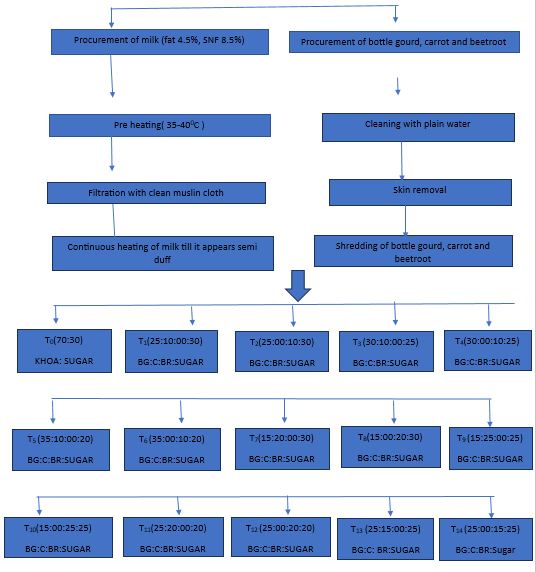
FIGURE 2
Flow chart for Experimental Developed Burfi
FIGURE 3
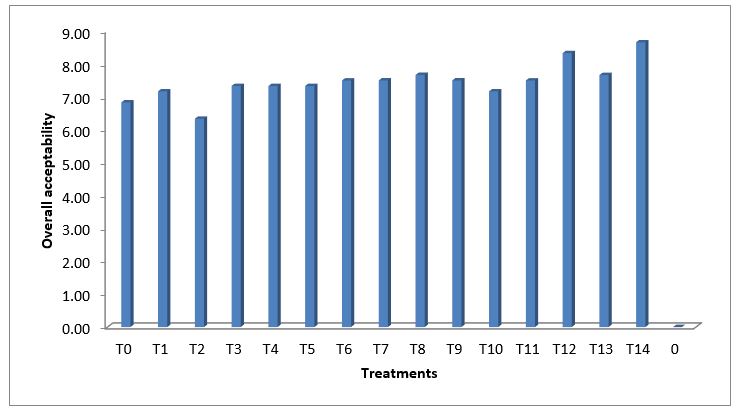
Figure 2
Tables at a glance
Figures at a glance