
Risk Assessment of Acrylamide in Biscuits for Different Age Groups: Application of an Efficient Microextraction Method Based on Diffusion Phase Followed by GC-MS
Received Date: June 17, 2026 Accepted Date: July 05, 2026 Published Date: July 08, 2026
doi:10.17303/jfn.2026.12.202
Citation: Hadie Moghtadaie, Samira Eslamizad, Marzieh Kamankesh, Hassan Yazdanpanah, Farzad Kobarfard, Abdorreza Mohammadi (2026) Risk Assessment of Acrylamide in Biscuits for Different Age Groups: Application of an Efficient Microextraction Method Based on Diffusion Phase Followed by GC-MS. J Food Nutr 12: 1-16
Abstract
Acrylamide is a chemical compound formed in starch-containing food products during high-temperature cooking processes. It poses significant health concerns, including carcinogenesis, mutagenesis, and reproductive toxicity in humans. Biscuits has been known as a favored food product among children and teenagers and are particularly susceptible to acrylamide formation.
This study aims to determine acrylamide in 45 biscuit samples collected from the market in 2022. Furthermore, the carcinogenic and non-carcinogenic risks as well as the Margin of Exposure posed by acrylamide to different age groups of the population have been assessed. The calculations of the Chronic Daily Intake (CDI) demonstrated higher acrylamide intake among children than adults. The THQ values for adults and children fell within safe ranges, although children exhibited higher levels. The greatest ILCR was observed among children aged 3-4 years, while the lowest was found in men aged 25-64 years consuming biscuits contaminated with acrylamide. This sensitive and accurate technique could be used for a comprehensive survey of acrylamide in biscuit samples. This study underscores biscuits as a significant source of acrylamide exposure for the consumer, regardless of age, at an elevated risk of carcinogenesis. Children are at higher risk due to their lower age.
Keywords: Risk Assessment, Acrylamide, Biscuit, Microextraction, Gas Chromatography-Mass Spectrometry, Health
1 Introduction
Food safety has been known as a paramount concern in recent years [50], with a growing focus on identifying and mitigating the presence of toxic substances in various foods. Different thermal processes such as frying, baking and roasting contribute to the formation of compounds like acrylamide, aromatic heterocyclic amines, furans, polycyclic aromatic hydrocarbons, nitrosamines, and acrolein, particularly in carbohydrate- and protein-rich foods [1-4]. Among these, acrylamide has a high capability to form in carbohydrate-rich foods exposed to high temperatures. Bread, biscuits, chips, potatoes, rice, and corn can be considered as these foods [5-8]. The primary mechanism involves the Maillard reaction, wherein the amino acid asparagine reacts with reducing sugars to yield acrylamide [6]. This compound poses health risks as it can be absorbed through various sources, leading to its distribution and metabolism in organs such as the liver, brain, heart, and kidneys [9].
In recent years, there has been a significant interest in developing analytical methods for the quantification of acrylamide at trace levels. Numerous efforts have been made to establish analytical methods for acrylamide determination [10]. The extraction phase, which aims to separate and pre-concentrate compounds from complex sample matrices, is a critical step that can be particularly challenging when dealing with trace amounts [11]. This phase constitutes one of the fundamental steps in sample preparation. Extraction methods can be broadly categorized into two significant classes: classical and microextraction. Classical extraction methods use large volumes of organic solvents, which can be costly and lead to low selectivity. Additionally, concerns about environmental contamination from these methods have been raised as significant ecological issues by environmental enthusiasts [12]. Extensive studies and efforts have been undertaken to explore alternatives with higher sensitivity and improved safety profiles, aiming to replace traditional techniques while reducing the consumption of organic solvents. In pursuit of greener alternatives, innovative extraction methods such as solid-phase extraction (SPE), ultrasound-assisted extraction (UAE), and microwave-assisted extraction (MAE) have emerged [12]. Microextraction techniques have gained significant attention in recent years, offering a distinct advantage with their much-reduced extraction phase volume compared to the sample volume. Microextraction encompasses various techniques, including liquid-phase microextraction (LPME) and solid-phase microextraction (SPME) [12]. These techniques have been characterized by their high recovery, simplicity, minimal solvent consumption, and ease of use [13].
Numerous analytical methods are available for the identification and quantification of acrylamide in food products. Gas Chromatography-Mass Spectrometry (GC-MS) and Liquid Chromatography-Mass Spectrometry (LC-MS) are preferred techniques due to their high sensitivity for acrylamide detection [14]. Today, GC-MS techniques, known for their high sensitivity, are widely employed for acrylamide quantification in food products [15]. Risk assessment is a fundamental step and a crucial tool for managing risk in food safety [16]. Given the carcinogenic and genotoxic effects of acrylamide on one hand and the widespread consumption of biscuits in Iran on the other, the determination of this contaminant in the samples of interest and the assessment of its risk to human health become imperative. Risk assessment is a multifaceted process, involving several stages: hazard identification, risk assessment, exposure assessment, and risk characterization [17]. Therefore, the objective of this study is to determine the level of acrylamide in biscuit samples using Gas Chromatography-Mass Spectrometry (GC-MS) along with a simple, cost-effective, and safe microextraction method. The study aims to determine the acrylamide intake through biscuit consumption in both children and adults in Iran, assess the non-carcinogenic and carcinogenic risks, and also the Margin of Exposure (MOE) associated with acrylamide exposure through biscuit consumption by both children and adults.
2 Materials and Methods
2.1 Chemicals and reagents
Acrylamide, Acetamide, Ethanol, Methanol, Acetone, Tetrachloroethylene, Dipotassium Phosphate, Hydrochloric Acid, Potassium Hydroxide, and Zinc Acetate were all procured from Merck, Germany. Additionally, Potassium Hexacyanoferrate was obtained from Panreac, Spain, and Xanthydrol from Sigma Aldrich, USA. Acetic Acid was sourced from Duksan, South Korea.
2.2 Standard and reagents
A standard solution of acrylamide was prepared at a concentration of 10 μg/mL in methanol. For the Preparation of 2 mol/L Potassium Hydroxide (KOH) Solution, 11.22 grams of KOH were accurately weighed and dissolved in a 100-milliliter volumetric flask. This high concentration of KOH solution plays a crucial role in sample preparation, particularly in pH adjustments and saponification processes. For preparing KOH/Ethanol (80:20) Solution, 5.61 grams of KOH were weighed and dissolved in a 100-milliliter volumetric flask. From this solution, 20 milliliters were taken and replaced with 20 milliliters of ethanol to achieve an 80:20 ratio of KOH to ethanol. This solution is pivotal for sample extraction and purification processes, offering a balanced environment for analyte stability. For the preparation of 2 mol/L Potassium Hydrogen Phosphate (K2HPO4) Solution, 34.836 grams of K2HPO4 were weighed and dissolved in a 100-milliliter volumetric flask. Potassium hydrogen phosphate is commonly used in buffer solutions to adjust pH during analytical procedures. For preparation of 1 mol/L Hydrochloric Acid (HCl) Solution, 9.86 milliliters of 37% hydrochloric acid were added to a 100-milliliter volumetric flask and diluted to volume. This solution has been used for pH adjustment and ensuring optimal conditions for subsequent analytical steps. For the preparation of Xanthydrol Solution, 0.05 grams of xanthydrol were added to 6 milliliters of ethanol. The solution was then refrigerated for storage. Xanthydrol has been applied as a derivatization reagent in analytical chemistry, particularly for enhancing the detection of specific analytes. For the preparation of Carrez I solution, 10.6 grams of potassium hexacyanoferrate were dissolved in 100 milliliters of distilled water. For the preparation of Carrez II solution, 21.9 grams of zinc acetate were mixed with 3 milliliters of acetic acid in a 100-milliliter volumetric flask and diluted with distilled water. Carrez solutions are essential for sample clarification, effectively precipitating and removing interfering substances such as carbohydrates and soluble proteins.
2.3 Sample collection
Forty-five biscuit samples were gathered from all distinct of supermarkets and retail stores in Tehran, Iran, randomly in the year 2021. The samples were one of the most popular Persian Biscuits, with varying batch numbers or production and expiration dates spanning over a year. The ingredients of the samples were wheat flour, sugar, pastry fat, wheat germ, salt, pasteurized eggs, skim milk powder, ammonium bicarbonate, sodium bicarbonate, inverted syrup, malt extract, identical vanilla flavor, and water. The samples were thoroughly blended and homogenized in the laboratory at 22 ◦C and were stored in glass bottles (amber) with Teflon caps at - 20 ◦C.
2.4 Sample preparation
Homogenized biscuit samples were prepared using the microextraction method and the presence of acrylamide was determined with gas chromatography-mass spectrometry (GC-MS). Initially, 70 g of biscuit was carefully ground and homogenized. From the ground biscuit sample, 1 gram was taken and placed in a 50-milliliter Falcon tube. Deionized water was added to the sample until it transformed into a watery consistency. The mixture was shaken for 1 minute, and then a 10-milliliter solution of potassium hydroxide in ethanol (80/20) was added. It was shaken again for 1 minute. The sample was subjected to centrifugation at 9000 rpm for 5 minutes. The upper layer was separated and transferred to another Falcon tube. A 1 M Hydrochloric acid (HCl) solution was added to the upper layer to adjust the pH to 3. Carrez solutions 1 and 2 were added to the solution, followed by another minute of shaking. Zanthoxylol and HCl (1 mol/L) were introduced and shaken for 1 minute. The solution was then left in the dark for 30 minutes. After 30 minutes, potassium hydrogen phosphate (K2HPO4) 2 mol/L and potassium hydroxide (KOH) 2 mol/L were added to the solution to achieve a pH of 6.5. The solution underwent centrifugation at 9000 rpm for 5 minutes, and the upper phase was transferred to a 15-milliliter Falcon tube. 400 µL Ethanol (EtOH) and 80 µL tetrachloroethylene (C2Cl4) were added to the upper phase. After another round of centrifugation, the upper phase was extracted using a sampler.
2.5 Instrumentation
GC-MS Analysis: One μL of the extraction phase was injected into the GC-MS. To quantify the levels of acrylamide, a gas chromatography-mass spectrometry (GC-MS) system, specifically the Agilent Technologies 780A GC system/5975 inert MSD, was employed. The system was equipped with an HP-5 Phenylmethylsiloxane capillary column (5%) and a methylpolysiloxane stationary phase (95%) with dimensions of 30 meters in length, 0.25 millimeters in inner diameter, and a 0.25-micrometer film thickness. Helium gas with a purity of 99.999% was used as the carrier gas. The temperature program for the oven was initiated at 100oC for 1 minute, followed by an increase of 15 oC/min until reaching 290oC, with a 5-minute hold at this temperature. A split-less injection with a split ratio of 1:50 and a carrier gas flow rate of 0.8 milliliters per minute was maintained throughout the experiments. The injector temperature was set to 290 oC, and the auxiliary temperature was set to 280 oC. Acrylamide identification was carried out using mass spectrometry (MS) in the selected ion monitoring (SIM) mode. Monitoring ions at mass-to-charge ratios (M/Z) 207 and 234 were used for acrylamide identification. A volume of 1 μL of the final extraction solution was injected into the GC-MS system. The retention time for acrylamide was determined to be 12.3 minutes. This analytical approach allowed for precise quantification and identification of acrylamide levels in the samples, enabling accurate assessment of its presence in the biscuit samples.
Optimization of Mass Spectrometry Conditions for Acrylamide Identification and Quantification: Using the Full Scan Method: In this phase, following the identification of all ions generated from acrylamide, the ion with the highest abundance for each compound was selected as the parent ion.
Selected Ion Monitoring (SIM): After identifying the parent ions, these ions were monitored using the SIM mode. Since only the parent ion was monitored in this mode, the sensitivity and selectivity of the method were enhanced. The mass-to-charge (M/Z) ratio for the determined ion is 207, and the confirmation ion is 234.
2.6 Validation and statistical analysis
To establish the linearity of the method, standard acrylamide solutions at concentrations of 0.001, 0.02, 0.1, 2, 5, 50, and 250 ng/mL were prepared. The DLLME process was optimized using these standard solutions with tetrachloroethylene (extraction solvent) and ethanol (dispersive solvent). The calibration curve was constructed by injecting these solutions into the GC-MS instrument, and the area under the acrylamide peak was calculated. Subsequently, the coefficient of determination (R²) was determined using the calibration curve. To assess the precision of the method, six consecutive injections were performed under optimal conditions. To calculate the recovery percentage, two consecutive injections were carried out using spiked samples containing 1 and 50 μg/g of standard acrylamide. The method's precision was expressed as relative standard deviation (% RSD). The limit of detection (LOD) is defined as the concentration at which an analyte can be detected but not necessarily quantified. In this study, the LOD was determined using the equation LOD = 3.33 × (S / m), where S represents the standard deviation for each peak in chromatography, and m is equivalent to one-fifth of the difference between the upper and lower limits of the noise around the peak of interest. Additionally, the limit of quantification (LOQ), which is the lowest concentration of the analyte that can be accurately and precisely quantified by the analytical method, was calculated.
2.7 Health risk assessment
2.7.1 Non-carcinogenic risk assessment
Two determinants of chronic daily intake (CDI) are the acrylamide concentration in food and daily food consumption. Additionally, body weight was taken into account in CDI calculations. CDI was calculated separately for adults and children using the following formula (Faraji et al. 2024):
CDI = C × IRi × EDi × EFi / (BW × AT)
Where:
CDI: Chronic daily intake (mg/kg/day)
C: Acrylamide concentration in biscuits (mg/g)
IRi: Consumption rate. Since there is no available data for biscuit consumption by each category in Iran, we assumed biscuit consumption of 2 grams/person/day in all categories according to the national report of the National Nutrition and Food Technology Research Institute of Iran [18].
EDi: Duration of exposure (70 years for adults and 6 years for children) [19], and for each category: 3.5 years for boys and girls aged 3-4 years, 6 years for boys and girls aged 5-9 years, 7 years for men and women 10-14 and 15-19 years, 16 years for women 20-24 and >25 years [20].
EFi: Number of exposure days (365 days/year)
BW: Body weight of consumers (considered 70 kg for adults and 15 kg for children); for each of the seven age and gender groups in the Iranian population, the body weight of consumers was determined based on data provided by Azizi and coworkers [21].
Target Hazard Quotient (THQ) was used for assessing the potential of non-carcinogenic risk. THQ less than 1 indicates that potential non-carcinogenic risk is unlikely to be significant, while THQ greater than 1 suggests a notable risk to the population [22].
2.7.2 Estimating carcinogenic risk
Carcinogenic risk to consumers exposed to acrylamide through biscuit consumption was assessed using the Incremental Lifetime Cancer Risk (ILCR). ILCR was calculated using the following equation [23]:
ILCR = CDI × CSF
Where:
ILCR: Incremental Lifetime Cancer Risk
CDI: Chronic daily intake (mg/kg/day)
CSF: Cancer slope factor (0.5 mg/kg/day for acrylamide [23]
ILCR less than 1 × 10⁻⁵ indicates that the cancer risk is unlikely to be significant over the individual's lifetime [23].
2.7.3 Margin of exposure (MOE)
Based on EFSA guidelines, the risk assessment of genotoxic carcinogens in food, such as acrylamide, is described under the MOE approach [24]. Chronic exposure to acrylamide was assessed using the MOE equation [25]:
MOE = BMDL10 / DI
Where:
MOE: Margin of Exposure
BMDL10: Benchmark Dose Lower Confidence Limit for a 10% response
DI: Daily intake of acrylamide (mg/kg/day)
The BMDL10, which is typically set 5 - 10% above the no observed adverse effect level (NOAEL), was determined for acrylamide. In this case, the BMDL10 was 0.43 mg/kg BW/day and 0.17 mg/kg BW/day based on evidence of axonal degeneration in the peripheral nerves of male rats and adenocarcinomas in the harderian glands. An MOE greater than 10,000 indicates that the risk is unlikely to be significant over the individual's lifetime [24].
3 Results
3.1 Method validation
3.1.1 Validation of sample preparation method
The limit of quantification (LOQ) was 2.33 ng/mL, and the limit of detection (LOD) was 0.7 ng/mL. The recovery of the extraction (RR) was calculated by comparing the amount of added analyte to the sample with an acrylamide concentration. The recovery rate was 97.06%. Reproducibility of the method (RSD) was determined by analyzing sample No. 24, and the obtained value was 9.8%. The extraction efficiency (EF), calculated by comparing the final analyte concentration in the extraction phase with the sample concentration, was found to be 112.
3.1.2 Assessment of linearity in the aqueous matrix
The results demonstrated the linearity of the calibration curve drawn with acrylamide standards at concentrations of 10, 100, 500, 1000, and 10000 ng/mL. The equation of the linear curve was Y = 895.68X + 7426.50, with a coefficient of determination R² = 0.9999.
After designing the analytical method and achieving an appropriate chromatography and mass spectrometry, method validation was performed, focusing on specificity, linearity, limit of detection, and limit of quantification.
3.1.3 Determination of limit of detection (LOD) and limit of quantification (LOQ)
Usually, a concentration of a sample that generates three times the standard deviation of the blank sample is defined as the limit of detection (LOD). In other words, it's the lowest concentration that the instrument can detect. The LOD and LOQ for acrylamide analysis in biscuit samples were determined to be 0.70 ppb and 2.33 ppb, respectively.
3.1.4 Calculation of accuracy and recovery percentage
To calculate the accuracy and recovery percentage, biscuit samples spiked with acrylamide at levels of 1 and 50 µg/g were prepared and injected into the instrument. The method's precision was evaluated using the relative standard deviation (RSD%), which was 87.9. Furthermore, the calculated recovery percentage was 97.06%.
3.2 Identification and quantification of acrylamide in biscuit samples
In all experimental runs, a control sample was included, which involved the analysis of a biscuit sample spiked with acrylamide alongside the actual biscuit samples. The value of 0.35 µg/kg was selected as the limit of detection (LOD/2). The Global Environmental Monitoring System recommended using LOD/2 as an alternative for statistical imputation when the ratio of non-quantifiable or unidentified results was less than 60% [26].
These results provide insights into the acrylamide content in the biscuit samples collected in Tehran in 2022 and serve as a basis for assessing potential risks associated with acrylamide intake through biscuit consumption. The average contamination level among the 45 tested biscuit samples was 1264 µg/kg with a standard deviation of 1469 µg/kg. Furthermore, the 90th percentile (percentile 90th) and the 97.5th percentile (percentile 97.5th) were determined to be 3728 µg/kg and 4315 µg/kg, respectively (Table 1). The results indicate that 60% of the samples exceeded the benchmark level for acrylamide contamination in biscuits.
The investigation of contaminated samples with acrylamide was carried out. As shown in Table 2, 12 out of 45 samples, acrylamide residues were detected in levels higher than 2.33 μg/kg (LOQ). Also, the results indicate that acrylamide levels in 73.33% of the samples were above the LOD. The examination of the number of acrylamide-contaminated samples revealed that out of the 45 tested samples, 27 of them had benchmark levels higher than 150 μg/kg, and the remaining 18 samples had benchmark levels lower than 150 μg/kg.
3.3 Risk assessment
3.3.1 Non-carcinogenic risk
The calculated CDI and THQ for acrylamide through the consumption of tested biscuits for the Tehran population are presented in Table 3. The calculated CDI for acrylamide in the tested biscuits for adults was lower than that for children, indicating lower risks for adults. The calculated CDI for acrylamide in the tested biscuits decreases as follows for different ages and gender groups: Men 25-64 years > Men 20-24 years > Men over 64 years > Women 25-64 years > Women over 64 years > Men 15-19 years > Women 20-24 years > Women 15-19 years > Women 10-14 years > Men 10-14 years > Girls 5-9 years > Boys 5-9 years > Boys 3-4 years > Girls 3-4 years.
THQ is a valuable parameter for assessing the risks associated with the consumption of contaminated products with acrylamide. The THQ assessment for acrylamide risk in the Tehran population through the consumption of biscuits is presented in Table 3. The THQ levels of both adults and children fall within the acceptable range, even though adults' THQ levels are lower than children's. The THQ level varies based on gender and age as follows: Girls 3-4 years > Boys 3-4 years > Boys 5-9 years > Girls 5-9 years > Men 10-14 years > Women 10-14 years > Women 15-19 years > Women 20-24 years > Men 15-19 years > Women over 64 years > Women 25-64 years > Men over 64 years > Men 20-24 years > Men 25-64 years. THQ is considered safe in all tested cases.
3.3.2 Cancer risk estimation
The acceptable lifetime risk established by USEPA is 1 × 10⁻⁵, meaning a cancer risk of 1 in 100,000 for exposed populations [49]. Table 4 displays the acrylamide ILCR assessment for adults and children in Tehran based on biscuit consumption. As shown in Table 4, the ILCR for adults is 1.81 × 10⁻⁵, and for children, it is 8.43 × 10⁻⁵. The ILCR in children is 8 times higher than in adults. The ILCR decreases based on age and gender as follows: Girls 3-4 years > Boys 3-4 years > Boys 5-9 years > Girls 5-9 years > Men 10-14 years > Women 10-14 years > Women 15-19 years > Women 20-24 years > Men 15-19 years > Women over 64 years > Women 25-64 years > Men over 64 years > Men 20-24 years > Men 25-64 years. Additionally, the highest ILCR and cancer risk were observed in children, and the lowest ILCR and cancer risk were seen in men aged 25-64 years consuming acrylamide-contaminated biscuits.
3.3.3 MOE estimation
Evaluating the increased risk of carcinogenic or neurotoxic effects caused by acrylamide can be done by assessing the MOE [27]. Table 4 shows the calculated MOE for non-neoplastic and neoplastic effects of acrylamide. Based on BMDL10 from animal studies and taking into account complete uncertainty in the interpretation of both genotoxic and carcinogenic effects, the EFSA scientific committee states that an MOE of 10,000 or higher is not concerning from the perspective of public health. It means that MOE exceeding 10,000 is considered safe and non-neoplastic [28]. As shown in Table 4, the calculated MOE (0.17) for non-neoplastic effects of acrylamide in adults and children in Tehran due to biscuit consumption is less than 10,000, indicating a high risk of exposure to acrylamide through biscuit consumption in population of Tehran. Furthermore, the calculated MOE (0.43) for non-neoplastic effects of acrylamide in adults and children in the Tehran population through biscuit consumption is both higher and lower than 10,000, that indicating a high risk in children exposed to acrylamide through biscuit consumption. Calculated MOE (0.43) for non-neoplastic effects of acrylamide in boys and girls aged 3-4 years, boys and girls 5-9 years, men and women 10-14 years, and women 15-19 years through biscuit consumption is also less than 10,000, showing a high risk in these groups due to exposure to acrylamide through biscuit consumption. Calculated MOE (0.43) for non-neoplastic effects of acrylamide in men 15-19 years old, men and women 24-20 years old, men and women 25-64 years old, and men and women over 64 years old through biscuit consumption is higher than 10,000, indicating no risk in terms of non-neoplastic effects.
4 Discussion
4.1 Method validation
Analysis of acrylamide in food matrices has several challenges due to its low molecular weight, high reactivity, and the absence of chromophores [29]. Therefore, the use of suitable extraction and purification methods is crucial for the accurate and precise determination of acrylamide in various food matrices. Different instrumental methods based on chromatography and mass spectrometry principles, including liquid chromatography (LC), gas chromatography (GC), and liquid chromatography-tandem mass spectrometry (LC-MS/MS) have been employed for acrylamide analysis in food products. However, gas chromatography-mass spectrometry (GC-MS) remains the primary method for determining acrylamide levels in food [30].
For acrylamide analysis, GC-MS is a dependable option due to its high accuracy, sensitivity, stability, and excellent repeatability [31]. Accurate results and the ability to determine the amount of acrylamide in these food products were made possible by the use of GC-MS in this study to separate and identify the acrylamide in biscuit samples.
In addition to enhancing the sensitivity and efficiency of analysis, the extraction process for the acrylamide removal from carbohydrate-rich samples is essential. In this research, tetrachloroethylene was used as the extraction solvent, and ethanol was employed as the dispersant solvent for microextraction. The extraction solvent containing the target analyte was collected at the bottom of the Falcon tube. In the final step, 1 μL of the lower phase was injected into the GC-MS.
Elahi et al. demonstrated that among the tested dispersant solvents, ethanol provided the best performance for microextraction, exhibiting a higher response and better extraction efficiency compared to other solvents, with an extraction efficiency of 92% [12]. Therefore, ethanol was selected as the dispersant solvent. Additionally, tetrachloroethylene was chosen as the extraction solvent due to its high response for target analyte extraction compared to other solvents.
To increase sensitivity, enhance recovery, and improve method repeatability, an initial cleanup and subsequent alkaline cleanup were implemented. Moreover, for concentration and increased sensitivity, the analyte was transferred from the solid phase to the aqueous phase using microextraction. These steps illustrate the benefits of the employed method. Table 5 shows a comparison of various analytical methods used for the determination of acrylamide in biscuits, potato products, bakery products, coffee, bread, Chinese doughnuts, breakfast cereals, and milk-based baby foods.
According to the official European Union Journal No. 317 in 2019, the acceptable limit of quantification (LOQ) for food items with acrylamide benchmark levels exceeding 125 μg/kg is less than or equal to 50 μg/kg [32]. As shown in Table 5, LOD and LOQ of this method were the lowest compared with other methods, which indicates the sensitivity of the technique. The majority of studies agree with other parameters like R2, Recovery, RSD, and the use of a spiked calibration curve to overcome matrix effects.
3.2 Identification and quantification of acrylamide in biscuit samples
The presence of acrylamide in heat-treated foods has been considered a significant concern related to food items by international experts since 2002. This concern arises from the classification of acrylamide as a probable human carcinogen (Group 2A) by the International Agency for Research on Cancer (IARC) in 1994. To aid in monitoring and regulating its levels in food matrices by manufacturers and specialists, having a simple, accessible, and reliable method for monitoring acrylamide concentrations in heat-processed foods is crucial.
Biscuits, as a primary food source, are often consumed by infants and young children, making them a significant product that requires precise control. The recommended benchmark levels for acrylamide in biscuits, according to the European Food Safety Authority (EFSA), are 350 μg/kg for general consumption and 150 μg/kg for infants and young children [33].
The results of the study conducted by Esposito and colleagues indicate that the acrylamide concentration in children's food (30-1560 μg/kg) exceeds the benchmark levels set by Regulation (EU) 2017/2158, which are 40 and 150 μg/kg for children's food and biscuits, respectively [34].
In Turkey, various researchers have determined acrylamide levels in infant biscuits ranging from 149 to 1075 μg/kg, while the European Commission (EC 2017/2158) has set a benchmark value of 150 μg/kg for infant biscuits consumed by infants and young children [35]. It has been shown that acrylamide naturally forms during the baking process in buckwheat biscuits, reaching levels of approximately 3,2142 μg/kg. This amount of acrylamide in quinoa biscuits is nearly twice as high as reported. Acrylamide levels in bakery products (1044 μg/kg) have also been reported to be several times higher than the benchmark levels recommended by European Commission regulations for biscuits (350 μg/kg) [36]. In another research study conducted by Mousavi Khaneghah and colleagues, the results showed that the acrylamide content in biscuits was 111.42 μg/kg, which is below the permissible limit [37]. Additionally, Ne'matollahi and colleagues reported that the acrylamide level in 19 biscuit samples collected from Tehran was 200.67 ng/g [38]. In the present study, the average exposure to acrylamide in 45 biscuit samples collected from the city of Tehran was 1264.63 μg/kg. In studies conducted by Kafouris in 2018 using UPLC-MS/MS, the determined acrylamide content in biscuits was approximately 32 μg/kg, with a detection limit of 10 μg/kg and a recovery rate of 93-99% [39]. In a study by Başaran in 2022 using LC-MS/MS, the reported recovery rate and accuracy were 2.98-3.95% and less than 7%, respectively. Passos conducted a study in 2021 using HS-SPME/GC-MS, reporting an acrylamide determination limit of 32 μg/kg and a detection limit of 10 μg/kg, with an accuracy of less than 9% and a recovery rate of 93-99%.
In a study by Arabi in 2016, acrylamide was determined in biscuits and the level of acrylamide was reported as 40 μg/kg. The detection limit was reported 16 μg/kg, and the recovery rate ranged from 83.7% to 99.6%. Cleanup was performed using MSPD [40].
Fernandes conducted a study in 2019, reporting an acrylamide determination in biscuits was 11.8 μg/kg. A detection limit of 3.55 μg/kg, and a retention time of 6.22 were achieved. Cleanup was performed using HLB SPE cartridges [41]. In a study by Gündüz in 2017, the acrylamide determination in biscuits was reported as 24.88 μg/kg and following the detection limit as 7.46 μg/kg and the recovery rate as 83% [42]. Mihai conducted a study in 2020, reporting an acrylamide determination limit in biscuits of 3.70 μg/kg, a detection limit of 1.23 μg/kg, and a retention time of 10.51. Cleanup was done using a florisil column, and the recovery rate was reported as 97-105% [43]. In a study conducted by Haouet in 2016, the acrylamide determination limit in biscuits was reported as 60 μg/kg, the detection limit as 20 μg/kg, and the retention time as 12.3, with a recovery rate of 96-97% [44]. Figure 1 shows a comparison of the levels of acrylamide in different types of biscuits with some previous studies.
4.3 Risk assessment
The results of our study indicate that the Incremental Lifetime Cancer Risk (ILCR) for acrylamide in both adults and children, across all age groups and genders, from biscuit consumption, exceeds the threshold of 1 × 10⁻⁵. Thus, both adults and children from all age groups are at high risk of exposure. Also, the highest ILCR values were observed in children, exceeding the threshold of 1 × 10⁻⁵, while the lowest ILCR values were found in males 25-64 years old. Consequently, children face the highest cancer risk, and men aged 25-64 years old have the lowest cancer risk among the tested samples. Given that acrylamide is a genotoxic compound, the Margin of Exposure (MOE) has been used to assess its risk. MOE is defined as the benchmark dose divided by the exposure dose. In all cases, the MOE for dietary acrylamide in different elderly populations across various regions worldwide is below 10,000, and in some cases, it drops to less than 200, indicating that dietary acrylamide exposure may be considered a public health concern. The lowest MOE value (0.17) was reported in children (1008.2), and the highest MOE value (5059.80) was found in males 25-64 years old, both of which were below the 10,000 thresholds, indicating high risk in these groups. Based on this relatively low MOE, several studies have established a link between acrylamide exposure and human cancer. However, the majority of studies do not show a clear association between dietary acrylamide intake and an increased risk of cancer in humans [45].
Esposito et al.'s study, using MOE-based risk assessment, showed that five out of six consumer groups had high acrylamide exposure levels linked to an increased risk of cancer [46]. Most studies did not report statistically significant correlations between dietary acrylamide intake and various cancers, although some studies have suggested a potential increase in the risk of kidney, endometrial, and ovarian cancers [47].
Nematollahi et al.'s study, which assessed the risk of acrylamide in food products collected from the Tehran market, indicated that the ILCR for all age groups exceeded 10⁻⁴, signifying a serious risk for the population. Furthermore, MOE values based on carcinogenicity raised health concerns for all age groups, with values greater than 10,000. For non-carcinogenic risk, the Target Hazard Quotient (THQ) was below 1, and the MOE based on neurotoxicity was higher than 125 (the safety threshold), indicating minimal risk across all age groups except for a small subset of children and adolescents. Despite the low acrylamide content (157 μg/kg), their study demonstrated the highest contribution to acrylamide exposure in all age groups due to high consumption levels [38].
Eslamizad et al.'s study, which assessed the health risks of acrylamide in bread in Iran using LC-MS/MS, showed that the calculated ILCR for acrylamide in bread for both adults and children exceeded the acceptable lifetime cancer risk established by the USEPA (1 × 10⁻⁵). According to this study, bread is the primary source of acrylamide intake for the Iranian population, and all consumers, regardless of age, could be at a high cancer risk [17].
Seilani et al. analyzed and assessed the potential health risks of acrylamide levels in commercial nugget samples available in Iran. Monte Carlo simulations (MCS) showed that the trend of non-carcinogenic risk, based on THQ, for children followed the pattern of chicken nuggets < meat nuggets < shrimp nuggets, while for adults, the same pattern was observed. The health risk of acrylamide for adults and children was significantly lower than the safe risk threshold (HQ>1 and CR > 1E-4) for the Iranian population [48].
The assessment of risk for carcinogenic effects in this study highlighted health concerns across most age groups, with an ILCR value greater than 1 × 10⁻⁵.
Conclusion
In this study, a sensitive method was developed for acrylamide determination in biscuit samples. The results indicated that the collected biscuit samples contain acrylamide, and biscuits can serve as a potential source of acrylamide exposure among the population in Tehran. Although all calculated THQ values are greater than 1, indicating controlled risk, exposure to acrylamide through biscuit consumption and other food sources susceptible to contamination may result in values exceeding 1, potentially posing adverse health effects. The calculated results showed that the ILCR of acrylamide for adults and children through biscuit consumption exceeds the permissible cancer risk level determined by USEPA (1 × 10⁻⁵), and individuals of all age groups are exposed to elevated cancer risk due to acrylamide intake from contaminated biscuits. Additionally, the MOE values indicate health concerns in most age groups, with values below 10,000. All things considered, these findings demonstrated that, given the health issues associated with acrylamide exposure through biscuit consumption, further research on this food and different types of food is necessary to reduce the impact of acrylamide on human health.
Acknowledgments
We thank the Food Safety Research Center, School of Pharmacy, and Department of Food Science and Technology, Faculty of Nutrition Science, Food Science and Technology/National Nutrition and Food Technology Research Institute, Shahid Beheshti University of Medical Sciences, Tehran, Iran.
Ethics Statement
The authors have nothing to report. This study does not involve any human or animal testing. All authors agree to publish.
Data Availability Statement
Data will be made available on request.
Conflicts of Interest
All authors have no competing interests to declare.
Funding Statement
The authors received no specific funding for this work.
- Eslamizad S, Kobarfard F, Javidnia K, Sadeghi R, Bayat M, et al. (2016) Determination of Benzo[a]pyrene in Traditional, Industrial, and Semi-industrial Breads Using a Modified QuEChERS Extraction, Dispersive SPE and GC-MS and Estimation of its Dietary Intake. Iran J Pharm Res. 15: e125074.
- Norouzi E, Kamankesh M, Mohammadi A, Attaran A (2018) Acrylamide in bread samples: Determining using ultrasonic-assisted extraction and microextraction method followed by gas chromatography-mass spectrometry. Journal of Cereal Science. 79: 1-5.
- Chen Y, Wu Y, Fu J, Fan Q (2020) Comparison of different rice flour- and wheat flour-based butter cookies for acrylamide formation. Journal of Cereal Science. 95: 103086.
- Yazdanpanah H, Kobarfard F, Tsitsimpikou C, Eslamizad S, Alehashem M, Tsatsakis A (2022) Health risk assessment of process-related contaminants in bread. Food Chem Toxicol. 170: 113482.
- Claus A, Carle R, Schieber A (2008) Acrylamide in cereal products: A review. Journal of Cereal Science. 47: 118-133.
- Curtis TY, Postles J, Halford NG (2014) Reducing the potential for processing contaminant formation in cereal products. Journal of Cereal Science. 59: 382-392.
- Nematollahi A, Kamankesh M, Hosseini H, Ghasemi J, Hosseini-Esfahani F, et al. (2019) Investigation and determination of acrylamide in the main group of cereal products using advanced microextraction method coupled with gas chromatography-mass spectrometry. Journal of Cereal Science. 87: 157-164.
- Eslamizad S, Kobarfard F, Tabib K, Yazdanpanah H, Salamzadeh J (2020) Development of a Sensitive and Rapid Method for Determination of Acrylamide in Bread by LC-MS/MS and Analysis of Real Samples in Iran IR. Iran J Pharm Res. 19: 413-423.
- Wongthanyakram J, Kheamphet P, Masawat P (2020) Fluorescence Determination of Acrylamide in Snack, Seasoning, and Refreshment Food Samples with an iOS Gadget–Based Digital Imaging Colorimeter. Food Analytical Methods. 13: 1-11.
- Azari A, Shokrzadeh M, Zamani E, Amani N, Shaki F (2019) Cerium oxide nanoparticles protects against acrylamide induced toxicity in HepG2 cells through modulation of oxidative stress. Drug Chem Toxicol. 42: 54-59.
- Tölgyesi Á, Sharma VK (2020) Determination of acrylamide in gingerbread and other food samples by HILIC-MS/MS: A dilute-and-shoot method. J Chromatogr B Analyt Technol Biomed Life Sci. 1136: 121933.
- Elahi M, Kamankesh M, Mohammadi A, Jazaeri S (2019) Acrylamide in Cookie Samples: Analysis Using an Efficient Co-Derivatization Coupled with Sensitive Microextraction Method Followed by Gas Chromatography-Mass Spectrometry. Food Analytical Methods. 12: 1439-1447.
- Liu H, Dasgupta PK (1996) Analytical chemistry in a drop. Solvent extraction in a microdrop. Anal Chem. 68: 1817-1821.
- Shakeri F, Shakeri S, Ghasemi S, Troise AD, Fiore A (2019a) Effects of Formulation and Baking Process on Acrylamide Formation in Kolompeh, a Traditional Cookie in Iran. Journal of Chemistry. 2019: 1425098.
- Shakeri F, Shakeri S, Ghasemi S, Troise AD, Fiore A (2019b) Effects of Formulation and Baking Process on Acrylamide Formation in Kolompeh, a Traditional Cookie in Iran. Journal of Chemistry. 2019: 1425098.
- Eslamizad S, Yazdanpanah H, Hadian Z, Tsitsimpikou C, Goumenou M, et al. (2021) Exposure to multiple mycotoxins in domestic and imported rice commercially traded in Tehran and possible risk to public health. Toxicol Rep. 8: 1856-1864.
- Eslamizad S, Kobarfard F, Tsitsimpikou C, Tsatsakis A, Tabib K, et al. (2019) Health risk assessment of acrylamide in bread in Iran using LC-MS/MS. Food Chem Toxicol. 126: 162-168.
- National Nutrition, Food Technology Research Institute (2004) Comprehensive Study of Food Basket Pattern, and Nutrition Status in Iran during 2000-2002. Shahid Beheshti University of Medical Sciences, Tehran.
- Eslamizad S, Alehashem M (2025) Metal contaminants in rice imported to Iran: A comprehensive assessment of carcinogenic and non-carcinogenic health risks. Journal of Trace Elements in Medicine and Biology. 87:127568.
- Bacigalupo C, Hale B (2012) Human Health Risks of Pb and As Exposure via Consumption of Home Garden Vegetables and Incidental Soil and Dust Ingestion: A Probabilistic Screening Tool. Science of the Total Environment. 423:27-38.
- Azizi F, Rahmani M, Emami H, Mirmiran P, Hajipour R, et al. (2002) Cardiovascular risk factors in an Iranian urban population: Tehran lipid and glucose study (phase 1). Sozial-Präventivmed. 47: 408-426.
- Antoine JMR, Fung LAH, Grant CN (2017) Assessment of the potential health risks associated with the aluminium, arsenic, cadmium and lead content in selected fruits and vegetables grown in Jamaica. Toxicol Rep. 4: 181-187.
- Faraji F, Shahidi S-A, Shariatifar N, Ahmadi M (2024) Evaluation of acrylamide concentration in commercial falafel available in Tehran City by different cooking methods: A health risk assessment study. Food Chemistry: X. 23: 101750.
- Hooshfar S, Khosrokhavar R, Yazdanpanah H, Eslamizad S, Kobarfard F, et al. (2020) Health risk assessment of aflatoxin M1 in infant formula milk in IR Iran. Food Chem Toxicol. 142: 111455.
- Mihalache OA, Dall’Asta C (2024) The burden of disease due to dietary exposure to acrylamide in Italy: A risk assessment-based approach. Food and Chemical Toxicology. 188: 114699.
- Khezerolou A, Alizadeh-Sani M, Zolfaghari Firouzsalari N, Ehsani A (2018) Formation, Properties, and Reduction Methods of Acrylamide in Foods: A Review Study. Journal of Nutrition, Fasting and Health. 6: 52-59.
- Esposito F, Velotto S, Rea T, Stasi T, Cirillo T (2020) Occurrence of Acrylamide in Italian Baked Products and Dietary Exposure Assessment. Molecules. 25.
- Committee ES (2012) Statement on the applicability of the Margin of Exposure approach for the safety assessment of impurities which are both genotoxic and carcinogenic in substances added to food/feed. EFSA Journal. 10: 2578.
- Riediker S, Stadler RH (2003) Analysis of acrylamide in food by isotope-dilution liquid chromatography coupled with electrospray ionization tandem mass spectrometry. Journal of Chromatography A. 1020: 121-130.
- Hu Q, Xu X, Fu Y, Li Y (2015) Rapid methods for detecting acrylamide in thermally processed foods: A review. Food Control. 56:135-146.31. Pan M, Liu K, Yang J, Hong L, Xie X, Wang S (2020) Review of Research into the Determination of Acrylamide in Foods. Foods. 9.
- Lineback DR, Coughlin JR, Stadler RH (2012) Acrylamide in foods: a review of the science and future considerations. Annu Rev Food Sci Technol. 3: 15-35.
- Passos CP, Petronilho S, Serodio AF, Neto ACM, Torres D, et al. (2021) HS-SPME Gas Chromatography Approach for Underivatized Acrylamide Determination in Biscuits. Foods. 10.
- Esposito F, Nolasco A, Caracciolo F, Velotto S, Montuori P, et al. (2021) Acrylamide in Baby Foods: A Probabilistic Exposure Assessment. Foods. 10.
- Başaran B, Aydin F (2021) Determination of Acrylamide Levels in Infant Formulas and Baby Biscuits Sold in Turkey. Letters in Applied NanoBioScience. 11: 3155-3165.
- Mousa RMA (2022) Inhibition of acrylamide in gluten-free quinoa biscuits by supplementation with microbial dextran. International Journal of Food Properties. 25: 11-23.
- Mousavi Khaneghah A, Fakhri Y, Nematollahi A, Seilani F, Vasseghian Y (2022) The Concentration of Acrylamide in Different Food Products: A Global Systematic Review, Meta-Analysis, and Meta-Regression. Food Reviews International. 38: 1286-1304.
- Nematollahi A, Kamankesh M, Hosseini H, Ghasemi J, Hosseini-Esfahani F, et al. (2020) Acrylamide content of collected food products from Tehran's market: a risk assessment study. Environ Sci Pollut Res Int. 27: 30558-30570.
- Kafouris D, Stavroulakis G, Christofidou M, Iakovou X, Christou E, et al. (2018) Determination of acrylamide in food using a UPLC-MS/MS method: results of the official control and dietary exposure assessment in Cyprus. Food Addit Contam Part A Chem Anal Control Expo Risk Assess. 35: 1928-1939.
- Arabi M, Ghaedi M, Ostovan A (2016) Development of dummy molecularly imprinted based on functionalized silica nanoparticles for determination of acrylamide in processed food by matrix solid phase dispersion. Food Chem. 210: 78-84.41. Fernandes CL, Carvalho DO, Guido LF (2019) Determination of Acrylamide in Biscuits by High-Resolution Orbitrap Mass Spectrometry: A Novel Application. Foods. 8.
- Boyaci Gunduz C, Bilgin A, Cengiz MF (2017) Acrylamide Contents of Some Commercial Crackers, Biscuits and Baby Biscuits. Akademik Gıda. 1: 1-1.
- Mihai A, Mioara N, Hornet G-A (2020) Assessment of the acrylamide level of cereal-based products from Romania market in accordance with Commission Regulation (EU) 2017/2158. Annals of the University Dunarea de Jos of Galati. 44: 104-117.
- Haouet N, Pistolese S, Branciari R, Ranucci D, Altissimi MS (2016) Study of Acrylamide Level in Food from Vending Machines. Ital J Food Saf. 5: 6147.
- Pedreschi F, Mariotti MS, Granby K (2014) Current issues in dietary acrylamide: formation, mitigation and risk assessment. J Sci Food Agric. 94:9-20.
- Esposito F, Nardone A, Fasano E, Triassi M, Cirillo T (2017) Determination of acrylamide levels in potato crisps and other snacks and exposure risk assessment through a Margin of Exposure approach. Food Chem Toxicol. 108: 249-256.
- Virk-Baker MK, Nagy TR, Barnes S, Groopman J (2014) Dietary acrylamide and human cancer: a systematic review of literature. Nutr Cancer. 66:774-790.
- Seilani F, Shariatifar N, Nazmara S, Khaniki GJ, Sadighara P, et al. (2021) The analysis and probabilistic health risk assessment of acrylamide level in commercial nuggets samples marketed in Iran: effect of two different cooking methods. J Environ Health Sci Eng. 19:465-473.
- Castorina R, Woodruff TJ (2003) Assessment of potential risk levels associated with U.S. Environmental Protection Agency reference values. Environ Health Perspect. 111: 1318-1325.
- Fardet A (2014) How can both the health potential and sustainability of cereal products be improved? A French perspective. Journal of Cereal Science. 60:540-548.
FIGURE 1
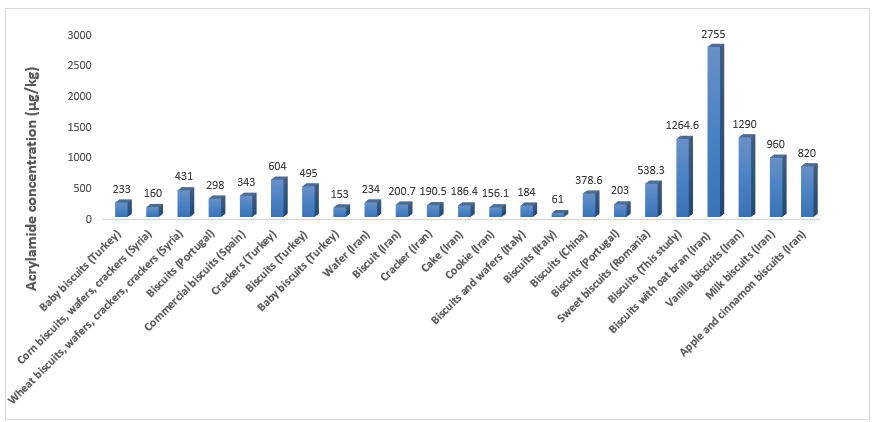
Figure 1: A comparison of the amounts of acrylamide found in various biscuit varieties worldwide
Tables at a glance
Figures at a glance