
Purity Analysis of Heroin in Sri Lanka
Received Date: April 29, 2025 Accepted Date: May 11 2025 Published Date: May 13, 2025
doi: 10.17303/jfrc.2025.10.101
Citation: Sandya Rajapakse KP (2025) Purity Analysis of Heroin in Sri Lanka. J Forensic Res Crime Stud 10: 1-7.
Abstract
Heroin is the most abused narcotic drug in Sri Lanka- Drug samples seized by the Police, excise and custom enforcement officers are brought to the Government Analyst's Department for analysis as a requirement of judicial investigations. purity analysis of these samples reveals the quality of the drug distributed island wide, The statistical evaluation with regard to avail. ability of the types of narcotic drugs in Sri Lanka and purity variations of heroin samples received in the year 2018 and 2019 will be discussed in this paper.
Methods: Samples received to the laboratory in 2018 and 2019 were analyzed qualitatively and quantitatively using TLC, GCMS and GCFID respectively.
Results: Results revealed that there is marked variation of the pure heroin content with the gross weight of the sample. Most of samples received showed very low percentage of heroin.
Conclusion: Prison overcrowding is a severe problem in Sri Lanka Most of the imprisonments are due to heroin related cases. These evidence showing the relationship between the gross weight and net weight ofheroin cases can be used to amend the national drug policies in order to expedite the drug cases in the courts and tackle the drug phenomenon effectively in the country.
Keywords: Heroin, Purity Analysis, Illicit drugs
Introduction
Drug abuse is one of the prominent problems which affects the country in many aspects including social, economic, educational and health.
Usually drug is a chemical substance that brings ficial effects for the human. However, due to the abuse usage, the same drug can be counted under the word "illicit drugs." Illicit drugs are substances that either stimulate (cxaine or metham- phetamine) or inhibit (heroin, sedative hypnotics) the central nervous system or cause hallucinogenic effects (marijuana or LSD) to the effect that their use has been prohibited.
Government Analyses Department is the only state owned forensic science laboratory in Sri Lanka which performs the analysis of illicit drugs receiving from all over the island as a requirement of judicial investigations, There is a remarkable increase in the of drug cases received to the Narcotic laboratory in the past few years. As far as the total number of an. nual cases is concerned there is a trend of increasing the of cases submitted every year. For instance the number of cases increased from 10782 in 2017 to 14643 in 2018.
Heroin is the most abused drug in Sri Lanka after cannabis, It is semisynthetic substance which is synthesized by acetylating morphine derived from opium [1] Heroin (diacetyl morphine) was first produced in 1874 by a British chemist in the search for a non.addictive morphine substitute [2].
In this paper an investigation on heroin quality variations in Sri Lankan society will be presented by analyzing samples received to the GAD from island wide police stations, Police Narcotic Bureau and excise Department during the period 2018 and 2019.
The goal was to assess drug quality variations in the 10. cal market to investigate quality differences with respect to the gross weight of the samples seized by the law enforcement of. ficers and thus to provide reliable evidence based information for decision makers to update and apply appropriate changes to national drug policies. As far as the pure heroin quantity of the samples with respect to their gross weight is concerned, criteria for bail can be amended as a solution to prison overcrowding, by considering the fact, if the gross weight is low, most of the cases have very low pure heroin quantity with milligram level.
Material and Methods
Drug sample collectionSeized drug samples were received from police, police Narcotic Bureau and Excise for routine analysis. Qualitative analysis was performed by preliminary test using marquis re. agent, Thin layer Chromatography and GC-MS. For cases with more than 10 samples hypergeometric method was used to as. certain the number of samples needed to be analyzed [3].
Chemicals and reagentsAll the chemicals and solvents used were Analar grade. Chloroform was purchased from Sisco research laboratory, In- dia Methanol was purchased from VWR PROLABO chemicals, France. Internal standard for Heroin triphenylacetophe. was purchased from sigma Aldrich. Certified Reference Standard (CRM) Of Heroin hydrochloride (99.98%) was obtained from the Lipomed Company Arlesheim, Switzerland, through UNODC Vienna, Austria.
Identification of HeroinFor the identification of Heroin presumptive test is car. ried out, and is often performed by using the marquis test where a reagent of sulfuric acid: 37% formaldehyde 9: 1 mixture is used which gives a purple colour, when opiates are present [4]
Thin layer ChromatographyIn forensic analysis, thin layer chromatography (TLC) is a distinctive, simple and useful method for drug analysis. A number of different solvent systems are available for this. In this analysis solvent system cyclohexane chloroform: diethyl amine was used. Acidified Iodoplatinate reagent was used as the spray reagent. thin Layer Chromatography is performed at the time of receiving the samples in order to check whether they contain dangerous drugs.
Qualitative analysis using GCMSAn Agilent 7890 A series gas chromatograph coupled to an Agilent 5795C inert XL MSD with Triple — Axis Detector with an auto injector and an Agilent 7693 Auto sampler were used to generate all standard and sample chromatograms. The MS detector was linked to a data handling system with Agilent chem. station integration software for data acquisition and storage, 'lhe column of 30m x 25()gmx 0.25gm HP 5MS 5% phenyl methyl siloxane, was used with Helium (99.999%) ultra-high purity as the carrier gas at a flow rate ofO.6 ml/min and samples were injected in split less mode.
About 10 mg of the sample was weighed into a 10ml volumetric flask and dissolved in methanol. A volume of lel was injected in to the GCMS system for analysis.
The front inlet temperature was 28CPC Chromato- graphic separation was achieved by keeping the initial oven temperature at for 2 minutes and varying the oven tem- perature from 900C to 3000C at a rate of 140C Imin. "Ihe final temperature was held for 10 minutes. Total run time for sample was 27 minutes. The solvent delay was 3 minutes. Identification was performed using retention time and against MS database, comparing with the mass fragmentation pattern in the MS data. base and also with standard heroin.
Quantification of heroin with GC-FIDApproximately 10mg of each sample was weighed ex. actly into a volumetric flask and dissolved in the internal stan- dard, betabenzo pinacolone (2,2,2 triphenyl aceto phenone) solution in chloroform with 0.6% of methanol and vortex for 1 minute and filled up to the mark. Ihen filtered through 0.45gm filters to a sample vial and injected in to a GC-FID systems.
Gas Chromatography separation was achieved by using Thermo scientific Trace 13(H.) GC system with flame ionization detector, auto sampler with chromeleon software. Ihe column 5% phenyl methyl siloxane, 3250C thermo HP5 (30.0mx0.25 mmx0.25gm). The injector temperature was setup at 2500C and the detector temperature at Initial oven temperature at and the temperature was increased at a ramp 300C/min to 2800C for 9 minutes. Nitrogen was used as a carrier gas at a flow rate of I .5 ml/min. Standard reference material of heroin was used to construct a calibration curve. A five-point calibration curve was established by injecting from Oppm, and ppm Of heroin standard solutions. Narcotic Laboratory of GAD participates inter laboratory come parison test conducted by UNODC Vienna twice a year.
Calibration acceptance criteria for heroin was, r2 0.995. The LOD and LOQ was determined by using the calculation, mean + IOSD, [standard deviation] and mean + IOSD re. spectively.
According to the Validation results of the GCAFID method, the limit of detection (LOD) and limit of quantification (LOQ) of heroin were 4.5 ppm and 6.5 ppm respectively. Ten replicates were analyzed and RSD was calculated to evaluate the precision, The method showed acceptable accuracies (% bias) of 1-6% and precision (%RSD) of less than 2%.
Results and Discussion
Statistical Data AnalysisTotal number of Heroin containing samples received to the laboratory during 2018 was 11895 and in 2019 was Ihey were categorized according to their gross weight as less than 2 grams, 2-5 grams, 5-10 grams, 10-200 grams and > 200 grams.
Number of Heroin cases received according to the gross weight is given in table 1 and Figure 1.
The statistical evaluation with respect to pure heroin quantity was performed only on samples having gross weight more 2 grams.
In 2018 a total of 3757 heroin cases were analyzed having the gross weight more than 2 grams and in 2019 a total of 3786 such heroin cases were analyzed.
A summary Of the quantification results Of the samples is given in Table 2 and Figure 2 .
The overall heroin concentration varied from 0.1% to 92.8% in 2018 and 0.1% to in 2019. Mean, median and minimum heroin concentrations were highest in >200g gross weight samples and lowest in 2-5g gross weight samples.
Variation of purity of heroin against the gross weight is given in Table (3) Figure (3)
Ihe relation between the mass of the sample and the dosage of heroin is presumptuously caused by dilution inside the country. The main diluent identified in heroin street samples was acetaminophen, [Paracetamol]. Caffeine is a characteristic com- mon adulterant in South West Asian type heroin. Most of the bulk samples analyzed contained caffeine as a adulterant and it was clear indication that those samples are coming from South West Asian origin.
The results revealed that, When the gross weight Of the sample is low (2S g) most of the cases (85%) have the pure her. oin quantity less than 5(N) milligrams and may be correspond. ing to the products, sold by small level dealers and consumed by end users. Gross weight (5-1 Og) cases only 3% cases have >5g pure heroin quantity. For higher gross weight quantities eg: ( 44% cases have >5g pure heroin quantity. Further cases having more than gross weight, 92% cases have pure heroin quantity >5g, Those cases include large scale detections by Police Narcotic Bureau, police or Navy officers at the airport or trans• porting by boats or vessels at the sea
Conclusion
Prison overcrowding is a severe problem in Sri Lanka- When considering the main types of offences for prison admis- sions, drug related imprisonments, mainly heroin cases have accounted for the highest percentage. According to Sri Lankan Law death penalty or life imprisonment is given for cases having more than 2 grams of pure heroin quantity [51, These evidences related to gross weight and net weight of heroin cases can be used for criminal justice ruling, drafting of, national drug policies and awareness campaigns. Further these results of the data collection will provide the evidence that policy makers and profes.sionals need in order to tackle the drug phenomenon effectively.
Acknowledgement
The author would like to thank the staff of the Narcotic Laboratory at the Government Analyst's Department for their support given throughout the analysis process.
- Adele B, Georges D, Francois M, Nicolas G, Alain O, et al. (2021) Investigation on heroin and cocaine quality in Luxembourg. Harm reduction Journal 18:97.
- The United Nations and Drug Control Division of Narcotic drugs, Vienna. United Nations, New York. 1982.
- Guideliness on sampling of Illicit Drugs for Qualitative Analysis” ENFSI, Drugs working Group, second edition,2016.
- Recommend Methods for testing opium, morphine and heroin” manual for use by National Drug Testing Laboratories, United Nations International Drug Control Program, Vienna. 1998.
- Hand book of drug abuse information, Research and Publications Division, National Dangerous Drug Control Board, Sri Lanka, 1997.
Figure 1
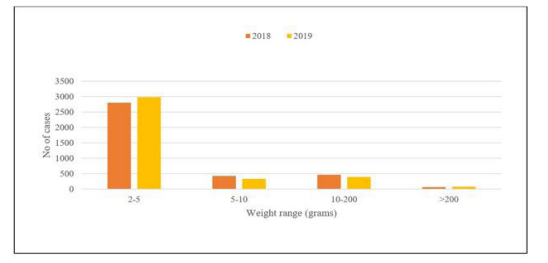
Figure 1: Number of Heroin cases received according to the gross weight
FIGURE 2
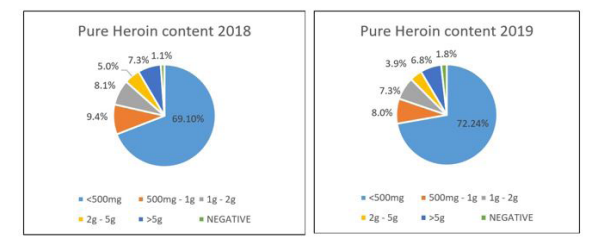
Figure 2: Quantification results of the samples
FIGURE 3
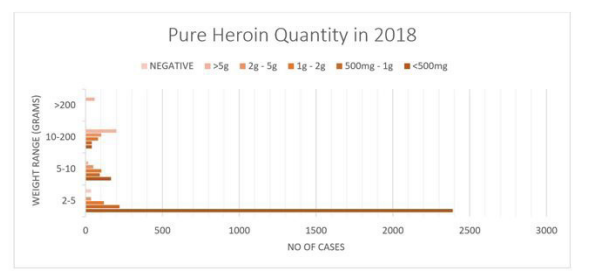
Figure 3: Variation of Pure Heroin Quantity with respect to the Gross Weight – 2018
FIGURE 4
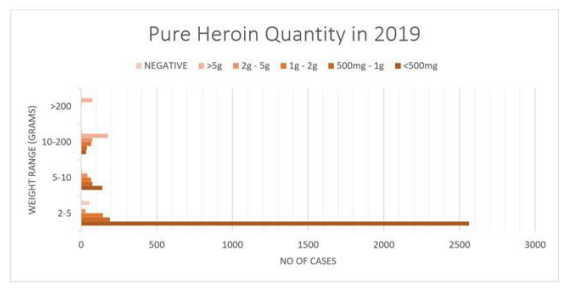
Figure 4: Variation of Pure Heroin Quantity with respect to the Gross Weight - 2019
Tables at a glance
Figures at a glance