
Physics-Based Approaches for the Restoration of Obliterated Marks: Destructive and Non-Destructive Techniques
Received Date: November 27, 2025 Accepted Date: December 09, 2025 Published Date: December 12, 2025
doi:10.17303/jfrcs.2025.10.202
Citation: Nittan Sharma, Anchita Paul (2025) Physics-Based Approaches for the Restoration of Obliterated Marks: Destructive and Non-Destructive Techniques. J Forensic Res Crime Stud 10: 1-15
Abstract
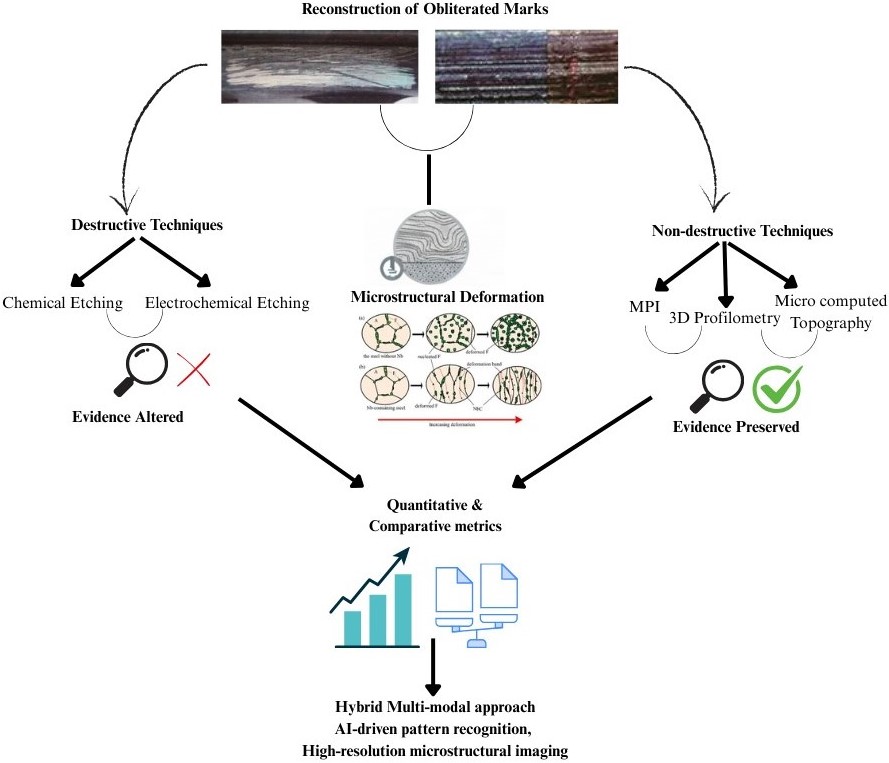
The forensic reconstruction of obliterated serial numbers and critical identifiers is paramount in criminal investigations, particularly across firearms, vehicle components, and industrial machinery, where such unique markers are indispensable for establishing provenance, authenticity, and evidentiary linkage. The inscription and subsequent obliteration of these marks impart persistent localized residual stress fields and distinct microstructural deformations beneath the material surface, forming the physical basis for their recovery. This review systematically categorizes and evaluates advanced physics-based methodologies for the restoration of such marks. Destructive techniques, including chemical and electrochemical etching, exploit differential material reactivity and grain boundary contrast within these deformed zones to reveal erased characters, though inherently compromising specimen integrity. In contrast, non-destructive approaches, encompassing Magnetic Particle Inspection (MPI), high-frequency Ultrasonic Testing (UT), advanced X-ray radiography, Micro-Computed Tomography (micro-CT), and high-resolution 3D surface profilometry, are critically assessed for their capacity to visualize subsurface deformations while preserving evidential integrity. Quantitative metrics such as signal-to-noise ratio (SNR) and spatial resolution are discussed in the context of method efficacy. Furthermore, the systematic preparation of specialized etching reagents, the photographic documentation of restored marks, and the comparative statistical assessment of method reliability and reproducibility are examined, highlighting their scientific underpinnings and robust forensic applicability. This study concludes by outlining current research frontiers and future directions, emphasizing the integration of advanced digital imaging, machine learning for automated character recognition, and hybrid multi-modal approaches, all poised to significantly enhance the reliability, quantitative validation, and admissibility of restoration evidence in modern forensic practice.
Keywords: Obliterated Markings; Serial Number Restoration; Microstructural Deformation; Destructive Techniques; Non-Destructive Techniques
Introduction
Serial numbers, Vehicle Identification Numbers (VINs), and other stamped markings are essential identifiers in today’s world. These are unique alphanumeric codes imprinted on a variety of objects, including firearms, vehicles, industrial machinery, and consumer electronics. Their primary purpose is to assign a unique identity to each item, facilitating verification of ownership, ensuring regulatory compliance, and maintaining quality control [1]. In forensic science, these markings play a crucial and valuable role because they are used to establish a connection between an object and its origin. This helps investigators trace stolen goods, identify weapons used in crimes, and reconstruct crime scenes. Restoring obliterated or erased serial numbers often becomes a key step, as they can link an item to a suspect or crime scene and serve as important evidence in legal proceedings [2].
The legal and investigative significance of these identifiers is well established. For firearms, a restored serial number can trace the weapon from its manufacturer to its lawful owner, which is crucial during such crimes. Consequently, legislation like the U.S. Gun Control Act of 1968 requires all firearms to have visible, permanent serial numbers [3]. Similarly, vehicles are assigned standardized 17-digit VINs that include detailed information about the model, manufacturer, and production sequence. Law enforcement agencies rely heavily on VINs to detect and recover stolen vehicles and in hit-and-run cases where vehicle identification is essential to the investigation. Beyond firearms and vehicles, industrial and electronic equipment also depends on serial numbers for ownership validation, liability assessment, and fraud prevention, further boosting their investigative value [4].
Obliteration of these markings most often occurs with criminal intent, as offenders try to conceal the identity of stolen goods and weapons. Methods of obliteration range from mechanical techniques, such as grinding, filing, scratching, peening, and drilling, to thermal and chemical approaches, including welding or corrosive treatments. Overstamping, in which new characters are impressed over the original, is another method used to obscure identity [1]. In addition to intentional tampering, accidental obliteration can also occur due to corrosion, wear, or prolonged exposure to harsh environmental conditions. In either case, the forensic challenge is to recover the original markings by analyzing the residual surface deformation patterns that remain after obliteration.
This review focuses on the physics-based approaches for restoring erased or obliterated marks, emphasizing both destructive and non-destructive methods. It will examine the physical principles underlying these techniques, such as microstructural deformation, stress distribution, magnetic field variations, acoustic impedance, and radiographic contrast. A comparative evaluation of their effectiveness, limitations, and admissibility in forensic practice will be provided. This review will also highlight emerging trends, such as digital imaging and multimodal reconstruction, which will shape future directions in enhancing the accuracy, reliability, and courtroom acceptance of serial number restoration.
Importance of Individual Markings
Individual markings on objects such as firearms, engine blocks, and industrial equipment are important in forensic investigations because they are unique identifiers, functioning like mechanical fingerprints. These imprints, whether in the form of serial numbers or tool impressions, provide a direct link between an object and its origin, enabling association with specific manufacturers, owners, or criminal events. The ability to restore such markings, even after deliberate obliteration, is grounded in the fundamental physics of how they are created and the lasting microstructural alterations they leave within a material [3].
When a mark is impressed onto a metallic surface, the process involves the interplay of stress, strain, and deformation. Stress is defined as the applied force per unit area, while strain describes the resulting change in shape [5]. During stamping or engraving, the applied stress far exceeds the elastic limit of the material, resulting in a state of plastic deformation. Unlike elastic deformation, which is reversible (temporary), plastic deformation is permanent and produces visible impressions on the surface. Most importantly, this deformation extends beyond the immediate surface into the subsurface layers, compressing and displacing the crystalline lattice of the metal. This altered zone is typically denser and mechanically distinct from the unaffected material, which creates a residual scar in the microstructure. It is precisely this hidden deformation zone that allows the forensic experts to recover the erased or obliterated marks [6, 7].
Every mark is also unique, a fact that underpins both tool mark analysis and serial number restoration. No two tools or dies are perfectly identical; microscopic imperfections arising from manufacturing processes and subsequent wear produce individual characteristics. These imperfections, combined with variables such as angle of impact, applied pressure, and depth of impression, result in statistically distinct markings [8]. Forensic examiners distinguish between class characteristics, which are common to a type of tool or stamping process, and individual characteristics, which reflect the unique traits of a specific tool or stamping event. This duality reinforces the evidentiary value of markings, as their individuality can be matched with high certainty to a particular source [9, 10].
The forensic challenge arises when markings are deliberately obliterated to conceal an object’s identity. Techniques such as grinding, filing, peening, welding, or chemical corrosion are employed to destroy the visible surface features. While these methods can effectively eliminate the superficial evidence, they rarely penetrate deep enough to erase the subsurface deformation caused by the original stamping. In fact, the obliteration process itself often introduces new stresses, heat, or microstructural changes that further differentiate the altered and unaltered regions [11]. These physical contrasts form the basis of restoration techniques; the surface that is deformed may etch at a different rate in the presence of chemical reagents, exhibit different magnetic properties, or respond differently under ultrasonic or radiographic examination. Thus, even if the original characters have been deformed, the physics of deformation ensures that a latent trace of the original mark persists. The forensic significance of individual markings lies not only in their roles as identifiers but also in the fundamental physical principles that govern their creation, uniqueness, and persistence.
Different Inscription Techniques
Identification markings, such as serial numbers on metal objects like firearms and vehicle components, are typically inscribed using a range of approaches that cause lasting modifications to the substrate. These encompass mechanical imprinting, carving, laser inscription, and electrolytic etching, each relying on unique physical mechanisms to produce discernible impressions or changes.
Mechanical Imprinting
Mechanical imprinting involves applying high compressive pressure with a punch or mold, forcing the metal surface to plastically deform and generate recessed symbols. Although visible groove depths typically range from 80-140 μm, the subsurface deformation zone can extend several times deeper, particularly in steel alloys, depending on factors such as material toughness, tool geometry, and applied force. This process induces localized compressive stresses and increased hardness in the underlying layers, enhancing strength but reducing ductility. On a microstructural level, imprinting disrupts the crystal lattice, producing defects, slip planes, and deformation twins that refine grain size and alter orientations. These effects create anisotropic properties, evident in hardness gradients that diminish progressively with depth as deformation influence decreases [12].
Engraving
Engraving is a related mechanical technique that employs a pointed tool or rotating blade to cut into the surface and form grooves with shallower subsurface effects compared to imprinting. The process primarily generates cutting stresses along the tool path, producing superficial channels largely restricted to the surface layer. The resulting residual stresses are predominantly tensile within the carved regions, which may promote fracture in brittle materials. At the microstructural level, localized strengthening and distortions occur near grain boundaries, though the depth of influence remains limited relative to imprinting. While engraving offers high precision, the absence of a deeply deformed layer makes it more susceptible to complete obliteration during intentional removal [13].
Laser Etching
Laser etching utilizes a focused energy beam to melt or vaporize the surface layer, producing marks through heat-driven material removal. Groove depths may reach up to 0.25 mm, depending on beam energy and substrate properties, as the process induces thermally generated stresses that propagate into the material [14]. The technique relies on rapid heating and cooling cycles, creating residual tensile stresses from expansion and contraction. At the microstructural level, this can result in phase transformations, grain refinement or reformation within the heat-affected zone, and in some cases, micro-crack formation. Unlike mechanical methods, laser etching introduces less plastic deformation but alters surface compactness through material loss and oxidation.
Electrochemical Marking
Electrochemical marking involves the use of an electrical current and an electrolyte solution to selectively oxidize and dissolve surface metal, producing visible but shallow marks without the need for applied mechanical force. The resulting grooves are typically less than 0.1 mm in depth, as the process relies on controlled anodic dissolution rather than physical impact. Residual stresses generated are minimal compared to mechanical or thermal methods, yet microscopic alterations occur in the form of localized etching, preferential grain boundary attack, and increased surface roughness, which may also influence corrosion resistance. The underlying mechanism depends on electrochemical potential gradients that drive ion migration and material removal in a precise and regulated manner, avoiding substantial bulk deformation [12, 13, 14].
Collectively, these techniques generate identification marks with highly variable groove depths and subsurface deformation zones, governed by both the marking method and the substrate (Table 01). To contextualize the depth ranges cited above, typical values reported for common metals and polymers are summarized below.
Methods of Obliteration Marks
Physical Methods
Physical obliteration techniques, such as rasping and polishing, mechanically abrade the surface to erase visible markings. Grinding often cuts deeper than the original groove, reaching up to 0.4 mm in copper alloys or steels [13]. This process introduces new surface scratches and embeds grinding debris, yet if removal is not sufficiently deep, subsurface deformations associated with the original marks may still persist. At the microscopic level, such abrasion disrupts grain boundaries near the surface, causing additional cold working that temporarily increases hardness while flattening earlier slip traces. However, excessive polishing can strip away hardened layers, lowering structural rigidity and homogenizing the surface, though residual stresses below the abraded zone may still allow recovery of erased marks.
Heat-Based Methods
Thermal methods, including heating, fusing, and melting, apply elevated temperatures to realign or eliminate deformation features within the metal. Moderate heating promotes grain recrystallization, relieving residual stresses and restoring ductility [12]. In fusion-based techniques, localized melting incorporates new material into the surface, producing thermally altered zones with modified grain boundaries. These zones may soften due to annealing or, in some cases, strengthen via phase transformations. Complete melting reshapes the surface by removing microstructural defects such as twins and dislocations, typically reducing hardness in re-solidified regions. While these processes diminish mechanical distortion signatures, they can also leave oxidation layers or density variations that paradoxically assist later recovery.
Chemical Methods
Chemical erasure involves the use of reactive agents, often acidic solutions, to corrode and remove surface layers, particularly targeting inscribed regions. Acids containing nitrogen or chlorine species are commonly applied, achieving removal depths equal to or surpassing the original groove. The fundamental mechanism relies on differential corrosion rates, where residual stresses accelerate localized dissolution in deformed areas. Microscopically, this action enlarges grain boundaries, decreases hardness through material loss, and may expose subsurface structures. In composite alloys, selective leaching of specific phases can alter the microstructure and produce uneven surfaces that further mask original marks. While effective at obscuring mechanical indicators of inscription, the success of chemical obliteration depends on penetration depth and alloy composition, and subtle remnants often remain detectable by forensic recovery methods.
Fundamental Principle of Restoration
The recovery of obliterated marks relies on the persistence of subsurface deformation zones that survive even after the surface layers have been removed. These zones, created during inscription, extend well beyond the visible groove, sometimes to depths of up to 520 μm in steels, and preserve altered microstructural and stress characteristics that differ measurably from the surrounding material [13]. Restoration methods exploit such contrasts in properties, including light reflectance, density variations, and magnetic permeability, to make erased marks detectable.
Light diffusion is especially important in optical and chemical recovery approaches, as deformed grains scatter illumination differently due to surface irregularities or deformation twins, producing visible haze or patterns under controlled lighting [13]. Density variations arise from localized plastic deformation, which slightly reduces compactness and alters the rate of chemical attack, while also affecting X-ray absorption and imaging contrast. Magnetic permeability differences form the basis of methods such as magnetic particle inspection: deformed regions exhibit reduced conductance, leading to flux leakage that attracts magnetic particles and outlines hidden characters [12].
In chemical dissolution, selective corrosion enhances contrast since strained areas dissolve more rapidly due to their elevated internal energy, resulting in relief or color differences visible to the examiner [15]. Similarly, acoustic techniques use cavitation effects, where bubbles collapse unevenly on distorted regions, eroding them in distinct patterns that are revealed under illumination [13]. Advanced electron backscatter analysis further exploits differences in crystallographic orientation, detecting areas of reduced diffraction pattern clarity to reconstruct erased marks without the need for reagent.
Restoration Methods and Principles
The restoration of obliterated markings is a fundamental task in forensic science, as it enables the revelation of crucial identifiers on firearms, vehicles, and industrial equipment. The choice of restoration method is guided by the types of substrate material, the nature of obliteration, and the evidentiary requirements of the case. Techniques are broadly categorized into destructive and non-destructive approaches, with the latter generally employed first to preserve the integrity of the specimen [16, 17].
Destructive Methods
These are operated by selectively removing or altering surface material to reveal the subsurface deformation zone created during stamping. Among these, chemical etching is the most widely applied. Its effectiveness is rooted in the physical principle that plastic deformation during stamping alters the crystalline lattice of the metal, leaving the strained zone more chemically reactive than surrounding regions. When an appropriate etchant is applied, the difference in reactivity causes the deformed area to corrode at a different rate, reproducing the base of the original characters [18]. The process requires careful surface preparation, typically polishing a mirror finish to eliminate extraneous scratches. The choice of etchant depends on the substrate; for example, Fry’s reagent is commonly used for steel, while other acidic or alkaline formulations are preferred for aluminum or zinc alloys. The success of stretching depends on whether obliteration has penetrated beyond the depth of plastic deformation; if the original compressed layer has been entirely removed, restoration becomes impossible [19, 20].
Electrochemical etching builds upon the same principle but employs an applied electric current to accelerate and control the etching process. In this process, the object acts as the anode in an electrochemical cell, and an electrolyte mediates the controlled dissolution of metal under low voltage (typically 3-6 volts). Forensic experts can fine-tune the etching rate, balance speed, and surface clarity by adjusting the current density. Electrolyte composition further influences results, with acidic, alkaline, or saline solutions selected according to the metal under investigation. This technique provides enhanced sensitivity and reproducibility when compared with purely chemical approaches, though it remains inherently destructive [21, 22] (Figure 1).
Non-Destructive Methods
These methods are widely used because of their ability to reveal obliterated marks without altering the evidence, making them particularly valuable for court proceedings. Magnetic particle inspection (MPI) is among the most established approaches for ferromagnetic material such as steel. This works in such a way that when a magnetic field is applied to the plastically deformed region beneath the stamped mark, it produces flux leakage, which attracts fine magnetic particles that are dispersed over the surface. These particles cluster along the outline of the obliterated characters, rendering them visible. MPI can often recover details even when surface obliteration is severe and is frequently used before chemical etching 23, 24]
Ultrasonic methods provide an alternative for both metallic and non-metallic substrates. High-frequency vibrations, typically delivered via piezoelectric transducers, generate cavitation in a liquid medium surrounding the specimen. The collapse of cavitation bubbles produces localized micro-shockwaves that erode smeared or deformed surface layers, thereby enhancing the visibility of subsurface impressions. This method requires minimal surface preparation and has the advantage of being gentle and repeatable [25, 26]. For polymer substrates, restoration relies more on optical and thermal contrast than on bulk plastic deformation. Ultraviolet illumination can reveal stressed or chemically altered regions around embossed or molded serials through fluorescence or differential absorption, even after superficial abrasion. Infrared imaging exploits variations in thermal emissivity or subsurface scattering to make residual character patterns visible beneath smoothed surfaces. Thermal imprint detection, in which the surface is transiently heated or cooled and monitored with an infrared camera, can highlight shallow relief or density differences left by the original marking, allowing partial or complete reconstruction of obliterated polymer serial numbers [27, 28].
More recently, advanced imaging modalities have expanded the toolkit of non-destructive restoration. X-ray imaging, and in particular micro-computed tomography (micro-CT), allows one to visualize the subtle subsurface density variations in three dimensions. By reconstructing volumetric models, micro-CT can detect deformed microstructures even in cases where surface methods fail, making it invaluable for sensitive specimens or non-metallic materials such as bone [29]. Similarly, digital microscopy and 3D profilometry offer detailed topographic reconstructions of restored marks. Digital microscopy provides high-resolution imaging of fine striations and irregularities, while 3D profilometry quantifies surface features, generating objective datasets that can be compared across specimens. Together, these optical methods enhance both visualization and measurement, which supports the forensic interpretation.
In practice, restoration often involves a tiered approach, beginning with non-destructive methods to preserve evidence, followed by destructive techniques when necessary. The enduring principle is that although surface obliteration can erase visible markings, the physics of plastic deformation ensures that traces of the original identifiers often remain recoverable (Table 2).
Preparation of Etching Reagents
The preparation of chemical etching reagents is essential in forensic restoration, as these solutions selectively dissolve metallic layers to expose subsurface deformation caused by stamping. They are typically formulated from oxidizing agents, acids or alkalis, and solvents, each regulating redox activity, dissolution rates, and reaction control [30].
For ferrous metals, classic agents include Fry’s reagent (CuCl₂ + HCl + H₂O), which exploits chloride-driven oxidation, and acidic ferric chloride (FeCl₃ + HCl + H₂O), where Fe³⁺ acts as both oxidizer and chloride donor [31]. For non-ferrous alloys, sequential alkaline-acidic protocols are common, such as NaOH pre-treatment followed by HNO₃, which first removes protective oxides and then oxidizes exposed aluminium [32]. More complex mixtures such as HF-HCl-HNO₃ blends for aluminium alloys [33] and chromic acid-Na₂SO₄ solutions for brass/zinc [34] are specific for microstructural features, enhancing mark visibility. The underlying mechanism is governed by electrochemistry: strained regions corrode faster owing to elevated lattice energy. In steels, Fe dissolution is accelerated by electron transfer with oxidizers [35], while in aluminium, NaOH produces soluble aluminate ions, followed by nitric acid refinement [32]. Electrolytic etching further refines selectivity through ion migration under low DC voltage [12].
Efficacy parameters include material composition (e.g., high-carbon steels resist attack more than low-alloy steels), obliteration depth (optimal recovery in aluminum at 0.04-0.06 mm), reagent concentration (5-25%), temperature (20-40°C), and exposure duration (typically 4-60 min) [31, 33]. Proper surface preparation and the use of fresh reagents are critical to ensure uniform reactions and minimize artifacts [36].
Photography and Documentation of Recovered Identification marks
Accurate documentation of restored identification marks is essential for forensic integrity and legal admissibility. Modern approaches integrate optical imaging strategies with digital enhancement tools to capture, preserve, and optimize evidence. Low-angle illumination (10-45°) improves topographic contrast by casting shadows across etched features, enhancing faint marks through differential scattering [37]. Fiber-optic sources minimize glare, and sequential imaging before and after restoration ensures evidentiary validation [14].
Macro- and micro photography provide complementary scales of detail. Macro imaging (1:1 or higher) documents entire surfaces such as firearm receivers, while micro photography (8-40× via stereomicroscopes) reveals fine structural details like etched steel grain boundaries. Calibration with reference scales and controlled lighting preserves dimensional accuracy. Serial imaging is often employed in long-duration recovery processes [38, 30, 39].
Digital optimization further enhances image clarity using techniques such as histogram equalization, unsharp masking, and noise reduction. Advanced software (e.g., Adobe Photoshop, forensic algorithms) enables correction of distortions, detection of weak patterns, and non-destructive enhancement while retaining original files. Metadata logging and chain-of-custody protocols maintain evidentiary reliability [37, 38]. All of these strategies create scientifically validated documentation that integrates optical physics and computational methods, ensuring forensic precision and legal defensibility.
Assessment and Comparison of Methods
The evaluation of destructive and non-destructive methods for restoring obliterated marks requires consideration of sensitivity, reliability, reproducibility, preservation of evidence, and legal admissibility. Both categories have distinct strengths and limitations, often dictating their application based on case-specific requirements [16, l7]. Non-destructive methods, such as magnetic particle inspection, X-ray radiography, ultrasonic testing, and advanced optical methods (for example, confocal microscopy and 3D scanning), are preferred in cases where preservation of the evidence is critical, such as firearms, VINs, and luxury items. These methods allow multiple examinations, minimize the risk of sample loss, and are often more acceptable in court due to their reproducibility. However, these methods may not be more reliable in cases where the obliteration is deep or the substrate has undergone extensive plastic deformation [23, 25]. On the other hand, destructive methods such as chemical etching, electrolytic etching, and heat tinting remain sensitive for deeply obliterated or plastically deformed marks. Their effectiveness arises from the differential corrosion rate or chemical reactivity between strained and unstrained regions of the substrate. Despite their reliability, they are often considered a last resort, since they permanently alter or consume the material, which potentially restricts their further analysis [19, 20] (Table 3).
Conclusion and Future directions
The restoration of obliterated serial numbers remains central to forensic science, ensuring traceability and evidentiary reliability. Destructive methods such as chemical etching are highly sensitive but compromise material integrity, while emerging non-destructive techniques mentioned as magnetic, ultrasonic, radiographic, and 3D imaging offer improved preservation and repeatability.
Future advancements lies in hybrid multimodal approaches that integrate the depth sensitivity of destructive methods with the preservation strength of non-destructive tools. Key directions include AI-driven pattern recognition, high-resolution microstructural imaging, and standardized digital documentation, all aimed at reducing operator dependency, enhancing reproducibility, and strengthening judicial admissibility.
Acknowledgements
The authors express sincere gratitude to Rashtriya Raksha University for institutional support and extend heartfelt thanks to their mentors for valuable guidance and for ensuring smooth execution and interpretation of the research.
Funding
This research did not receive any specific grant from funding agencies in the public, commercial, or not-for-profit sectors.
Disclosure Statement
The authors declare that they have no known competing financial interests or personal relationships that could have appeared to influence the work reported in this paper.
Declaration Regarding the Use of Generative AI
None of the sections of the manuscript has been written with the help of Generative AI. Although some of the sections have been refined using Quillbot and grammar of the manuscript has been thoroughly checked through Grammarly software.
- Mazumdar A, Mukherjee TK, Bhowmik T (2024) Restoring Obliterated Serial Number of a Vehicle: A Crime Scene Investigation Based Case Study. About the Editors, 1.
- Broeders APA (2012) Principles of forensic identification science. In Handbook of criminal investigation (pp. 303-337). Willan.
- Zimring FE (1975) Firearms and federal law: the Gun Control Act of 1968. The Journal of Legal Studies, 4: 133-98.
- Sridevi T, Swapna P, Harinath K (2017) Vehicle identification based on the model. In 2017 IEEE 7th International Advance Computing Conference (IACC) (pp. 566-571). IEEE.
- Harshey A, Das T, Mishra V, Shukla RK, Srivastava A (2023) Essentials of Forensic Physics. In Textbook of Forensic Science (pp. 377-423). Singapore: Springer Nature Singapore.
- Wightman G, Matthew J (2008) Restoration of stamp marks on steel components. Forensic science international, 180: 32-6.
- Jia X, Hao K, Luo Z, Fan Z (2022) Plastic deformation behavior of metal materials: A review of constitutive models. Metals, 12: 2077.
- Uysal S, Mercan M, Uzun L (2020) Serial number restoration on polymer surfaces: A survey of recent literature. Forensic Chemistry, 20: 100267.
- Hansen N, Barlow CY (2014) Plastic deformation of metals and alloys. In Physical metallurgy (pp. 1681-1764). Elsevier.
- Divinski SV, Padmanabhan KA, Wilde G (2011) Microstructure evolution during severe plastic deformation. Philosophical Magazine, 91: 4574-93.
- Mavlyutov A, Evstifeev A, Volosevich D, Gushchina M, Voropaev A, et al. (2023) The effect of severe plastic deformation on the microstructure and mechanical properties of composite from 5056 and 1580 aluminum alloys produced with wire arc additive manufacturing. Metals, 13: 1281.
- Treptow RS (1973) “Methods for the restoration of obliterated serial numbers”. National Criminal Justice Reference Service. Retrieved from https://www.ojp.gov/pdf files1/Photocopy/81771NCJRS.pdf
- White RM, Keller RR (n.d.) Restoration of firearm serial numbers with electron backscatter diffraction (EBSD). National Institute of Standards and Technology. Retrieved from https://www.nist.gov/syste m/files/documents/forensics/Restoration-of-Firearm-Serial-Numbers-Using-Electron-Backscatter-Diffraction.pdf
- Young SG (1973) The restoration of obliterated stamped serial numbers by ultrasonically induced cavitation in water. NASA Technical Memorandum 732786. NASA Lewis Research Center. Retrieved from https://ntrs.nasa.gov/api/citations/19730019134/downloads/197 30019134.pdf
- Garagnani GL, Fortini A, Codeluppi N, Soffritti C, Gong Y (n.d.) Using the etching technique to restore stamped marks: Metallurgical and statistical approaches. Retrieved from https://sfera.unife.it/bitstream/11392/23 38917/5/11392_2338917_PRE_Garagnani.pdf
- Sharma M (2019) Fundamental physics used in forensics. Forensic Sci Add Res, 5: FSAR-000606.
- Rao PK, Tharmavaram M, Pandey G (2020) Conventional technologies in forensic science. Technology in Forensic Science: Sampling, Analysis, Data and Regulations, 17-34.
- Kesharwani L, Gupta AK, Mishra MK (2013) Development of new reagent for restoration of erased serial number on metal plates. Egyptian Journal of Forensic Sciences, 3: 26-34.
- Gaud V, Bhati K (2022) Restoration of Obliterated Serial Number on Keys with the Help of Various Chemical Etching Method: A Review Study. J Forensic Res Crime Stud, 7: 1-10.
- Halim MIA, Suhaimi NN, Aliesyah CF, Mahat MM, Karim UKA, et al. (2024) A review: Destructive and non-destructive methods in the restoration of obliterated serial numbers. In AIP Conference Proceedings (Vol. 2991, No. 1, p. 020060). AIP Publishing LLC.
- Smith JP, Randviir EP, Banks CE (2016) An introduction to forensic electrochemistry. Forensic Science: A Multidisciplinary Approach, 89-102.
- Kuppuswamy R (2011) Metallographic etching of aluminium and its alloys for restoration of obliterated marks in forensic science practice and investigations. Aluminium alloys, theory and applications, 58: 27.
- Wu Q, Dong K, Qin X, Hu Z, Xiong X (2024) Magnetic particle inspection: Status, advances, and challenges—Demands for automatic non-destructive testing. Ndt & E International, 143: 103030.
- Kesharwani C, Wu S, Yan Y, Dong Y, Shen X, et al. (2019) Application of magnetic particles in forensic science. TrAc Trends in Analytical Chemistry, 121: 115674.
- Peng H, Yang X, Peng W, Wu X, Tian S (2024) A Rapid and High-Precision Electronic Non-Metallic Substrate Thickness Detection Sensor Based on Coaxial Resonator. IEEE Transactions on Microwave Theory and Techniques, 72: 5420-9.
- Zhang L, Ren Y (2025) Direct Methods for the Detection and Characterization Non-metallic Inclusions in Steels. In Handbook of Non-Metallic Inclusions in Steels (pp. 73-106). Singapore: Springer Nature Singapore.
- Kim M, Kim J, Kim H, Jung I, Kwak H, et al. (2022) Direct Visualization of UV-Light on Polymer Composite Films Consisting of Light Emitting Organic Micro Rods and Polydimethylsiloxane. Polymers, 14: 1846.
- Maris E, Aoussat A, Naffrechoux E, Froelich D (2012) Polymer tracer detection systems with UV fluorescence spectrometry to improve product recyclability. Minerals Engineering, 29: 77-88.
- Franchetti G, Viel G, Fais P, Fichera G, Cecchin D, et al. (2022) Forensic applications of micro-computed tomography: a systematic review. Clinical and Translational Imaging, 10: 597-610.
- North Carolina State Crime Laboratory. (2017). “Technical procedure for serial number restoration” (Version 6). Retrieved from https://forensicresour ces.org/wp-content/uploads/2019/07/Serial-Number-Restoration-09-22-2017. pdf
- Zaili MA, Kuppuswamy R, Harun H (2007) Restoration of obliterated stamped marks on aluminium surfaces by etching technique. “Malaysian Journal of Forensic Sciences”, 3: 1-8.
- Kumar A, Srivastava A, Das T, Harshey A, Saini VR, et al. (2020) Restoration of obliterated stamped marks on aluminium surfaces by metallographic etching technique. “Oriental Journal of Chemistry”, 36: 1195-201.
- Uysal İ, Yilmaz R (2011) A survey of some metallographic etching reagents for restoration of obliterated engraved marks on aluminium-silicon alloys. “Forensic Science International”, 208: 126-30.
- Azlan T, Yilmaz R (2012) Development of new reagent for restoration of erased serial number on metal plates. “Egyptian Journal of Forensic Sciences”, 2: 120-5.
- Bloor DW (1976) The mechanism of the restoration of obliterated serial numbers by acid etching. “Journal of the Forensic Science Society”, 16: 231-5.
- Abdul Wahab MF (2013) “Restoration of obliterated stamped marks on cast iron surfaces by etching reagent” (Master’s thesis, Universiti Sains Malaysia). Retrieved from http://eprints.usm.my/53457/1/MOHD%2520FARIZON%2520BIN%2520ABDUL%2520WAHAB-24%2520pages.pdf
- Mancini K, Sidoriak J (2018) “Fundamentals of forensic photography: Practical techniques for evidence documentation on location and in the laboratory”. Routledge.
- Scientific Working Group on Digital Evidence. (2024). “Guidelines for the use of macro photography in forensic science”. Retrieved from https://www.swgde.org/wp-content/uploads/2024/08/2024-08- 05-SWGDE-Guidelines-for-the-Use-of- Macro-Photography-in-Forensic-Science-24-P-001-1.0.pdf
- Collaborative Testing Services (2020) “Serial number restoration test No. 20-5250 summary report”. Retrieved from https://cts-forensics.com/reports/20-5250_Web.pdf
- National Criminal Justice Reference Service. Retrieved from https://www.ojp.gov/pdffiles1/Photocopy /81771NCJRS. pdf
FIGURE 1
Graphical Abstract
FIGURE 2
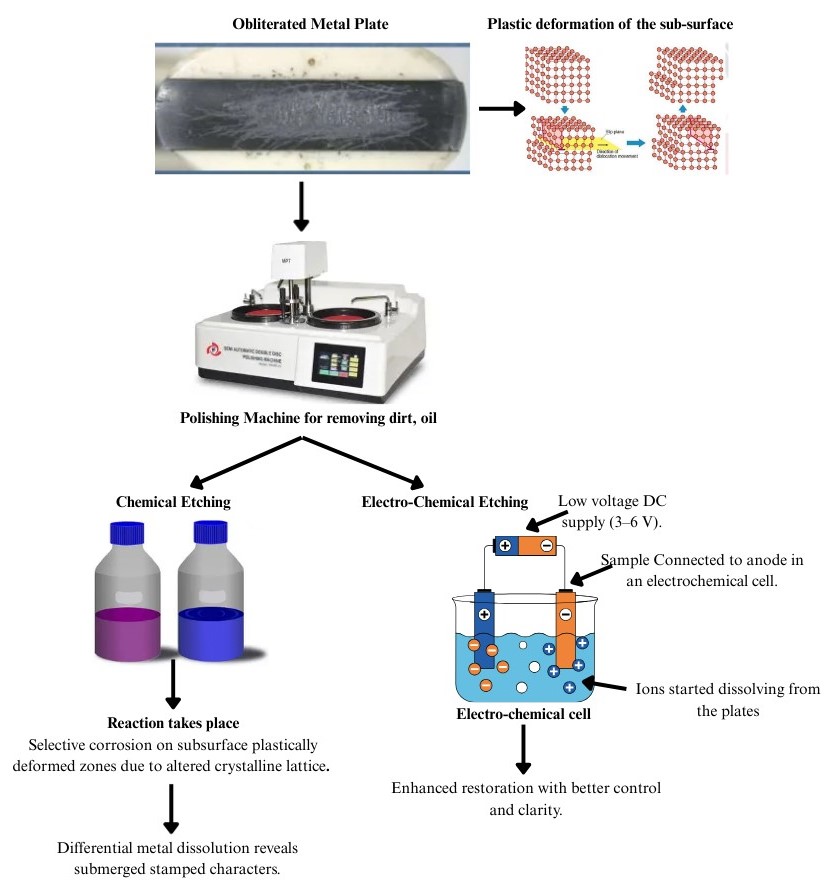
Figure 1: Schematic illustration of Chemical and Electrochemical Etching for Restoration of Obliterated marks
Tables at a glance
Figures at a glance