
Improvement in Long-Term Bonding and Mechanical Performance by Using Glass Concrete in Combination with Xanthan Gum Exposed to Harsh Environment
Received Date: March 08, 2025 Accepted Date: March 18, 2025 Published Date: March 22, 2025
doi:10.17303/jmsa.2025.9.102
Citation: Humaira Kanwal, Noshaba Azhar, Umer Malik3, Naushaba Azhar, Muhammad Asim (2025) Improvement in LongTerm Bonding and Mechanical Performance by Using Glass Concrete in Combination with Xanthan Gum Exposed to Harsh Environment. J Mater sci Appl 9: 1-13
Abstract
Concrete is versatile building material which is used in almost all construction works. A lot more deterioration occurs due to abrupt environmental changes. Key factor of fibrous concrete that improve the value and scale to concrete. It can be used in humid environments with significant role. Consumption of concrete is increasing day by day and considered as 2 nd largest building construction material. Concrete faces so many environmental issues like blistering and scaling. Need to add some fibers to improve the voids ratio in fibrous concrete. Keeping in this view, sodium silicate glass (SSG) is used as replacement of cement with different percentages 0%,5%,10% and 15% in combination of xanthan gum 1% for all mixes. An experimental study is conducted to investigate the concrete properties by performing compression test, split tensile test, alkali silica reactivity test, sulfate resistivity test and drying shrinkage test. In this connection, ninety-six concrete cylinders are prepared for compression and split tensile test, forty-eight concrete cubes for compression test and thirty-six mortar bars of four mixes are prepared for durability testing. Workability is checked of fresh concrete during the pouring of concrete cylinders. Poured cylinders’ samples are left for different age of curing at 7,14,21 and 28 days. After curing, samples are tested to check the compressive strength of hardened concrete. Workability of four mixes lies between 50-70mm. Test results showed that compressive strength of concrete using SSG with 15% is increased as compared to other mixes of concrete with 5% and 10%. Fibrous concrete is suitable for humid environment where high strength and voids less concrete are required. Addition of glass powder improves the strength & to reduce the water cement ratio. Utilization of quantity of cement to be reduced in concrete. Research recommended that recycled glass powder can be used in concrete as construction material and at 15% for optimum results.
KEYWORDS:
Waste Glass Powder; Xanthan Gum; Split Tensile and Compressive Strength; Circular Economy; Sustainability; Cost Effective Material
Introduction
Concrete is a composite building construction material which is used in construction industry. Consumption of concrete is now increasing day by day [1]. It is the 2nd largest building material which is mostly used in construction industry. Many environmental issues producing by the use of concrete which are never be neglected and needed to be taken under consideration. A lot more natural resources are used for the production of concrete as fine and coarse aggregates [2,3].
Approximately one-ton quantity of carbon dioxide is discharged into the atmosphere by production of one ton of cement. It is 7% of the world's total annually production of CO2. Now It is our duty to save the natural resources for next generation and relieve the burden from the environment for ecological balance [4,5]. In Pakistan it is time to find out the residue to save the environment and ful- fill the construction needed without disturbing the natural resources [6,7]. This can be only achieving by using waste material in our surrounding like waste glass powder, fly ash, coconut fiber, plastic etc. the use of waste materials in concrete will reduce the economic factor in major construction projects [8,9].
Concrete is a mixture of cement, fine and coarse aggregate having properties like compressive strength, tensile strength, workability, durability [10]. When the cement mix
with water it takes chemical reaction due to which heat generated and hardened [11]. The initial setting time of cement starts within a few minutes. It takes some weeks to gain full strength and continue to gain strength over many years [12,13].
Recycled glass powder in cement will increase the strength properties due to the reaction of alkali with the cement. It helps the manufacturing process of bricks and it can be preserved as a raw material [14-16]. Waste materials can be used after recycling. Waste materials like fly ash, coconut fiber, steel fiber and glass powder are used in different forms of construction materials after recycling.
When cement is replaced with glass powder it gives better workability and also in higher strength for concrete [17]. To achieve the sustainable environment, a necessary action is needed to clean environment and atmosphere and introduce the alternative of cement [18].
The usage of waste glass in concrete will increase the alkali content in the cement. Recycling ratio of this mix is close to 100%, and it is also used in concrete to improve the durability properties of concrete [19]. Recently, glass and its powder have been used as a building material in different structural applications like beams [20]. Also the major benefit is to reduce the environmental problems which leads to sustainable construction. Hence, glass powder is abundantly used as a replacement of supplementary cementitious materials [21]
Materials
Ingredients of concrete consist of cement, sand and crush. When water is mixes with cement then chemical reaction starts as a result heat is produced. This heat directly effects on the strength property of concrete.
- Best way cement is used for this study to prepare a concrete.
- Chenab sand and margala crush are collected from a single vendor for the preparation of concrete.
- Xanthan gum is a popular additive for thickening, suspending and stabilizing. Xanthan gum is extracted by fermenting a bacteria carbohydrated with Xanthomonas campestris.
- Glass bottles have been collected and then finely ground for processing. It is a non biodegradeable material and difficult to decompose. Utilization in concrete as a replacement of cement may leads to cost-effective resource. Glass powder after recycling and convert into powdered form and powdered xanthan gum as shown in figure 1.
As cement is ultra-fine material like both glass powder and xanthan gum are used in this study as a replacement of cement. Chemical composition of cement and glass powder is given in Table 1
Methodology
Mix DesignRatio is used for all mixes is 1:2:4. One part of cement, two part of sand, and third part of aggregate by weight. Water cement ratio is used for this mix is 0.59 [22]
In this research study, raw glass powder has been used as a partial replacement of cement. All ingredients of concrete are used in appropriate proportion. Also, the cement is replaced with glass powder at different percentages 0%, 5%, 10%, and 15% by glass powder in combination with xanthan gum 1% or all mixes. Objectives of this research is to evaluate the effect of waste glass powder (SSG) in combination with xanthan gum on workability, compressive strength, ASR, Sulfate Attack and drying Shrinkage of concrete specimens. Mixing of concrete is done with mixer as shown in Figure 2.
Sample PreparationNinety-six concrete cylinders 6”x12” (150mmx300mm), Forty-eight concrete cubes 2”x2” (50mmx50mm), thirty-six mortar bars (40mmx40mmx160mm) of four mixes (M1, M2, M3 and M4) are prepared by adding glass powder with different percentages of 0%, 5%, 10% and 15% and 1% xanthan gum as cement replacement as shown in Figure 3 and hardened concrete cylinders, mortar cubes and beams as shown in Figure 4. Mix proportion 1:2:4 and W/C ratio = 0.5 is same for different 7, 14, 21, 28 curing days.
Casting and curingAfter measuring the workability of concrete, casting is done of four mixes as per the designed percentages. Ninety-six cylinders (96 cylinders) were casted according to (ASTM C-192) and cured at 7, 14, 21 and 28 days. After curing test, the samples (cylinders) at curing ages 7,14,21, and 28days.
Few tests are performed on fresh and hardened concrete on different samples
Slump TestSlump Test is performed on fresh concrete to measure the workability of four mixes M1, M2, M3 and M4. In order to check the water cement ratio and required quantity of water in concrete to make it workable. This test is performed on fresh concrete according to ASTM C 143 [23]. Measuring of slump as shown in Figure 5.
Compression TestThe maximum reliability of concrete is a compression test which is performed on hardened concrete samples [23]. In this research, total of four groups of concrete mixes are prepared in laboratory. The replacement level of cement to glass powder is used for different mix 0%, 5%, 10%, and 15% in concrete to check the result compressive strength in compression testing machine as shown in Figure 6.
Flexural TestFlexural test is performed to evaluate the crack resistance. It is related with the initial stage of cracks. Flexural test is carried out on prisms to evaluate the strength of concrete according to ASTM C78 [24]. Prisms are casted at all replacement level and check at 28days. Mortar bar are placed in machine as shown in Figure 7.
Alkali Silica Reactivity TestAlkali silica reactivity test is chemical reaction that happens between hydroxyl ions and alkali cations in solution which is hydrated with cement paste and reactive silica present in the aggregates used in concrete. This test evaluates the change in length by producing swelling in concrete sample. These test are performed on mortar bars.
Sulfate Resistivity TestSulfate attack of concrete in which strength loss, expansion, cracking and concrete disintegration were evaluated. It includes salt crystallization due to salt attack and sulfates present in soils, seawater or groundwater due to chemical attack.
Drying Shrinkage TestDrying shrinkage test is performed to measure the change in size of the sample. Measurement of length is shown in Figure 8.
Results and Discussions
Results of fresh and hardened specimens of concrete have been discussed.
Slump Test ResultsWorkability of concrete increases as the powdered glass content increased. There is a systematic increase from 50mm (for control mix) to 75mm (at 15% replacement).
Figure 9 shows the result of slump at different percentage levels. This graph shows that workability of fresh concrete increases by adding the glass powder in addition to xanthan gum. This increase may be the use of glass powder (SSG) in addition plastic property.
Compression Test ResultsAfter the slump test, the fresh concrete specimens poured into cleaned and well-oiled concrete cylinders and left for 24 hours to set. The hardened concrete remolded off the cylinder and cured for 7, 14, 21 and 28 days inside a curing tank by complete immersion in water.
Figure 10 shows the graphical representation of compressive strength of concrete cylinders on 7, 14, 21 and 28 days. Strength increases by adding the glass powder.
This graph shows that compressive strength of concrete cubes with different replacement level of glass powder. Strength of concrete cube increases and makes concrete durable as compared to conventional concrete but the strength of 28 days nearly equal to conventional concrete. Also bonding properties are improved by adding xanthan gum and reduced voids.
Flexural Test ResultsIncreases the content of sodium silicate glass (SSG) increases the flexural strength at 28 days as shown in Figure 11 The maximum value of strength increases at the replacement level is 15% i.e. 11%. SSG powder increased the flexural and tensile strength.
Permeability & DurabilityFor better performance of concrete durability and perm- ability, few test alkali silica reactivity test, sulfate resistivity test and drying shrinkage test are performed. Results are shown in Figure 12. Concrete is more resistant by adding glass powder with xanthan gum.
SEM ImagesMicrostructure analysis were taken by the SEM images which is shown in Figure 13.
Figure 13 demonstrates the SEM images of samples with different replacement level 0%, 10% and 15% glass powder for 28 days. It can be observed that no of fibrous bonds is produced on concrete surface by adding glass powder with xanthan gum. These bonds are built by some fi- brous reaction products. As a result, particles overlapped and packed closely with each other to make a solid structure without a characteristic morphology. Also, CSH gel formation can be investigated by the power classification. It can be concluded that pozzolanic activity have been improved by the addition of Thne particles of glass powder and thicker CSH gel made which improves the fibrous properties as well as strength. The rate of expansion decreases due to the addition of glass powder.
At the same time, by relating the SEM images at different replacement level 10%, 15% M3/M4 with control mix M1. It can be observed that when the concrete mixing ratio and xanthan gum are same for all the mixes and glass powder is varies with different replacement level. Loose ASR gel generated on the surface of the M2, M3 and M4. Concrete particles are closer in response reduce voids by the addition of glass powder in combination with xanthan gum.
Microscopic level determine that xanthan gum and glass powder can effectively prevent the ASR expansion of the mortar rod specimens. In comparison, ASR gel gradually decreases by the increase of powdered material in loose structure. CSH gel are more in dense structures. Above test illustrated that “increase in glass powder in combination with xanthan gum may enhance the effect of ASR expansion” [25,26].
Mechanism and analysis of Glass Concrete by ASRASR normally happens with aggregate reaction When concrete have the reactive aggregates and both have pozzolanic property then ASR may occur. CSH gel is produced in dense concrete (formula 1). When ASR happens, loose gel of ASR is produced. ASR is similar to pozzolanic reaction but k+ and Na + are replaced with Ca +2 (formula 2). These two reactions are correlate with each other. Both in expansion rate and results of SEM samples shows that when glass powder and xanthan gum with fine particles are added and mixed with concrete. Large amount of SiO2 present in cement may react with Na+, K+ and OH- in concrete in response loose ASR gel formed.
SiO2 + 2OH- + Ca + 2 → n1 C aO . SiO2 . n2 H2O …….. (1)
SiO2 + 2OH-- + 2Na+ (K+ ) → Na2 (K2 ) . SiO3 . H2O ……(2)
After that ASR gel absorbed water and swelled then expansion rate increases. When glass particles size are less than pozzolanic activity of glass powder are activated when used as cementing material. Active ingredient SiO2 in glass powder may involve in reaction, consuming Ca(OH)2 in large amount and formed a dense CSH gel. OH- ions used in large amount in solution. Due to the ASR activity in concrete, OH- ions may reduce. On the other side, ASR gel prevent the swelling. CSH gel have a durable and strong sustainable activity which eliminates and reduces the concentration of Na + ions in solution in response decreases the alkali silica reaction degee of active aggregates. As shown in equation 1and 2
Therefore, results of SEM analysis and expansion rate, it is concluded that the SEM analysis glass powder may be the prevent mechanism of ASR expansion due to the pozzolanic property of glass powder.
Environmental and Financial ConsiderationsWaste Glass generate in a huge quantity and it’s a non-biodegradable material. As it’s an environmental burden and difficult to decompose. Need to use in a productive way after recycling. By the use of waste glass in powdered form after recycling as a construction material, improve the aesthetic and strength properties. Glass powder also a cost effective material.
Conclusions
Conclusions have been extracted from experimental results.
- Workability of normal concrete increases with the percentage increase of SSG. Slump at 15% is 78mm by 56%. All mixes have achieved the required workability between 50mm to 80mm that is suitable for the use of normal concrete.
- Compressive strength of concrete increases by the addition of raw glass powder. Max. strength is achieved by 15% replacement of waste glass powder in concrete which will increases the compressive strength by 8.3% in 28 days and min. strength is increased around 3%. Moreover, Flexural strength of glass concrete increases slightly (11% at 15% SSG)
- SSG powder reduces the permeability and improve the durability properties. SSG powder may contain organic minerals, which stabilize the strength property and have no adverse effect on the strength of concrete. Also all concrete mixture has achieved the desired strength (25MPa).
- By the use of (SSG) raw glass powder can save the resources, cost, energy and environmental pollution.
Acknowledgement
All authors are acknowledgement and grateful for the assistance provided by the esteemed university, “The University of Lahore, Pakistan”. Also co-authors thankful to the management of Concrete Lab staff of The University of Lahore who give the opportunity to accomplish the research.
Summary
Strength of glass concrete M1, M2, M3 and M4 are not signiffcantly changed; Moreover, glass concrete is strong, durable and more water resistant. Also it have better insulation and sulfate resistance. Glass powder can be utilized for mixing of concrete without any strength loss. Glass powder is recommended to be used in the construction industry at 15% replacement for mixing of normal and aesthetic concrete
Conflict of Interest
the authors state no conflict of interest
- Sharma, A., & Sangamnerkar, A. (2015). Glass powder–A partial replacement for cement. International Journal of Core Engineering and Management (IJCEM), Acropolis Institute of Technology and Research, Indore (MP), India, 1.
- Singh, S., Srivastava, V., & Agarwal, V. C. (2015). Glass waste in concrete: Effect on workability and compressive strength. International Journal of Innovative Research in Science, Engineering and Technology, 4(9), 8142–8150.
- Jiang, X., Xiao, R., Bai, Y., Huang, B., & Ma, Y. (2022). Influence of waste glass powder as a supplementary cementitious material (SCM) on physical and mechanical properties of cement paste under high temperatures. Journal of Cleaner Production, 340, 130778.
- Islam, G. M. S., Rahman, M., & Kazi, N. (2017). Waste glass powder as partial replacement of cement for sustainable concrete practice. International Journal of Sustainable Built Environment, 6(1), 37–44.
- Solihu, H., & Abdulkadir, A. (2022). Influence of Presaturation of Gravel on the Mechanical Properties of Concrete. Journal of Building Material Science, 4(1), 34–43
- Wang, Y., Li, Y., Su, Y., He, X., & Strnadel, B. (2022). Preparation of waste glass powder by different grinding methods and its utilization in cement-based materials. Advanced Powder Technology, 33(8), 103690.
- Ashiq, S. Z., Akbar, A., Farooq, K., Kazmi, S. M. S., & Munir, M. J. (2022). Suitability assessment of marble, glass powders and poly-propylene fibers for improvement of siwalik clay. Sustainability, 14(4), 2314.
- Venkatraman, S., & Sathish Kumar, K. (n.d.). Effect of glass powder on performance of concrete subjected to sulphate attack. International Journal of Applied Engineering Research, 9.
- Zidol, A., Tognonvi, M. T., & Tagnit-Hamou, A. (2017). Effect of glass powder on concrete sustainability. New Journal of Glass and Ceramics, 7(02), 34.
- Ayat, A., Bouzerd, H., Ali-Boucetta, T., Navarro, A., & Benmalek, M. L. (2022). Valorisation of waste glass powder and brick dust in air-lime mortars for restoration of historical buildings: Case study theatre of Skikda (Northern Algeria). Construction and Building Materials, 315, 125681.
- Derinpinar, A. N., Karakoç, M. B., & Özcan, A. (2022). Performance of glass powder substituted slag based geopolymer concretes under high temperature. Construction and Building Materials, 331, 127318.
- Omran, A., & Tagnit-Hamou, A. (2016). Performance of glass-powder concrete in field applications. Construction and Building Materials, 109, 84–95.
- Raju, S., & Kumar, P. R. (2014). Effect of using glass powder in concrete. International Journal of Innovative Research in Science, Engineering and Technology, 31, 21–427.
- Du, H., & Tan, K. H. (2014). Waste glass powder as cement replacement in concrete. Journal of Advanced Concrete Technology, 12(11), 468–477.
- Orouji, M., Zahrai, S. M., & Najaf, E. (2021). Effect of glass powder & polypropylene fibers on compressive and flexural strengths, toughness and ductility of concrete: an environmental approach. Structures, 33, 4616–4628.
- Tho-In, T., Sata, V., Boonserm, K., & Chindaprasirt, P. (2018). Compressive strength and microstructure analysis of geopolymer paste using waste glass powder and fly ash. Journal of Cleaner Production, 172, 2892–2898.
- Hendi, A., Mostofinejad, D., Sedaghatdoost, A., Zohrabi, M., Naeimi, N., & Tavakolinia, A. (2019). Mix design of the green self-consolidating concrete: Incorporating the waste glass powder. Construction and Building Materials, 199, 369–384.
- Patel, D., Tiwari, R. P., Shrivastava, R., & Yadav, R. K. (2019). Effective utilization of waste glass powder as the substitution of cement in making paste and mortar. Construction and Building Materials, 199, 406–415.
- Du, H., & Tan, K. H. (2017). Properties of high volume glass powder concrete. Cement and Concrete Composites, 75, 22–29.
- Onaizi, A. M., Lim, N. H. A. S., Huseien, G. F., Amran, M., & Ma, C. K. (2022). Effect of the addition of nano glass powder on the compressive strength of high volume fly ash modified concrete. Materials Today: Proceedings, 48, 1789–1795.
- Aliabdo, A. A., Abd Elmoaty, M., & Aboshama, A. Y. (2016). Utilization of waste glass powder in the production of cement and concrete. Construction and Building Materials, 124, 866–877.
- Osarenmwinda, J. O., & Awaro, A. O. (2009). the potential use of periwinkle shell as coarse aggregate for concrete. Advanced Materials Research, 62, 39–43.
- Safiuddin, M., & Hearn, N. (2005). Comparison of ASTM saturation techniques for measuring the permeable porosity of concrete. Cement and Concrete Research, 35(5), 1008–1013.
- Jalil, A., Khitab, A., Ishtiaq, H., Bukhari, S. H., Arshad, M. T., & Anwar, W. (2019). Evaluation of steel industrial slag as partial replacement of cement in concrete. Civil Engineering Journal, 5(1), 181–190.
- Mahmood, A. H., Afroz, S., Kashani, A., Kim, T., & Foster, S. J. (2022). The effciency of recycled glass powder in mitigating the alkali-silica reaction induced by recycled glass aggregate in cementitious mortars. Materials and Structures, 55(6), 156.
- Dzionek, A., Wojcieszyńska, D., & Guzik, U. (2022). Use of xanthan gum for whole cell immobilization and its impact in bioremediation-a review. Bioresource Technology, 126918.
- Safiuddin, M., Mahmud, H. B., & Jumaat, M. Z. (2011). Efficacy of ASTM saturation techniques for measuring the water absorption of concrete. Arabian Journal for Science and Engineering, 36, 761–768.
FIGURE 1
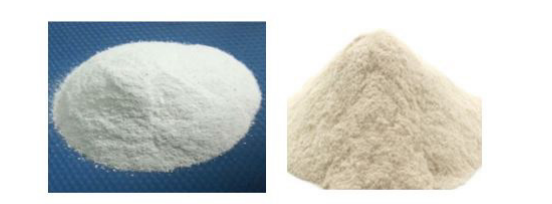
Figures 1 Cementitious material: (a) Glass Powder(SSG), (b) Xanthan Gum
FIGURE 2
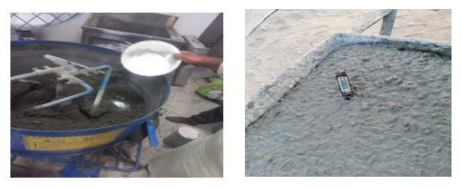
Figure 2: Mixing of concrete
FIGURE 3
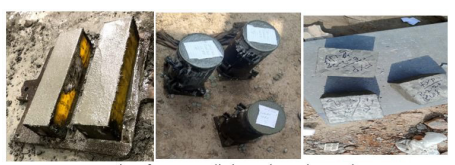
Figure 3: Casting of concrete cylinders, cubes and mortar bars
FIGURE 4
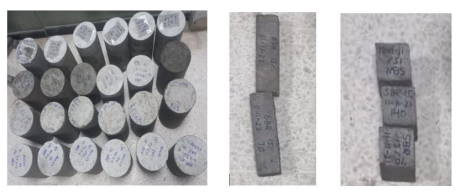
Figures 4 After casting hardened concrete cylinders, cubes and mortar bars
FIGURE 5
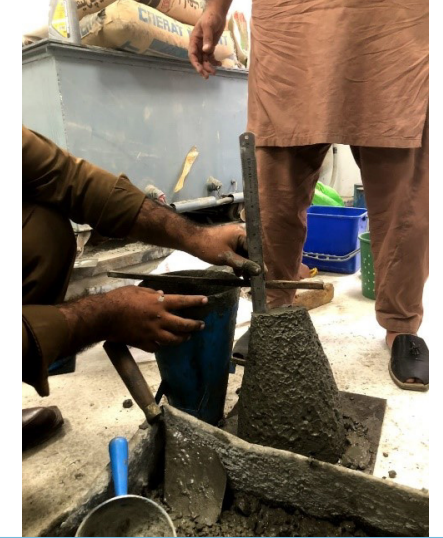
Figures 5: Measurement of slump on fresh concrete
FIGURE 6
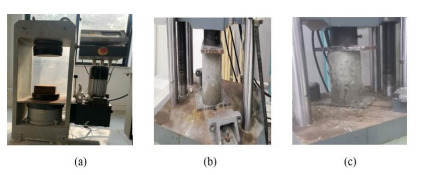
Figure 6: Experimental setup (a) Compression Testing Machine (b) sample before testing & (c) sample after testing
FIGURE 7
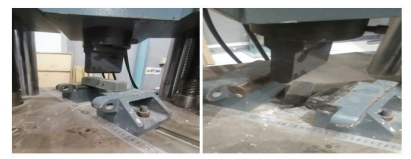
Figure 7: Experimental setup: (a)Sample (mortar bar) before testing & (b) after testing
FIGURE 8
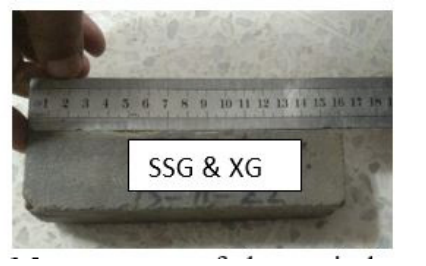
Figures 8: Measurement of change in length of mortar bar
FIGURE 9
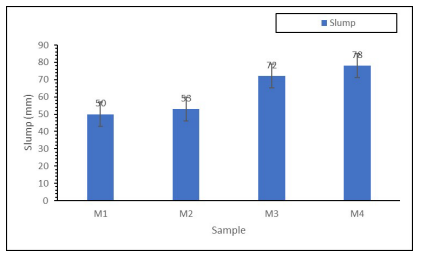
Figures 9: Slump at Different Percentage of Glass powder and Xanthan Gum
FIGURE 10
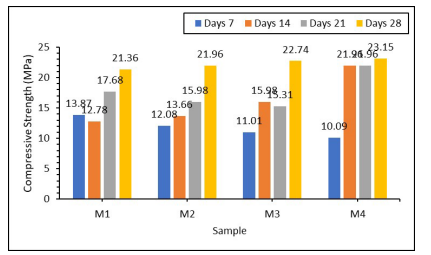
Figure 10: Summary of compressive Strength of concrete cylinders of all mixes
FIGURE 11
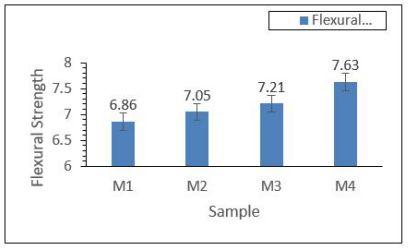
Figure 11: Flexural Strength of concrete cubes on 28 Days
FIGURE 12
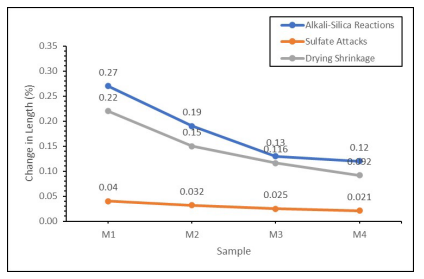
Figures 12: Percentage change in length due to expansions Caused by Alkali silica reaction, Sulfate Attacks and Shrinkage by Drying
FIGURE 13
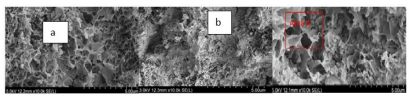
Figures 13: Sample images of SEM of 28d sample with different content of glass powder (a) glass powder 0% (b) glass powder 10% (c) glass powder 15%
Tables at a glance
Figures at a glance