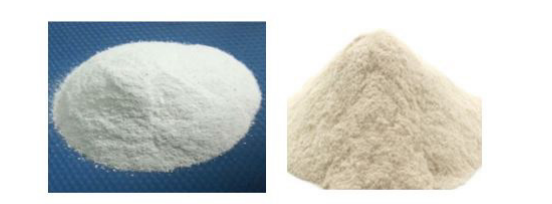
Figures 1 Cementitious material: (a) Glass Powder(SSG), (b) Xanthan Gum
Figures 1 Cementitious material: (a) Glass Powder(SSG), (b) Xanthan Gum
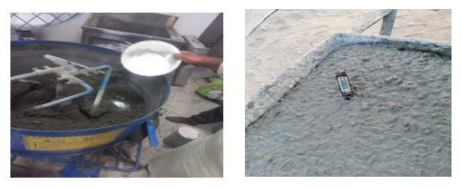
Figure 2: Mixing of concrete
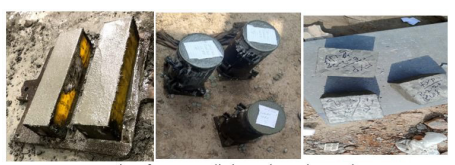
Figure 3: Casting of concrete cylinders, cubes and mortar bars
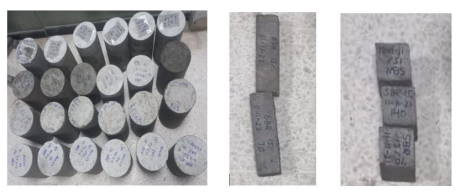
Figures 4 After casting hardened concrete cylinders, cubes and mortar bars
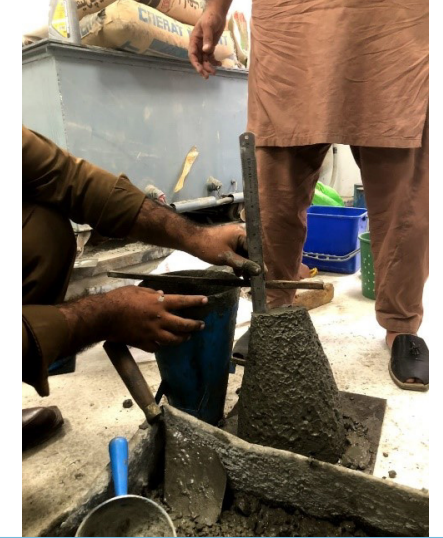
Figures 5: Measurement of slump on fresh concrete
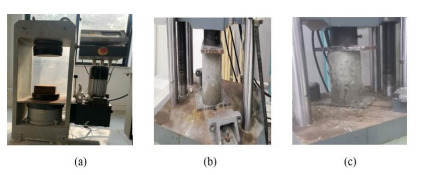
Figure 6: Experimental setup (a) Compression Testing Machine (b) sample before testing & (c) sample after testing
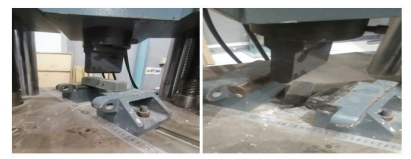
Figure 7: Experimental setup: (a)Sample (mortar bar) before testing & (b) after testing
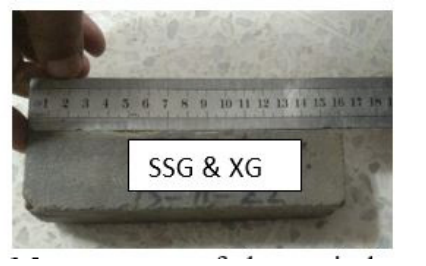
Figures 8: Measurement of change in length of mortar bar
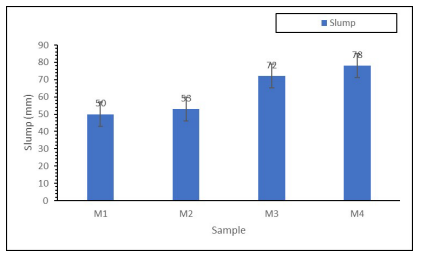
Figures 9: Slump at Different Percentage of Glass powder and Xanthan Gum
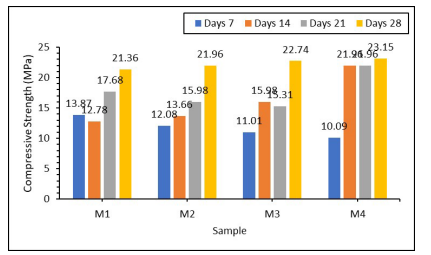
Figure 10: Summary of compressive Strength of concrete cylinders of all mixes
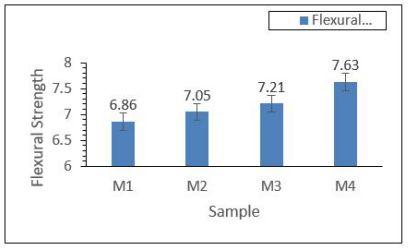
Figure 11: Flexural Strength of concrete cubes on 28 Days
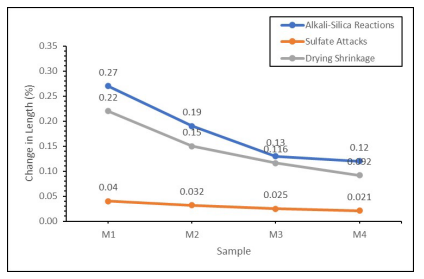
Figures 12: Percentage change in length due to expansions Caused by Alkali silica reaction, Sulfate Attacks and Shrinkage by Drying
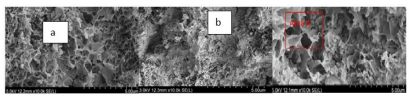
Figures 13: Sample images of SEM of 28d sample with different content of glass powder (a) glass powder 0% (b) glass powder 10% (c) glass powder 15%
Tables at a glance
Figures at a glance