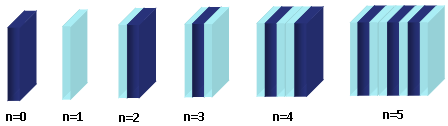
Figure 1: Schematic representation of the fibonacci sequence built structure as a stacking of H and L material layers, as a function of the generations number I, for I varying from 0 to 5.
Figure 1: Schematic representation of the fibonacci sequence built structure as a stacking of H and L material layers, as a function of the generations number I, for I varying from 0 to 5.
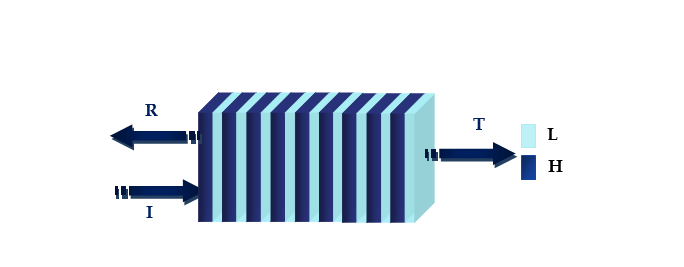
Figure 2: Schematic representation of the periodic structure as a stacking of H and L material layers
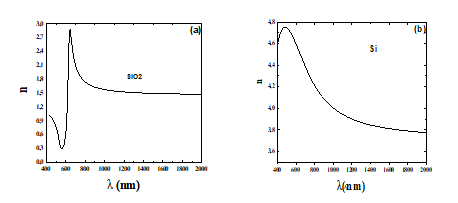
Figure 3: The variation of the refractive index n of Si and SiO2 materials a function of wavelength
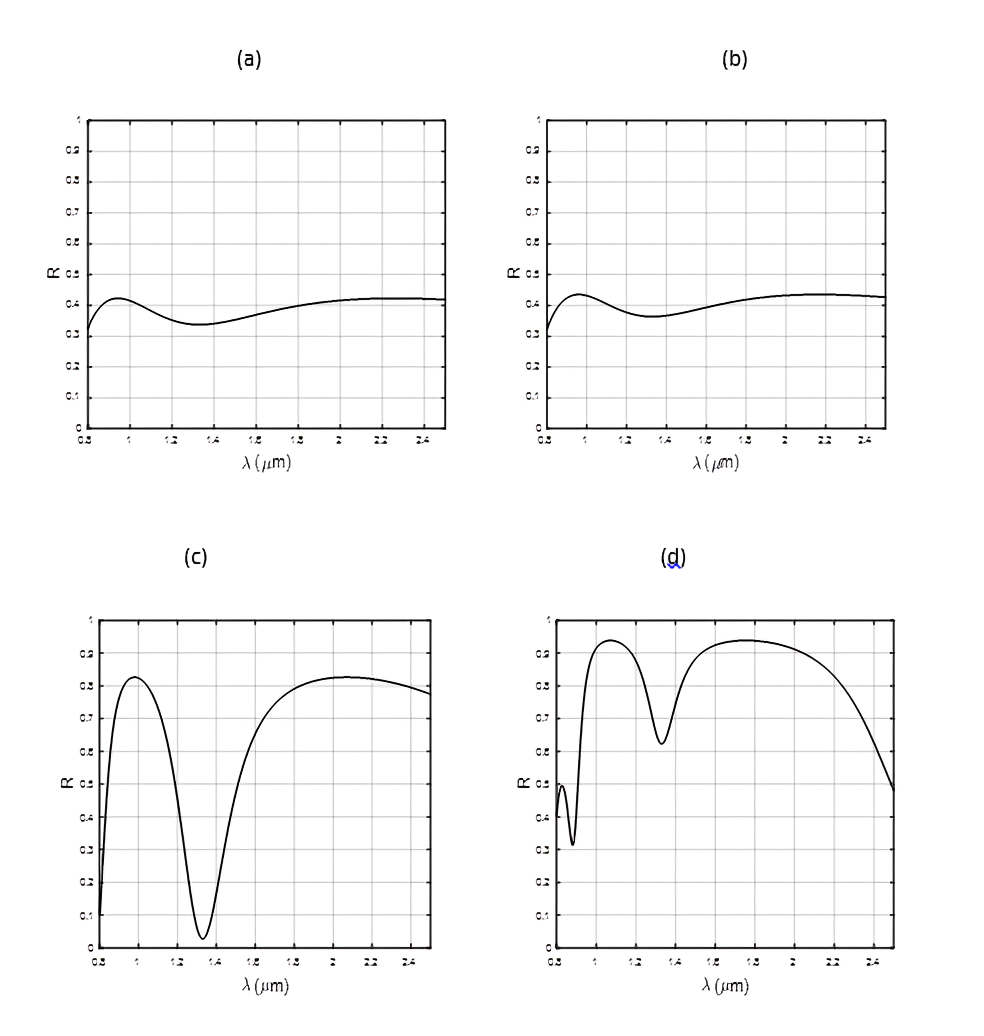
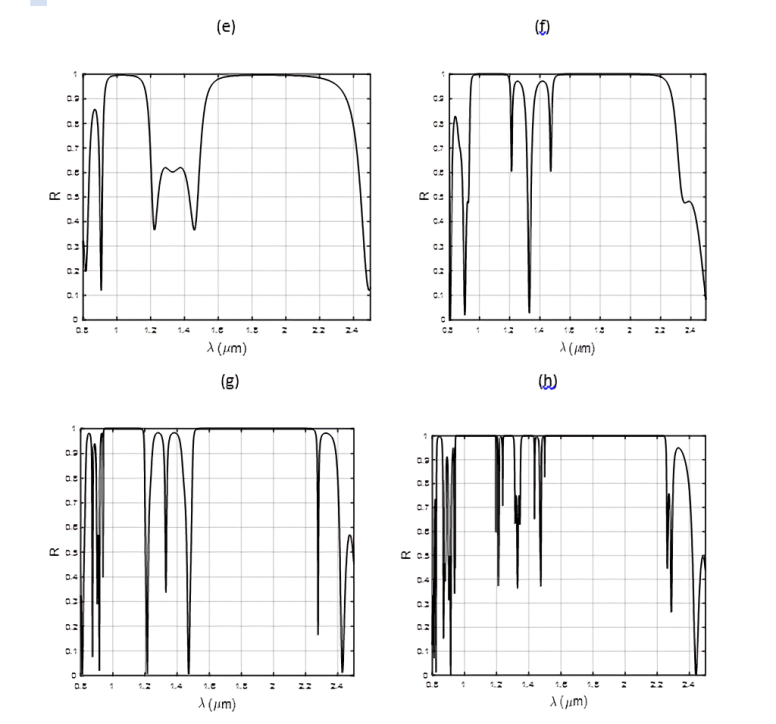
Figure 4: calculated Reflectance spectra of the Fibonacci photonic crystal of Si/SiO2 stacked layers, for different generation numbers I: a (I=3 i.e. 2 layers); b (I=4 i.e. 3layers); c (I=5i.e. 5 layers); d (I=6 i.e. 8 layers) ;e (I=7 i.e. 13 layers) ;f (I=8 i.e. 21 layers); g (I=9 i.e. 34layers); and h (I=10 i.e. 55 layers).
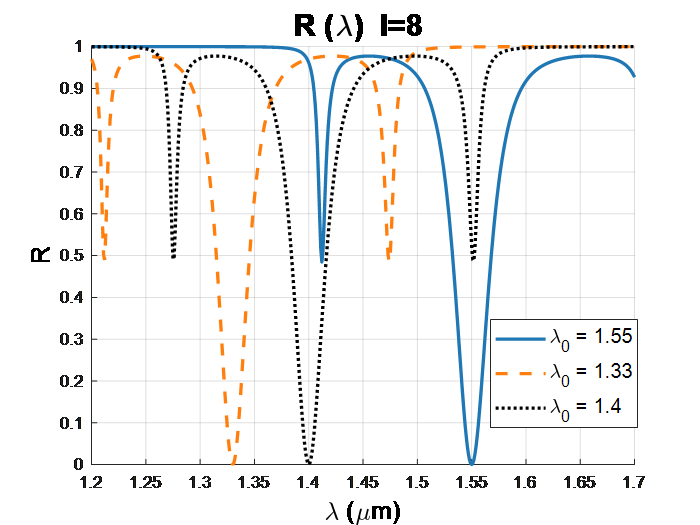
Figure 5: Reflectance spectra obtained for the fibonacci structure as function of wavelengths for three different reference wavelengths: 1.55 µm (solid line), 1.33 µm (dashed line), 1.4 µm (dot line).
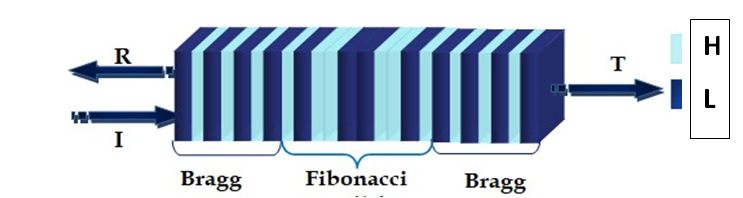
Figure 6: Schematic representation of the hybrid structure (Bragg/ Fibonnacci/ Bragg) as a stacking of H and L material layers
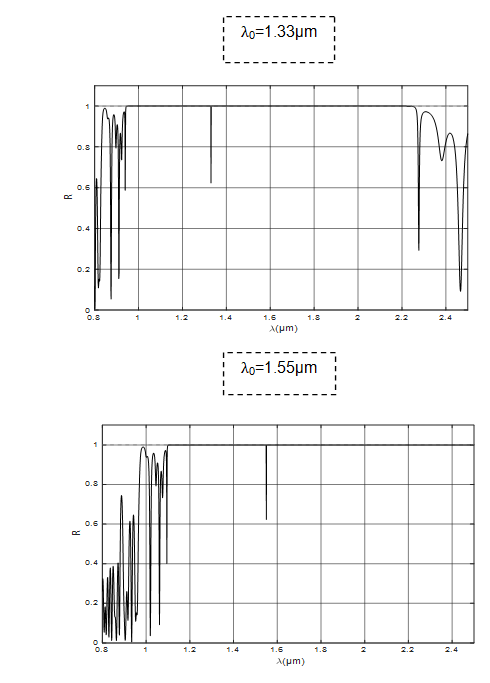
Figure 7: Calculated Reflection Spectra of the Br (7)/FS (8)/Br (7) Multilayer System for the Two Reference Wavelengths: λ0=1.33µm and λ0=1.55µm
Tables at a glance
Figures at a glance