
Evaluation of the Therapeutic Effects of Telfairia Occidentalis as an Adjunct in the Treatment of Malaria with Artemether/ Lumefantrine Regimen in Children with Acute Uncomplicated Malaria
Received Date: September 02, 2025 Accepted Date: September 19, 2025 Published Date: September 19, 2025
doi: 10.17303/jpam.2025.2.103
Citation:Ngoran Shantine Berinyuy, Theresia Njuabe Metoh, Chi Tchampo Fru, Philip FonGah, Achille Chi Djouosseu et al. (2025) Evaluation of the Therapeutic Effects of Telfairia Occidentalis as an Adjunct in the Treatment of Malaria with Artemether/ Lumefantrine Regimen in Children with Acute Uncomplicated Malaria. Pathol Allied Med 2: 1-19
Abstract
Introduction: Malaria, one of the deadliest diseases in Africa, continues to a public health problem in Cameroon. Anopheles gambiaie has been reported to be the very efficient vector Of Plasmodium falciparium Which is the species Of parasite responsible for 98% of deaths among children in endemic areas. In the course of host invasion, malaria parasite attacks the red cells. leading to a decrease in hemoglobin levels and the development of anemia commonly reported in children and pregnant wo- men. Malaria management involves the use of conventional drugs such as Artemether/Lumefantrine, (AL) which is the first drug of choice in the treatment of uncomplicated malaria-Telfairia occidentalis (Pumpkin Leaves), a vegetable plant con- surned in most parts of the world and with potential antimalarial properties, could serve as an adjunct therapy in malaria management. Due to this effect, this study aimed, to evaluate the therapeutic effect of Telfairia occidentalison the hemo- globin level,parasitaemia clearance rate and the liver activity in Camercx»nian children below 16 years. In an open labeled randomized clinical trial, enrolled participants who had Hemoglobin level within normal ranges, and individuals who had uncomplicated P, falciparum malaria were randomly assigned to receive: Artefan (AL) + placebo only; AL and capsulated Telfairia occidentalis (2 x Igram) dose for 3 days. On days O, l, 2 and 7. Hemoglobin levels were measured using a Mission Hb meter, gametocytes were also assessed and quantified by microscopy and quantification of liver activity enzymes using a Humalyzer. Data analysis were carried out using Graph pad prism version 8.0. I The overall findings showed that, parasite density affects the hemoglobin level and hematocrit with no significant average drop (Hb: 10.19g/dL to 10.19VdL with p-val- ue Of 0.05, Hct: 30.49% to 30.49%p-value: 20.05), Ihe values Of the Hemoglobin level and hematocrit were to in- crease after treatment with AL but a significant increase was seen with those treated with AL + Raw Pumpkin (RP) with mean ± SE of Hb (11.08g/dL): 11.08±0.02950; pso.05, Hct (33.21%): 33.21±0.09449; po-0001). Parasite density was seen to decrease in both groups from DO to D7 but decreased more rapidly and significantly in the group receiving AL+RP com- pared to AL with mean difference of 337.5; p-value 20.05, 937.5; p-value 20.05, p-value 0.01 and O.(KH); p-valueS0.05 on DO, Dl, 02 and 1)7. Liver activity enzymes were as well seen to decrease in both groups from IN) to D7 but decreased more rapidly and significantly in the AL + RP group with mean ± SE of AST: ( 40.53 IU/L) 40.53±3.739 p-value 0.0153, (29.731U/L) 29.73±3.085 p-value (17.23 IU/L) 17.23±2693 p.value < 0.ocm, (9.0751U/L) 9.075±2131 p-val- 48.71±5.385 p-value 0.0332, (38.461U/L) 38.461±4.884 p-value 0.0223, (15.291U/L) 15.29 ±2.068 p-value 0.8397, (8.9251U/L) 8.925±2.105 p-value0.9997. Also, signs and symptoms of malaria were seen to clear off more rapidly in the groups receiving T, occidentalis than in those receiving just AL Conclusively, Telfairia occidentalis has an influence on the hemoglobin leveland liver enzyme modulatory effects and works in synergy with AL for the treatment of uncomplicated malaria due to its antimalarial properties,
Keywords: Telfairia occidentalis; Hemoglobin level; Liver activity; Dietary Supplement Malaria; Artemether-Lumefantrine
Abbreviations: ACT: Artemisinin-Combined TherapyAL: Artemether-Lumefantrine CQ: Chloroquinine Hb: Hemoglobin INTs: Insecticide-Treated Nets IPTP: Intermittent Preventive Treatment in Pregnancy IRS: Indoor Residual Sprays [TN: Insecticide Treated nets PB: Boiled Pumpkin PCR: Polymerase Chain Reaction RP: Raw Pumpkin SP: Sulfa. doxine.Pyrimethamine SP: Sulfadoxine.Pyrimethamine WHO: World Health Organization Day Zero
Introduction
In the world at large, over 2(K) million malaria cas• es occur yearly, out of which two million progresses to se. vere disease. According to WHO's latest world malaria report, there were an estimated 247 million malaria cases and 619 000 malaria deaths worldwide in 2021 [1], with the major causative agent being Plasmodium falciparum [1]. According to WHO latest World Malaria report released on the 6th of April 2022 there were 241 million cases of malaria in the year 2020 compared to 229 million cases in 2019. The estimated number of malaria deaths stood at in 2020 compared to 411,0 deaths in 2018. In 2019 accord. ing to WHO statistics, nearly half of the world's population was at risk with most cases and deaths occurring in sub — Sa- haran Africa [2].
Despite all management measures put in place, malaria still tops the list of Cameroon’s Public health concerns and other parts of Sub–Saharan Africa [3]. Also, children under 5 years of age were the most vulnerable group for malaria and accounted for 97% of all malaria deaths worldwide in the year 2019 [1]. The management Of malaria involves a coherent productive approach which includes preventive measures that aim at controlling the vectors such as use of insecticide-treated nets (ITNs), indcxyr residual sprays (IRS) and parasite elimination by use of conventional drugs including artemisinin monotherapies and artemisinin-based combination therapies (ACTs) 151. Due to increase resistance of parasite to ancient drugs such as Chloroquinine and mefloquine, ACT have been recommended as the first line treatment for patients infected with uncomplicated Plasmodium falciparum [2]. Artemether/Lumefantrine (AL) is one of the approved and most successful fixed dose ACT used in the treatment of uncomplicated malaria by P. falciparum. Unfortunately, recent partial artemisinin resistance has been reported, to be characterized by slow parasitological response defined as delayed parasite clearance to treatment during the 3 days' treatment with AL as recommended by the WHO as the stipulated time for complete parasite clearance from infected blood [6]. Early diagnosis and prompt treatment with an effective drug regiment remain important components of malaria control and elimination strategies [71. In Cameroon, one of the recommended drugs for the treatment of uncomplicated malaria caused by Plasmodium falciparum, is AL which is commonly known as Coartem. In a previous study designed to evaluate the efficacy Of Amodiaquine-Artesunate versus Artemether Lumefantrine against uncomplicated malaria in children less than 14 years in Ngaoundere, Cameroon [81, it was reported that, both drugs were effective in parasite clearance and PCR-corrected cure. The rates were and 96.4%. However, several laboratorial abnormalities occur in the course of the infection such as anemia, thrombocytopenia, and methemoglobinemia, 191. Different substances or extracts have been in use today such as quinine and artemisinin were either obtained directly from plants or are derivatives of plant components [10]. As such, plants have always been considered to be a possible alternative and rich source of new drugs. T. occidentalis for example (commonly known as pumpkin leaves); has been reported to exhibit antiplasmodial activity both in the 4-day early infection test and in established infection with a marked increase of the mean survival time [l II, The leaves of Telfairia occidentalis showed the presence of phenolic compounds, flavonoids, phytosterols, tan- nins, saponins, chlorophyll and glycosides which have reported to exhibit chemo suppressive activity [12]. Tel. fairia occidentalis prcÆuced a dose-dependent improve. ment in the seminal fluid analysis and the histology of the testes, showing a near complete morphological regeneration and increased spermatogenesis [13]. The leaf extract Of T. occidentalis increased sperm motility, sperm viability and sperm count in rat [141. Other components of the plant such as arginine, vitamin C and zinc may also play impor- tant roles since studies have shown that nutritional thera• pies with zinc, vitamin C, vitamin E and arginine proved to be of benefit in the treatment of male infertility [121, Both aqueous and ethanolic extracts of T. occidentalis leaf have hepatoprotective although the aqueous extract was more effective than the ethanolic extract, which could be attributed to the higher antioxidant activity of the aque- ous extract than the ethanolic extracts of T. occidentalis leaves [15].
The leaves are good sources of K, Cu, Fe and Mn, moderate sources of Mg and Zn which are essential in human and animal nutrition [161, "Ihe high content of Fe in the young tender fluted pumpkin leavesserves as the basis for which the leaf extract is administered traditionally as blood tonic in the treatment of anemia and to convalescing patients, With these numerous therapeutic potentials, pumpkin leaves can therefore used not only as a food sup- plement but also an adjunct therapy in the management of malaria alongside ACTs which is the first work carried out so far. This study aimed to investigate the effect of Telfairia cxcidentalis on the hemoglobin level of malaria patients, the clearance rate of parasite in the blood and its effects on liver activity of children less than 16 years of age,
Methods
Study AreaThe study was carried out in the Bamenda Regional Hospital, Gilead Health Center and Solaman Multi-Care Foundation Laboratory which are all based in Bamenda situated in the Northwest Region of where it funds as the regional administrative headquarter. Bamenda is found in Mezam division and located between latitudes to 5058 North of Equator and between longitude 108 and 10010 East of Greenwich Meridian [18]; and oc. cupies a total surface area of 3,125 hectares 1191. It is bound. ed by Bafut subdivision to the North, flanked to the West by Mbengwi, to the South by Santa sub-division, to the South. west by Bali subdivision and bordered by Tubah sub-divi. Sion in the East
Study DesignThis study was a randomized open label clinical trial carried outfrom March 2022 to May 2022 to assess the effect of Telfairia occidentalis on the Hemoglobin level, the liver enzyme activity and parasite clearance rate when in combination with artemether lumefantrine (AL) treat- ment regimen in children. After a proxy-informed consent was gotten from parents/guardians, children aged 3 to 16 years whopresented clinical signs and were diagnosedwith uncomplicated malaria and parasitaemia count above 20 blood, were recruited for this study through ran. dom sampling as case group. Subjects without malaria were recruited as control group. screened for the presence of co-infections were excluded from the study.The study was designed to have one control group and three treatment groups (Groups 1, 2, 3 and 4). Upon meeting all enrolment criteria, participants were randomized to receive either of the two treatment regimens; (i) AL (Coartem; Novartis Pharma AG, Basel Switzerland- 20 mg artemether and 120 mg lumefantrine) as a standard or (ii) therapeutic dose of AL and therapeutic dose of Telfairia occidentalis
Sample Population and RandomizationOverall, of 180 participants included in this study, 75 were females and 69 were males. Seventy participants were malaria positives giving a prevalence of 38.88% (70/180). Of the overall, 120 participants of all age groups were divided into 4 groups, 70 were study patients positive for malaria and 50 were the control group negative for malaria. Also, of the overall participants, a subset of 74 chil- dren between the ages of 3 to 15 belonging to the control and malaria infected group were selected for treatment. The children were enrolled and assigned to Four groups (control (RP, BP), AL, AL + RP and AL+BP groups) randomly in. cluding 70 malaria positives to the study groups 2, 3 and 4 (AL, AL + RP and AL+BP groups respectively) and 50 malaria negatives in the control group (Group l)- FOL low.up was done for seven days for the assessment of Hemoglobin Level and Liver Enzyme Activity.
Drug Administration, Treatment and GroupingThe 70 patients recruited as malaria cases were placed into three groups (groups 2, 3 and 4). Group 2 received artemether lumefantrine only while group 3 received artemether-lumefantrine together with capsulated Raw Telfairia cxcidentalis and group 4 received artemether lumefantrine together with Boiled Telfairia occidentalis Group one was made up of non-positive cases, that is children whose microscopic examination did not show the presence of P. falciparum or any other malaria species and were called normal individuals.
For group 2, artemether—lumefantrine was admin. istered according to the manufacturer's prescription which is based on the weight ofthe child. The treatment lasted for a period of 3 days (72 hours) with a treatment inter. val of 8 hours as recommended by WHO. That is, drugs taken twice a day; morning and evening [21]. For 5 kg to less than 15 kg body weight, patients took one tablet as an initial dose, I tablet again after 8 hours and then I tablet twice daily (morning and evening) for the following 2 days (total course of 6 tablets). For 15 kg to less than 25 kg bodyweight, two tablets as an initial dose, 2 tablets again after 8 hours and then 2 tablets twice-daily (morning and evening) for the following 2 days (total course of 12 tablets). For 25 kg to less than 35 kg bodyweight, three tablets as an initial dose, 3 tablets again after 8 hours and then 3 tablets twice-daily (morning and evening) for the following 2 days (total course of 18 tablets). For 35 kg bodyweight and above, four tablets as a single initial dose, 4 tablets again after 8 hours and then 4 tablets twice-daily (morning and evening) for the following 2 days (total course of 24 tablets). Each tablet of AL contains 20 mg of artemether and 120 mg of lumefantrine. For group 3 and 4, artemether lumefantrine was ad. ministered the same way as in group 2 Telfairia occidentalis was administered on age ranges.
For follow—up, the treatment was initiated on IN) (enrollment Day) and participants were asked to return to study clinic on days 1, 2 and 7. On each follow-up day, study participants were assessed for any symptoms, Bassible adverse effects, concomitant medication, measuring axillary temperature and collecting samples. In case a partici- pant did not show up at the clinic, a field worker was sent to the house to find out the reason and possibly to bring the participant at the clinic for clinical examination and sam- pling. At all visits, blood was collected by finger-prick for blood smears and 2mls of blood collected in red tubes for lipid V%trameter quantifications. A patients' case report form was filled each day of follow up. 111is was to check for de- crease of clinical signs of malaria (fever, temperature, vomit. ing, loss of appetite, abdominal pain, headache, dizziness and weakness) and if there was any adverse effect of the drug administered.
Hemoglobin MeasurementHb measurements were done using the mission plus Hb Hemoglobin Testing System VR (AconBiotech San Diego USA) intended for the quantitative determination of hemoglobin (Hb) and calculated hematocrit (Hct) in capillary and venous human whole blood. Before collecting the sample, the individual's finger was cleaned with a cotton containing a prepared 75 % alcohol, after which a lancet was then used to prick the finger, The first blood was wiped off using a cotton and a light pressure applied to obtain a second drop of blood. About 10gL of capillary blood was then collected using a capillary transfer tube. The tube was held slightly downwards and its tip touched the drop. Capillary action automatically draws the sample to the fill line and stop. The Hb meter turned on after it was correctly set with the correct time and the appropriate test strip was inserted and its c€kle shown on the screen of meter after insertion for confirmation. After some few seconds after inserting the test strip a signal is made for specimen to be applied in the specimen application area. The tip of the capillary transfer tube was then aligned with the specimen application area of the strip and the second drop of blood approximately applied, After which the Hb and Hct were read after a few seconds and the respective readings were noted at every occasion. This procedure was repeated for Dl, D2 and D7 follow up of patients.
Malaria Parasite Count EstimationThe method used for quantification or estimation of density in enrolled patients was microscopy which was performed by counting within a given number of microscopic fields against counted white blood cells (WBCs) within the same fields [21] with an assumed WBC count of 8.0 x 10⁹cells/L Blood samples were collected from patients on DO upon recruitment by finger pricking using lancets and the slides labelled with patient ID number and day of collection. The blood was then made to drop on a clean sterilized microscopic slide (approximately 10111) and a thick smear made in a circular motion, The slides were allowed to air dry before staining with giemsa Air dried slides were fixed with methanol by dipping into the container of methanol for 2—3 minutes, 'Ihe slides were then placed back-to-back in a staining trough containing giemsa solution making sure all fixed sample faced to one direction and allowed for 20 minutes, After which the slides were rinsed with clean water, allowed to air dry for 5minutes then viewed under the microscope. The slides were examined under the xl(H) oil immersion objective lens of a light microscope, 'Ihe asexual parasites density was counted against WBCs counted in microscopic field examination, A patient was considered positive if P. falciparum was seen during the microscopic examination. This procedure was repeated for Dl, D2 and D7 follow up of patients.
Liver Enzyme Activity MeasurementsThe method used for the measurement of ALT, AST and GGT was spectrophotometry using the Humalyzer 3500 machine which is automated with a built-in inventory management system. On DO, D3, D7 of follow-up, 2ml of blcx.yd was collected from patients via venipuncture and placed in to a 4ml EDTA test tube. samples were cen- trifuged using a centrifuge at rpm for 15 minutes as per standard clinical laboratory procedures. The plasma was then separated and transferred into dry tubes and stored in a refrigerator set at 0 to 40C.The samples were then ana- ly-zed using Humalyzer 3500 for AST, ALT and GGT which uses enzymatic colorimetric and spectrophotometric test. Blood analyzed were collected on DO before treatment and D2 and D7 after treatment.
Data AnalysisData were entered and analyzed using Microsoft excel 2013 and Graph Bld prism version 8.0.1. Descriptive statistics were done, All values were expressed as Mean ± S.E (Mean standard error of Difference). The analysis of variance (ANOVA) was employed to know mean differences of liver enzymes and parasite density. P-values < 0.05 were considered as statistically significant and Confidence limit was at 95%.
Results
Socio-Demographic DataThe baseline characteristics of participants (180) who met the inclusion criteria are displayed in Table 1. Of the overall, children enrolled had a mean weight of 36.4 kg. There was a significant difference in hemoglobin (Hb gldL) study cases and control group (p = 0.02) and a significant difference in temperature.
The combined effect of Telfairia occidentalis and AL on the parasite clearance rate in children infected with Plasmodium falciparumWe observed a positive response in individuals suf. fering from P. falciparum who received AL + Placebo as their only treatment. Their parasitemia dropped from high- er to lower values of trophozoites/ul of bloodwith a signifi- cant change even though during the third day (D2) of treat- ment some trophozoites were still found in the blood sam- ples of some patients as shown in the figure below (l a), It was observed that there was a significant difference in mean between Do and D1 at 4000ul of blood and 1500ul of blood (3778±378.3), 95% Cl(1044 to 3467) with p.value 0.0015, as well as between DO and at 4(mul of blood and The ef- fect of AL+BP on the parasite clearance rate of P. falci- parum infected children among the different treatment days showed a significant decrease in parasitemia between DO and D7 from 35(X) trophozoites/ul of (3450±861.3) with a p.value ofO.02 and O trophozoites/ul of blood. Mean. while the analysis also showed a in parasitemia tweenD1 vs D2, Dl vs D7and D2 vs D7 though not statisti- cally significant (Figure lb). The combined effect of AL + RP on the parasite clearance rate between the different days of treatment showed a significant decrease (p-value s 0.05) in the number of parasites (Figure lc). No trophozoites were observed on D2 and D7 showing a significant decrease with p.value 0.0037.
Comparison between BP+ AL and Placeb0+ AL, RP + AL and Placebo + AL effects on parasite clearanceAs shown in fig 2, parasite clearance differs, though not statistically significant, except for D2 in figure 2a which showed a significant decrease in mean from 3000 trophozoites/ul of blood (30.0±0.0), 95% Cl 95.22 to (504.8) With p-value S 0.05. 'Ihe parasite clearance rate washigher in the BP+AL group from 35(K) trophozoites/ul of blockl (3756±1170, to p>0.05) trophozoites/ul of blood (112.5±106.7, P>0.05) compared to the placebo + AL group from trophozoites/ul of blood (3475±1170, p>0.05) to 8(K) trophozoites/ul of blood (300±106.7, p>O.05). In the RP + AL group a small decrease in para sitemia was observed though not statistically significant as no parasites were seen after the third day of treatment (02) and D7 of follow up from 4000 trophozoites/ul of blood (3412.5±1044, p>0.05) in D0 to 0 trophozoites/ul of blood.
Hemoglobin levels in normal individuals and malaria patientsAn increase in the means of Hb in children not af- fected by the parasite from that Of individuals affected by the parasite was observed as follows, According to the differ- ent treatment days it was observed that, on DO an incre- ment was recordedfrom 1030g/dL to 12.19 gldL with a P-- value of 0.02, Dl from 10.M)g/dL to 12.19g/dL with a p-val- ue of 0.02, from a mean of 10.79g/dL to a mean of12.31g/dL and a p. value of 0.11 and D7 from a mean ofll.08g/dL to 12.43 and with a p.value of 0.13, even though days 2 and 7 were not statistically significant. In the Sadik's multiple comparison of the means of Hb in normal, there was a general increase in the Hb level in the blood sam- ple of normal childreneven though not statistically signifi- cant from days 2 and 7. There was a decrease in the means of Hb in children not affected by the parasite (RP vs BP) from that of individuals affected by the parasite. DO from 12.26g/dL to 12.19 gldL with a p-value of 0.98, Dl from 12.26g/dL to 12.19g/dL with a p.value of 0.98, D2 from a mean of 12.49g/dL to a mean and a p. value of and D7 from a mean to 12.42g/dL and with a p.value of 0.43, even though days O, I and 7 were not statistically significant, while a decrease in mean was as well observed between RP vs PA(Placebo + AL) though statisti- cally significant-DO from 12,26g/dLto 10.63g/dLp-value Dl was from 12.26g/dL to 10,63g/dL with a p.val. ue of D2 from 12.49g/dL to 10.03g/dL with a p-val• ue of and D7 was from 1300g/dL to 10.21g/dL with p.value and Bp vs PA showed a decrease in mean as well though statistically significantD012.19g/dL to 10.03g/dL with p.value 003, Dl was from 12.19g/dL to 10.03g/dL with a p.value of D2 from 12.31g/Dl to 10.03g/dL with p-value and D7 from 12.43gJdL to 10.21g/dL with a p.value of 002
Effects of Artefan +Placebo, RP and BP on the Hb level of Test and groupsIn the bar chart Tukeys multiple comparison, it was observed that there was an increase in Hb between RP vs BP (figure 3 bl) though not statistically significant, while a significant increase in Hb was observed between RP vs PAL (b2) with a very tiny p-value of as well as be- tween BP vs PAL With a small p-value Of 0.003.This Ob- served increments in the hemoglobin levels as displayed by the graphs below can be attributed to the fact that the active ingredients iron specifically are still very much intactthere by boosting the hem+bin levels most especially in the RP group.
Therapeutic effect of Telfairia occidentalis on liver activity of Plasmodium falciparum infected children
Therapeutic effect Of RP, BP and AL+ Placetbo on liver activityIt was observed that, the AST, ALT and GGT levels in the RP group showed a great significant decrease between the different days, compared to the BP group which as well showed a significant decrease in these liver enzymes The level of these enzymes decreased significantly as well in the treatment group (AL + Placebo) (p 0.01). An observed decrease in the three Liver enzymes in the RP + ALcan be explained by the fact that the phytochemical contentsof this functional focxi was still intact, unlike in the BP + RP group wherein we observed a small significant decreasecan be dueto thermal denaturation of most of these phytochemicals thereby decreasing its effects
Effect of BP +AL and RP + AL on liver activity of Plasmodium falciparum infected childrenThe figure 5 shows comparison of the effect of BP+ AL and RP + AL on the liver activity of the patients (treatment groups) which showed no significant difference between the different liver enzymes (ALT, AST and GGT) during the different treatment days though it was observed that there was a decrease in mean during the different treatment days. Figure a showed a significant decrease in ALT for both treatment groups (BP and RP *AL) on p and (40.53±2.715, p 0.003).
Effect Of BP +AL and Placeb0+ AL on liver activity of Plasmodium falciparum infected childrenThe below figure 6 shows comparison of the effect of BP + AL and Placebo + AL on liver activity of the treatment group.lt was in Figure 6(a) that there was a significant decrease in mean of AST between the two treatment groups with mean difference (21.87±2.244, p< 0.0001), as well as in means Of ALT figure 6(b) With mean difference (6.390±2.053,p0.0302) though no significant difference was observed on 07 of follow up, but inthere was no significant decrease in mean of GGT was observed between the two treatment groups.
Comparison between RP +AL and Placebo+ AL on the liver enzyme activity of Plasmodium falciparum infected childrenA comparison of the effect between RP + AL and AL + Placebo on the liver activity enzymes of P, falciparum infected children is shown in figure 7, It was observed that there was a significant increase in means of AST and ALT between the two treatment groups, AST po.0153) on DO, (-15.39± 3.085, po.0012) on m, (-17.87±2.693, and (-21.24±-21.24, p< o.01) on m, ALT (16.75±5.385, po.0332) on DO, (1666±4.884, pO.0223) on DI and no significant difference was observed on D2 and D7 of treatment. There was no observed significant difference in GGT between the two treatment groups.
Comparison Of the different treatment groups Parasitemia levels between AL + placebo vs. AL + RP, AL + placebo Vs. AL + BP and AL + RPVs. AL + BPFigure 8 below brings out comparison of parasite clearance rate among the different treatment groups, and it observed that there was a significant parasite clearance rate in the AL + RP group as compared to the other two treatment groups that is AL +placebo and AL + BP groups.
HB level between AL + placebo vs. AL + RP, AL + placebo Vs. AL + BP and AL + RPVs. AL + BPFigure 9below brings out comparison of HB levels among the three different treatment groups, and the results obtained shows that there was a significant difference in means of HB level of the AL + RP treatment group from (10.93± 0.1225), (12.43±0.1225) with p-value when compared with the AL + placebo group and from (9.37± 0.1500), with p.value 0.0007 when compared with AL + BP group.
Liver enzyme activity between AL + placebo vs. AL + RP, AL + placebo Vs. AL + BP and AL + RPVs. AL + BPIt was observed in figure 10 below when a compari- son of the three liver enzymes activity (ALT, AST, GGT) we compared among the three treatment groups that, there was a significant decrease in ASTin the AL + RP groupfrom (49.94± 1.532),(22.61± 1.532) with p-value when compared with the AL + placebo group, main while no significant difference in the decreased liver en- zyme (ALT)was observed when the AL + RP group was compared with the AL + BP group from (22.61± 3.466). For ALT and GGT no significant decrease was observed in these two liver enzymes among the different treatment groups when compared.
Discussion
Anemia is a common blood disorder that affects people of all age groups [211. It is marked by a reduced red blood cell (RBC) countand hemoglobin (Hb) levels [22]. Iron deficiency induced anemia negatively affects motor and development, resulting in fatigue and low pro- ductivity. During parturition, it may be linked with reduced birth weight and an increased risk of maternal and perinatal death [231 [241. In 2013, iron deficiency anemia accounted for approximately deaths in both sexes across all age groups in developing nations 171. Anemia is one of the sever- al diseases asserted to have been successfully treated with plant principles by herb doctors [211. In the recent past, an assortment of natural compounds from plant extracts has been studied by different researchers [251. This study was aimed at evaluating the effect of Telfairia occidentalis on the hemoglobin level, parasite clearance rate, and liver enzyme activity in children in the age of range 2 to 15 years.
This study investigated the parasite clearance rate in three treatment groups. T. xcidentalis in combination with AL recorded a high rate of parasite clearance, in the case group 3 ( RP + AL) when compared with the case groups 2 ( AL + Placebo) and 4 ( BP + AL ) where there was no recorded significant difference in parasite clearance rate between the two groups.ln case group 3 it was recorded that there was a significant total parasite clearance on D2 as compared to case groups 2 and 4 where there was no significant difference in parasite clearance, but there was a complete parasite clearance on D7 in all three case groups-No significant difference was recorded for DO and Dl for all the three case groups. Furthermore, signs such as high temperature, fever and vomiting were not the case for those who took AL+ RP, AL + BP during the treatment days but these was found to be the case for in AL + Placebo group, whereas patients in the AL+ RP and AL + BP groups were not indifferent in the case Of appetite from those in the AL+ Placebo group. It was also observed that the AL + RP group exhibited the highest parasite clearance rate when compared with the other treatment groups (AL + placebo, AL +BP). The possible explanation for this could be that T. occi- dentalis played a role in the eradication of parasitemia in the host's blood, which had a combined effect with that already done by AL and subsequently increased the parasite clearance rate. This could be because of the rich content of flavonoids, tannins, alkaloids, saponins, and alkaloids. Previous research has shown that, T. occidentalis has a potent antioxidant capacity through its ability to prevent lipid peroxidation and DNA damage and to increase the of antioxidant enzymes [26]. The antioxidant and anti-inflammatory effects of this plant result from the carotenoids, vitamins C, flavonoids, and other substances it contains. As the body cannot manufacture these nutrients, they must sup. plied in the diet. Therefore, the synergistic antimalarial effect of T. occidentalis when used in combination with ACT likely resulted from the antioxidant activities that are associated with the beta carotene (carotenoids) and chlorophyll it contains [27]. The results obtained from this study are there. fore in line with those of Okokon et al, [28], whoreported significant antiplasmodial activity With the seed and leaf extracts of T. occidentalis durin ear and established infections. The seed extract exhibited schimntocidal activity. An- tiplasmodic activity Of fluted pumpkin was also validated by Adegbolagun et al, [29], who documented a reduction in parasitemia within 48 hours, when bergheiinfected albino mice were administered an aqueous extract of T. cxcidentalis alone or in combination with artesunate.
Being one of the largest organs in the human 1301, the liver plays a key role in the regulation of variegated processes, which include metabolism, storage, secretion, and detoxification of endogenous and exogenous com- pounds 13 II. Hepatocytes are the functional cells of the liver [32]. Globally, liver disorders are a major problem. Ortho- dox drugs employed in the treatment of liver diseases are sometimes ineffective and can have grave untoward effects [33]. In addition, the treatment interventions are usually expensive for resourcepoor countries. Herbal medicines constitute a group of therapeutic agents with a lowside effect profile.
In this study, all participants in groups 1A and B registered a normal Hb level compared to the other groups. However, such levels were lowered, though not statistically significant in children with malaria compared to the healthy control. lhere was no significant difference in Hb levels between the two control groups (RP and BP), but a significant difference in Hb levels was observed between RP vs. placebo + AL and between BP vs. placebo + AL. There was a significant difference in Hb (increased in AL + RP) when the three treatment groups were well compared. "Ibis increase in hematological parameters (Hb and Hct) investigated could 1k as a result of some constituents such as iron and some B complexes vitamins that it B)ssesses as the* serve as hematopoietic factors that influence directly on blood production in the bone marrow [34]. This study agreed with the findings of [35], who reported that, consequently upon administration, the methanolic leaf extract of T. dentalis stimulated si 'ficant erythropoietin and leukopoi-in mice. Atabo et al, 1361, demonstrated that leaf, seed, and stem extracts of fluted pumpkin have the capacity to reduce endogenous methemoglobin (metHb) concentrations converting metHb to Hb at a high rate. Ogbe., et al in 010, [211 found that an oral daily dose of T. cxcidentalis showed significant antianemic activity in phenylhydrazineinduced anemia in rabbits. A significant increase in Hb was al") reported bylweala E., 137], whodocumented the ematinic activity of the aqueous crude extract. According to the findings of [38], preparations of fluted pumpkin significantly increased PCV, Hb concentrations, RBCs, and white cell (WBC) counts, This study also corroboates with the work of Salman et al. 1391, who reported that there was a significant increase in the hematological parame- rs of rats that were treated for two weeks with the aqueous leaf extract of fluted pumpkin. Some scientists have proposed the use Of fluted pumpkin in the treatment Of anemia, following studies that reported that extracts of fluted pumphelped to maintain blood levels in subjects given their extracts 1401. This study further explored the combined efect of T. occidentalis and AL on the liver activity enzymes.The group control group IAadministered with RP showed a significant decrease in all three liver enzymes analyzed (AST, ALT and GGT) when the different treatment days re compared,as compared to the BP control group which showed a significant decrease in AST and C,CGT but no significant difference was observed for ALT when D2 was compared with D7. While for case group 2 (AL + Placebo) a sig- nificant decrease in AST and ALT was recorded When the different treatment days were compared except for GGT where there was no significant difference when Dl was compared with D2. When a comparison between case groups 2 and 4 was made, it was observed that there was a significant decrease in AST, while a significant decrease in ALT was recorded just for DO and Dl but no significant decrease on and D7, between case groups 3 and 4 was made, it was also observed that there was a significant decrease in AST and ALT except for D7 where no significant decrease was recorded, meanwhile no significant decrease was observed with GGT. When group 3 was compared with group 4, it was noticed that there was a significant decrease in AST on DO and there was no observed significant decrease on days l, 2 and 7, while no significant decrease was recorded for ALT and GGT from which we can draw a con.clusion that RP group IA and case group 3 recorded the greatest effect on decreasing the three analyzed liver en. zymes. This can be attributed to the rich phenolic content of T. cxcidentalis as well as its antioxidant potentials. A significant difference in AST was also observed in AL + RP group when compared with the other treatment groups (AL + placebo and AL + BP), While there was no significant difference in ALT and GGT when the treatment groups where as well compared. The results of this study were in agreement with those of Oboh G., et al, [41 | who reported that an aqueous extract of fluted pumpkin was more effective than the ethanolic extract in protecting hepatcxytes against garlicinduced oxidative stress. NwannaEE., et al 1421 in their work found that both solublefree and bound phenolic ex. tracts of the leaves protected hepatocytes from oxidative stress. However, solublefree phenolic extract showed signifi- candy higher hepatoprotective activity as compared to bound phenolic extract. Ihe hepatoprotective property of fluted pumpkin may be attributed to its rich phenolic content as rted b Obohetal [21].
Conclusion
This study investigated the effectiveness of artemether/lumefantrine and its combination with raw or boiled leaves of T. occidentalis in the treatment of uncomplicated malaria. The degree of anemia was lowered as evidenced a restored hemo in level and there was a rapid parasite clearance upon administration of the combination of T. occidentalis and artemether/lumefantrine. The young leaves of T. occidentalis significantly normalized the level of hepatic enzyme activity in the course of the treatment of P. falciparum infected children, Globally, it can concluded that, the combination artemether/ lumefantrine with the leaves of T. Occidentalis can be effective in the treatment of malaria and that the effects are more pronounced in combination with the raw leaves of T. occidentalis. Thus, this study displayed T. occidentalis as an enriched functional food with outmost benefits to human health when consumed naturally.
Ethical Consideration
Ethical approval was sought and obtained from the Regional of public health Bamenda, Northwest Region Cameroon through N/Ref: 028/ATT/NWR/RDPH/BRIGAD of 8 th FEBRUARY 2022: and the Ethical and Research committee of the University of Bamenda, Northwest Region Cameroon. A Proxy-informed consent was gotten from all individuals enrolled in the study or from parents and guardians of the children for their willingness to participate in the study after explaining the rational of the study and en-Suring their confidentiality. Participation was voluntary.
Disclosure statement
The authors, declare there is no conflict Of interest
Acknowledgements
The authors appreciate the technical staff of the Bamenda Regional Hospital, Gilead Health Center and Soleman Laboratory for their support.
- World malaria report (2022) World Health Organization. 2022. World Health Organization, Geneva, Switzerland
- World Health Organization, World malaria report 2020 (2021): 20 years of global progress and challenges. World Health Organization.
- etoh TN, Chen JH, Fon-Gah P, Zhou X, Moyou&mo R, Zhou XN (2020) Genetic diversity of Plasmodium falci- parum and genetic profile in children affected by uncompli- cated malaria in Cameroon. Malaria journal 19. 115.
- Plewes, SJ Leopold, HiA/F Kingston, AM Dondorp (2019) Malaria: What's New in the Management of Malaria?. Infect Dis Clin North Am 33:39-60
- M Dondorp, Frans-ois Nosten, Poravuth Yi, Debashish Das, Aung Phae Phyo, et al. Artemisinin Resistance in Plasmcxiium falciparum Malaria. N Engl J Med 361:455-67
- World Health Organization, World malaria report 2015 (2015). Geneva: World Health Organization.
- M Ali„ PM Netongo, AT Barbara et al. (2013) "Amodi- aquineartesunate versus artemether-lumefantrine against un- complicated malaria in children less than 14 years in Ngaoun. dere North Cameroon : efficacy, safety, and baseline drug re- sistant mutations in pfcrt, pfmdrl, and pfdhfr Genes," Malaria Research and Treatment.
- chan J, Tibenderana J, Kyabayinze D, Mawejje H, Mugizi R, Mpeka B, Talisuna A, D’Alessandro (2011) Case management of severe malaria forgotten practice: experiences from health facilities in Uganda. PLoS One 6: e17053
- Tse EG, Korsk M, Tod MH (2019) The past, present and future of anti-malarial medicines. Malar J 18:93.
- kokon JE, Ekpo AJ, Eseyin OA (2009) Evaluation of in vivo antimalarial activities of ethanolic leaf and seed extracts of Telfairia occidentalis. J Med Food 12: 649-53.
- Okokon JE, AJ Ekpo, OA Eseyin (2007) Antiplasmodial Activity of ethanolic Root Extract of Telfairia occidentalis.Research Journal of Parasitology 2: 94-8.
- ladele JO, Oyewole 01. Bello 0K, Oladele OT (2020) Identification of Bioactive Chemical constituents present in the Aqueous Extract ofTelfairia Occidentalis and it's in vitro Antioxidant Activities. Nat Ayurvedic Med 4: 0237
- wangwa EK, Mordi J, Ebeye OA, Ojieh AE (2007) Testicular regeneration effects induced by the extracts of Telfairia occidentalis in rats. Caderno de pesquisa, serie Biologia 19: 27-35.
- aalu LC, Kpela T, Benebo AS, Oyewopo AO, Anifo- wope EOI Oguntola JA (2010) The Dose-Dependent Testicu- 10 protective and Testiculo toxic Potentials of Telfairia occi- dentalis Hook f. Leaves Extract in Rat. Intern J Appl Res Nat Prod 3:27-38.
- boh G Tropical green leafy vegetables prevent garlic induced hepatotoxicity in the rat. J Med 9:545-51
- dris S (2011) Compositional Studies of Telfairia occidentalis leaves. Ame J Chem 2011; 1: 56-9.
- Neba (1987) Modern Geography of the republic of Cameroon Subsequent edition. Camden NJ.
- cho Chi (1998) Human interference and environmental instability: addressing the environmental consequences of rapid urban growth in Bamenda, Cameroon. Environment and Urbanization 10: 1998.
- World Health Organization, World malaria report 2015. Geneva: World Health Organization.
- B Ochola, P Vounatsou, T Smith, M L H Mabaso, C R J C Newton (2006) The reliability of diagnostic techniques in the diagnosis and management of malaria in the absence of a gold standard. Lancet Infect Dis 6:582-88.
- gbe RJ, Adoga GI, Abu AH (2010) Antianaemic potentials of some plant extracts on phenyl hydrazine induced anaemia in rabbits. J Med Plant Res 4: 680 4
- arrell D, Cox T, Firth J, Benz E (2003) Oxford Textbook of Medicine. Oxford: Oxford University Press.
- teer PJ (2000) Maternal hemoglobin concentration and birth weight. Am J Clin Nutr 71:1285S-7S.
- ozuki N, Lee AC, Katz J (2012) Child Health Epidemiology Reference Group. Moderate to severe, but not mild, maternal anemia is associated with increased risk of small for gestational ageoutcomes. J Nutr 142: 358-62.
- ash BP, Archana Y, Satapathy N, Naik SK (2013) Search for antisickling agents from plants. Pharmacogn Rev 7: 5360
- boh G, Nwanna EE, Elusiyan CA Antioxidant and antimicrobial properties of Telfairia occidentalis (fluted pumpkin) leaf extracts. J P and antimicrobial properties of Telfairia occidentalis (fluted pumpkin) leafextracts. J Pharma- col Toxicol 1: 167-75
- Kimura; DB Rodriguez-Amaya (2003) Carotenoid composition of hydroponic leafy vegetables. Journal of Agriculture and Food Chemistry 51: 2603-7
- kokon JE, Ekpo AJ, Eseyin OA (2009) Evaluation of in vivo antimalarial activities of ethanolic leaf and seed extracts of Telfairia occidentalis. J Med Food 12: 649-53.
- degtboxlagun 0M, Emikpe BO. Woranola 10, Yetunde O (2013) Synergistic effect of aqueous extract of Telfairia occidentalis on the biological activities of artesunate in Plasmodi um berghei infected mice. Afr Health 14:9706.
- Zakaria ZA, Rofee MS, Somchit MN, Zuraini A, Sulaiman MR, Teh LK et al (2011) Hepato protective activity of driedand fermented processed virgin coconut oil. Evid Based Complement. Alternat Med 201: 142739
- Madrigal Santillán E, Madrigal Bujaidar E, Álvarez González I, Sumaya Martínez MT, Gutiérrez Salinas J, Bautista M et al. (2014) Review of natural products with hepatoprotective effects. WorldJGastroenterol 20: 14787-804.
- Michalopoulos GK (2007) Liver regeneration. J Cell Physiol 213: 286-300
- Arhoghro EM, Ekpo KE, Anosike EO, Ibeh GO (2009) Effect of aqueous extract of bitter leaf (Vernonia amygdalina del) on carbon tetrachloride (CCl4) induced liver damage in albino Wistar rats. Eur J Sci Res 26: 122-30.
- Koury MJ, Ponka P (2004) New insights into erythropoiesis: the roles of folate,vitamin B12, and iron. Annu Rev Nutri 24: 105-31.
- Lawal B, Shittu 0K, Rotimi AA, Olalekan IA, Kamooru AA, Ossai PC (2015) Effect of methanol extract of Telfairia occcidentalis on haematological parameters in wister rats. J Med Sci (Faisalabad) 15:246-50.
- Atabo S, m»lanle JD, Aisha M, Alhaji UI (2014) Bio content of Telfairia cxcidentalis and their effect on methemo- globin formation in sickled erythrocytes. Asian Pac J Trop Med 7: S262-6.
- Iweala E, Obidoa O (2009) Some biochemical, haematological and histological responses to a long-term consumption of Telfairia occidentalis supplemented diet in rats. Pak J Nutr 8: 1199-203.
- Alada AR 2000, Haematological effect ofTe1fairia occidentalis diet preparation. Afr J Biomed Res 3: 185-6
- Salman TM, Olayaki LA, Oyeyemi WA (2008) Aqueous Extract of Telfairia occidentalis leaves reduces blood sugar and increases hematological and reproductive indices in male rats. Afr. J. Biotechnol 7: 2299-303
- Fiona HI, Latunde-Dada GO (2011). Iron Bioavailability from a Tropical leafy vegetable in anemic mice. Nutr. Metab 8: 9.
- Oboh G (2005) Hepatoprotective property of ethano- lic and aqueous extracts of fluted pumpkin (Telfairia occiden- talis) leaves against garlic-induced oxidative stress. J Med fd 8: 50
- Nwanna EEy G Antioxidant and hepato- protective properties of polyphenol extracts from Telfairia occidentalis (fluted pumpkin) leaves on acetaminophen induced liver damage. Pak J Biol Sci 10: 2682 7.
FIGURE 1
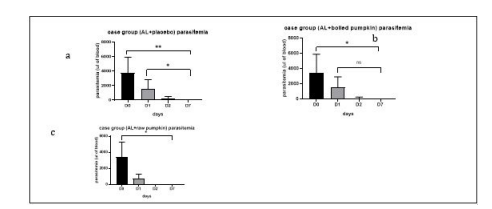
Figure 1: The effect of AL + RP, Artefan AL + Bp and Artefan+ placebo treatment groups on parasite clearance. Effect of AL + placebo on parasitemia (a). effect of AL +BP (b) and the effect of AL +RP (c) on parasitemia of children infected with Plasmodium falciparum. asterisks represent statistical difference between the different treatment days (D0,D1,D2, and D7)
FIGURE 2
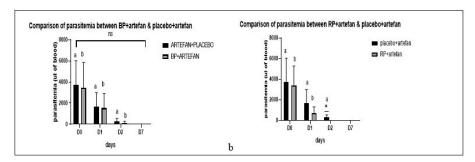
Figure 2: Effects of RP +AL BP *AL and Placebo + AL on the parasite clearance rate and a comparison between BP+AL vs Placebo +AL (a),and RP AL vs Placelxbo on the parasite clearance rate of plasmcxiium falciparum infected children. Asterisks represents statistical difference between treatment days (DO, 01, 02 and 07) as well as between the different treatment groups (BP+AL RP+AL and AL+ Placebo)and also comparison vs placebo 4 AL and RP •AL vs Placebo + AL treatment groups While nS means not statistically Signifi-
FIGURE 3
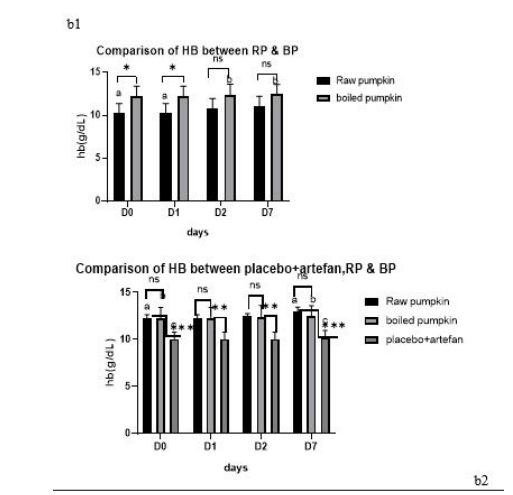
Figure 3: comparison of the effects of RP and BP (bl ) on the Hb level of the control group and also comparison of the effects of AL + Placebo, RP and BP on the Hb level of Test and Control groups. Asterisks represents statistical difference between control groups (RP and BP) as well as between the test group (Placebo + AL), while the letters represent differences between control groups and test group
FIGURE 4
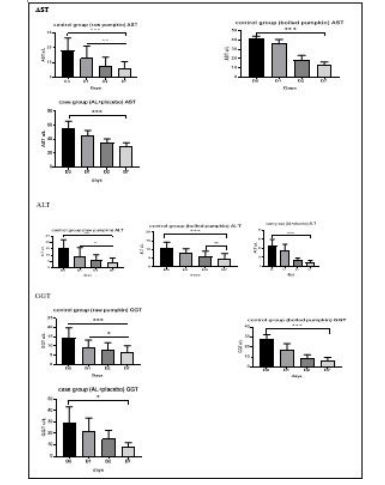
Figure 4: Effect of Telfairia occidentalis on the liver activity of non-infected children (Fig 4a and 4b) and children infected with Plasmcxlium falciparum (figure 4c). Asterisks represents statistical difference between the different treatment days (DO, Dl, D2 and D7) while ns represents not statistically significant
FIGURE 5
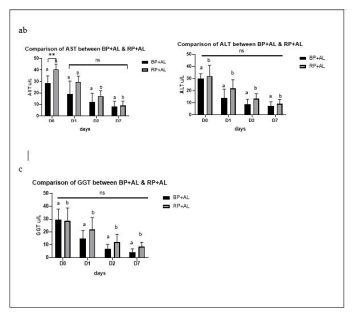
Figure 5: comparison of BP and RP + AL effect on AST (fig 5a), ALT (fig 5b) and GGT (fig 5c) of Plasmodium falciparum infected children, Asterisks represents comparison between the two treatment groups (BP + AL and RP + AL) on the different days Of treatment, nS represents statistically not significant while the letters represent the different treatment groups
FIGURE 6
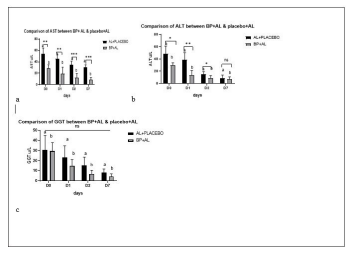
Figure 6: comparison Of the effect between BP AL and AL + Placebo on the AST (6a), ALT (6b) and GGT(6c) enzymes Of Plasmodium falciparum infected children, Asterisks represents difference between AST, ALT and GGT levels during the different treatment days in BP + AL compared AL *Place-IN' treatment groups. i-Vhereas a and b represent the difference in the serum levels of ALT, AST and GGTbetween BP+ ALtreatment group compared to AL + Placelk" treatment group
FIGURE 7
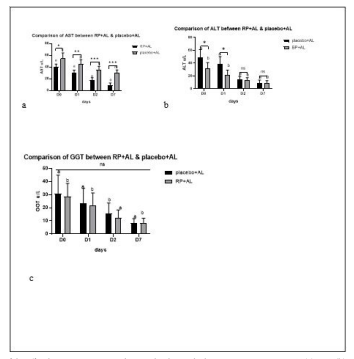
Figure 7: comparison of the effect between RP + AL and AL + Placebo on the liver enzymes activity, AST (a), ALT(b) and GGT(c) serum level of malaria positive children. Asterisks represents statistical difference between treatment rou s (RP + AL and AL + Placebo) and also comparison between RP + AL treatment and AL Placebo treatment groups. The letters represent the difference in serum levels between the RP 4 AL treatment group and AL Placebo treatment group
FIGURE 8
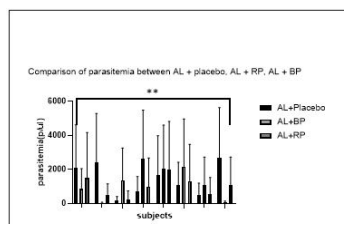
Figure 8: comparison of Parasitemia between AL + placebo vs. AL RP. AL placebo Vs. AL BP and AL + RP Vs. AL + BP treatment groups. Asterisks represents comparison the three treatment groups (AL 4 placebo. AL + RP. AL + BP) among subjects Of the different groups. ns represents statistically not significant while the letters represent the different treatment groups
FIGURE 9
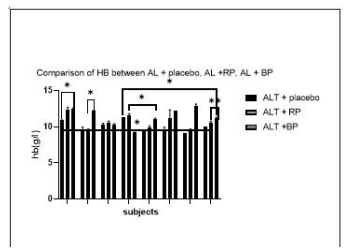
Figure 9: comparison Of HB levels Ektween AL + placebo vs. AL + RP. AL vs. AL + BP and AL 4 RP vs. AL + BP treatment groups.Asterisks represents comparison between the three treatment groups (AL + placebo, AL + RP, AL + BP) among subjects of the different groups. ns represents statistically not significant
FIGURE 10
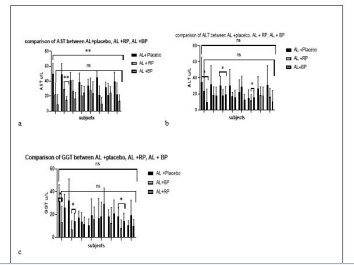
Figure 10: comparison of liver enzyme activity levels AL + placebo vs. AL + RP, AL placebo Vs. AL + BP and AL RP vs- AL BP treatment groups. Asterisks comparison the three treatment groups (AL + placebo, AL + RP. AL + BP) among subjects of the different groups, ns represents statistically not significant
Figures at a glance