
Pharmacological Screening of Dhoop and Spray Containing Oil of Pelargonium graveolens and Nyctanthes arbor tristis for its Anticonvulsant Activity
Received Date: May 24, 2025 Accepted Date: June 24, 2025 Published Date: June 27, 2025
doi:10.17303/jpdm.2025.8.104
Citation: Bornare Nakul (2025) Pharmacological Screening of Dhoop and Spray Containing Oil of Pelargonium graveolens and Nyctanthes arbor tristis for its Anticonvulsant Activity. J Pharmacol Drug Metab 8: 1-9
Abstract
Epilepsy is a neurological condition characterized by recurrent seizures caused by abnormal brain activity. This study investigates the therapeutic potential of essential oils in the form of dhoop and spray which derived from Nyctanthes arbor-tristis (Parijat) and Pelargonium graveolens (Geranium) in managing of epilepsy in a rat model induced by pentylenetetrazole (PTZ). The study involved six groups and exposed with dhoop and spray of Parijat and Geranium under PTZ induced convulsion state. The finding of the study indicates the increased in the seizure latency by PTZ while the animals exposed with dhoop and spray of Parijat and Geranium decreases the seizure latency and time. These findings suggest that Parijat and Geranium essential oils might have potential anticonvulsant effects, as evidenced by their impact on seizure latency in the PTZ-induced rat model.
Keywords: Parijat; Geranium; Dhoop; Spray; PTZ; Anticonvulsant
Introduction
Epilepsy has been recognised for thousands of years, and it has been treated with a variety of traditional and non-traditional therapies, including aromatherapy, a non-pharmacological conservative treatment. Aromatherapy has been attempted as a behavioural kind of medicine to treat epilepsy. Aromatherapy has been used to aid persons who have auras, which indicate an imminent seizure. Certain oils may assist to prevent or reduce the intensity of an epileptic episode if breathed softly before the seizure starts, as aggressive sniffing might cause a seizure [1]. For some persons whose seizures are preceded by an aura, breathing in the fragrance of the aromatic oils at the onset of the warning might lower the likelihood or severity of an epileptic episode. It has been proposed that scent can function as a counter measure in the epilepsy because of its ability of triggering activity in the same cortical area where epileptic potentials occur quite often [2].
Epilepsy is a brain condition, primarily characterized by frequent, erratic disruptions of regular brain activity, or epileptic seizures. Instead of being a single illness, epilepsy is a group of disorders that are indicative of underlying brain malfunction and can have a wide range of causes. Aromatherapy is commonly used in complementary and alternative medicine (CAM) to promote sleep. A randomized clinical trial of college students found that rosemary essential oil enhanced sleep quality and dramatically reduced sleep delay. The experiment used rosemary capsules. Lavender inhalation promotes deep sleep and has gender-specific effects in young men and women. They are use in treatment of epilepsy on other conditions. [3] Essential oils (EOs) are one particular class of natural medicines obtained by distillation of plant material to obtain a volatile, hydrophobic extract. EOs has been used as anticonvulsants in traditional medicine in many cultures [4].
Considering the potential role of aromatic plants for their medicinal values the present study undertaken to evaluate the efficacy of some aromatic plants, Nyctanthes arbor-tristisb (Parijat) and Pelargonium graveolens.
Nyctanthes arbor-tristisb is regularly known as ‘Parijat, night jasmine, harsingar. Nyctanthes is greek for 'night flower,' while arbortristis is greek for' sad tree,' because it loses its radiance during the day. It belongs to family of oleaceae. The seeds are used in treatment of piles. The decoction of Parijat flowers used in treatment of gout. Leaves used against dry cough, the leaf juice with honey are given internally. The aqueous paste of leaves is used externally in treatment of skin diseases specifically in treatment of ring worm. The leaves of Parijat used as female tonic [5]. They are created through a sequence of metabolic processes from primary metabolites such as amino acids, carbs, and proteins. Alkaloids, flavonoids, glycosides, tannins, phenols, steroids, resins, saponins, and other phytochemicals are found in medicinal plants utilised by both humans and animals [6].
The rose-scented geranium Pelargonium graveolens (Geraniaceae) is an erect, much-branched shrub, which can reach up to 1.3 m in height and 1 m in spread. The hairy stems are herbaceous when young, becoming woody with age [7]. The genus Pelargonium belongs to the geraniaceae family comprises about 270 distinct species. Pelargonium graveolens commonly known as the rose geranium [8].
In Ayurveda, the aromatherapies have the potential in treating several neurological conditions because of easily crosses the blood brain barrier. The aroma will directly reach to brain by nasal route. While there is needed to prove the concept scientifically for the use aroma in the management of epilepsy. So, our study further undertakes to formulate the essential oil in the form of dhoop and spray for convenient application in the epilepsy management.
Materials and Methods
Collection and Identification of Plant Material
Dried Leaves and flowers of Pelargonium graveolens and Nyctanthes arbor tristis were collected from Jalgaon and Authenticated by Dr. R.K. Choudhary, Agharkar Research Institute, Pune. Certificate of Authentication numbers are AUTH 24-41 and AUTH 24-48.
Chemicals
Parijat oil was procured from salvia cosmeceuticals Pvt. Ltd (NEW Delhi, India). Geranium essential oil was procured from ST Botanica Beauty Pvt. Ltd Sangvi House, Shivajinagar (Pune,India). Pentylenetetrazole was procured from Research Lab Fine Chem Industries (Mumbai, India). Starch Maize was obtained from Loba Chemical Pvt Ltd (Pune India). Midazolam Nasal Spray 5mg/ml was procured by Savi Health Science (East Sikkim, India).
Formulation of Dhoop
Flowers of Geranium and Parijat were collected and sun-dried to reduce moisture. After the herbs were dried, they were ground into a fine powder with a mortar and pestle. The resulting powder was then filtered through muslin to produce a fine powder. Wood sawdust and charcoal were used as burning agents, with starch and sucrose added for binding to prepare dhoop. Geranium oil or Parijat oil was then added to the recipe for scent. After shaping the dhoop, it was left to dry until it was suitable for use [9-11].
Formulation of Spray
In a clean beaker, combine Geranium and Parijat oils, add an antioxidant (Vitamin E) to prevent oxidation, and add Polysorbate 20 emulsifier to the oil phase. Adjust the ratio according to the formulation's stability and clarity. In another beaker, measure distilled water, then add ethanol or isopropyl alcohol and thoroughly stir. Adjust the pH of the water phase as needed to ensure skin compatibility. Slowly incorporate the oil phase into the water phase, stir it constantly with a magnetic stirrer. Continue stirring until a homogenous mixture is formed. Add a preservative (such as Phenoxyethanol) to the mixture, adjusting the amount according to the formulation volume and manufacturer's concentration. Check the pH and adjust as necessary. Transfer the formulation to spray bottles, making sure they are making sure they are sterile and properly labeled with the contents, date of manufacture, and usage instructions. Perform a final quality check to ensure the homogeneity and stability of the formulation. Conduct stability tests by storing the spray in different environmental conditions (e.g., room temperature, refrigeration) and monitor for changes in appearance, scent, and efficacy over time. This process ensures that the formulation is consistent, effective, and safe for use [12].
Characterization of Dhoop
Determination of Bulk density (BD) and Tapped density (TD)
Bulk density defined as the mass of many particles of the material divided by the total volume they occupy. The total volume includes particle volume, inter-particle void volume and internal pore volume. Tapped density is the term used to describe the bulk density of a powder (or granular solid) after consolidation/compression prescribed in terms of “tapping” the container of powder a measured number of times, usually from a predetermined height. The term bulk density refers to a measure used to describe a packing of particles or granules and the term Tapped density refers to the true density of the particles or granules [13,14].
Procedure
A quantity of 10 gm of powder blend was introduced in to 25 ml measuring cylinder. After that the initial volume was noted and the cylinder was allowed to fall under its own weight on to a hard surface from the height of 2.5 cm at second intervals. Tapping was continued until no further change in volume was noted. BD and TD were calculated using the following equations [15].
Determination of Carr’s Compressibility Index
The Carr index is an indication of the compressibility of a powder. It is another indirect method of measuring the powder flow from bulk and tapped density. It was calculated by following formula [16].
Determination of Hausner’s Ratio
Hausner’s ratio is related to inter-particle friction and as such can be used to predict the powder flow properties. It was calculated by below given formula [17].
Determination of Angle of Repose (Q)
The angle of repose of powder blend was determined by the funnel method. The accurately weight powder blend were taken in the funnel. The height of the funnel was adjusted in such a way the tip of the funnel just touched the apex of the powder blend. The powder blend was allowed to flow through the funnel freely on to the surface. The diameter of the powder cone was measured and angle of repose was calculated using the following equation [18].
Experimental Design
The study involved healthy male and female Albino Wistar rats, each weighing between 150 to 200 grams, sourced from the AISSMS College of Pharmacy, Pune. The rats were maintained under standard laboratory conditions, including a controlled temperature of 25±2°C, humidity levels at 55±5%, and a 12-hour light/dark cycle. They were provided with unrestricted access to food and water, though food was withheld for 12 hours prior to the experiments. The study design adhered to ethical guidelines as stipulated by the Committee for the Purpose of Control and Supervision of Experiments on Animals (CPCSEA) and the Institutional Animal Ethical Committee (IAEC), ensuring humane and ethical treatment of the animals.
A total of 36 rats were divided into six groups, each consisting of six animals. The control group received an injection of Pentylenetetrazole (PTZ) at a dose of 60 mg/kg intraperitoneally (i.p.). The experimental groups included various treatments in conjunction with PTZ: Group 2 received PTZ and Midazolam nasal spray (5 mg/ml); Group 3 received PTZ and Geranium Dhoop (7.7 gm); Group 4 received PTZ and Parijat Dhoop (7.7 gm); Group 5 received PTZ and Geranium Spray (0.2 ml); and Group 6 received PTZ and Parijat Spray (0.3ml). These treatments were designed to investigate the potential anticonvulsant effects of Geranium and Parijat, delivered either as Dhoop or as a spray, in comparison with the known effects of Midazolam, a standard anticonvulsant agent. The use of PTZ was to induce seizures, providing a model to evaluate the efficacy of these treatments in mitigating seizure activity [19].
Result
Evaluation of Powder Flow Properties of Dhoop
Table 1 and 2 shows the characteristic properties of powder of Geranium and Parijat flower.
Effect on PTZ induced seizure
The result of the study shows, the dhoop and spray of Geranium and Parijat significantly decreases in the latency time of seizure episode of PTZ induced seizure (Figure 1 and 2).
The values represented in the form of mean± SD; N=6; ## (p<0.01), ### (p<0.001) significantly different compared to PTZ group. Comparison between the groups was made by One-way analysis of variance (ANOVA) followed by Dunnet multiple comparison.
Discussion
Aromatherapy has been used to help the people with auras to an impending seizure. Certain oils may help to prevent or diminish the intensity of an epileptic episode if inhaled quietly before the seizure starts, as vigorous sniffing can precipitate a seizure [20]. In Ayurveda, the aromatherapies have been mentioned to use in treating of several neurological conditions because of easily crosses the blood brain barrier through nasal route [21].
In the context of aromatherapy, the present study aims to formulate essential oils in the form of dhoop and spray for convenient application in epilepsy management. The study focuses on using Geranium and Parijat essential oils due to their aromatic properties and reported benefits in traditional and alternative medicine [22]. Geranium is known for its calming and stress-relieving effects, which may help in managing the symptoms of epilepsy. Parijat, also known as night-flowering jasmine, is reputed for its soothing aroma and potential therapeutic benefits, including its use in alleviating stress and anxiety. The study seeks to explore these essential oils' efficacy and practicality in aromatherapy applications for individuals with epilepsy, aiming to provide an accessible and natural complementary treatment option [23].
The experimental study performed in the PTZ induced seizure model. The values seem to reflect some quantitative aspect in term of seizure latency in the present investigation. The finding reflects consistent seizure latency around the low to mid-12 range, indicating a certain level of stability or standard measurement for this group. The standard midazolam treatment has slightly lower values, averaging around the 7-8 range, which might suggest a lowering of seizure latency compared to the PTZ group. Geranium and Parijat Dhoop show a more varied range of values, with Geranium dhoop the values ranging from approximately 10.02 to 10.49, and Parijat dhoop values ranging from 10.12 to 12.48. This variation might indicate differences in the effects or measurements between these two types of dhoop. Overall, the data suggests distinct differences between the groups, which could be significant depending on the context of the measurements.
The new set of data includes measurements for PTZ control, standard midazolam, Geranium Spray, and Parijat Spray, reflecting another aspect of the study on epilepsy management through aromatherapy. The PTZ control group shows a consistent range of values around 12-13, serving as a baseline for comparison. The standard midazolam group displays lower values, ranging from 5.08 to 7.31, suggesting a different response or baseline measurement compared to the PTZ control group. The Geranium Spray shows values between 10.06 and 11.52, indicating a fairly stable response across the samples. This might reflect the consistent effects of Geranium Spray in the context of the study, potentially pointing to its efficacy in managing symptoms or conditions related to epilepsy.
The Parijat Spray has values ranging from 7.11 to 8.42, which are generally lower than those for Geranium Spray but higher than those for the STD group. This suggests that while Parijat Spray may have some beneficial effects, they might be less pronounced compared to Geranium Spray.
Overall, the data indicates Geranium and Parijat sprays have varying levels of impact, potentially beneficial in the context of epilepsy management through aromatherapy.
Conclusion
The study's results conclude that the essential oils Pelargonium graveolens (Geranium) and Nyctanthes arbor-tristis (Parijat) effectively decrease seizure efficacy and increase latency time in seizure episodes. This indicates that these essential oils may reduce the frequency or intensity of seizures while prolonging the period between them. The formulations of these oils in the form of dhoop and spray have shown promising effects on PTZ-induced seizures, a common experimental model for inducing seizures. However, while these initial findings are encouraging, further clinical studies are necessary to confirm the efficacy and safety of these formulations in human patients. This research provides a basis for considering aromatherapy as a complementary approach to managing epilepsy.
Acknowledgement
The authors would like to acknowledge Dr..Ashwini R. Madgulkar, Principal, AISSMS College of Pharmacy, Pune, for her encouragement and guidance.
Conflict of Interest
No conflict of interest was declared by the authors. The authors alone are responsible for the content and writing of the paper.
- Jaseja H (2008) Scientific basis behind traditional practice of application of “shoe-smell” in controlling epileptic seizures in the eastern countries. Clinical Neurology and Neurosurgery, 110: 535–8.
- Proposal for Revised Clinical and electroencephalographic classification of epileptic seizures. Epilepsia 1981. 22: 489–501.
- Nematolahi P, Mehrabani M, Karami-Mohajeri S, Dabaghzadeh F (2018) Effects of Rosmarinus officinalis L. on memory performance, anxiety, depression, and sleep quality in university students: A randomized clinical trial. Complementary Therapies in Clinical Practice, 30: 24–8.
- Pandey MM, Rastogi S, Rawat AKS (2013) Indian Traditional Ayurvedic system of medicine and nutritional supplementation. Evidence-based Complementary and Alternative Medicine, 2013: 1–12.
- Karnik, Ps T, Antarkar D, Gidse C, Ra V, Vaidya A (2019) Antimalarial activity and clinical safety of traditionally used Nyctanthes arbor-tristis Linn. 2013: 45-658
- Sasmal D, Das S, Basu S (2007) Phytoconstituents and therapeutic potential of Nyctanthes Arbortristis Linn. Pharmacognosy Reviews. 1/2-17, 344-9.
- OpenLibrary.org. Pelargoniums of Southern Africa by J. J. A Van der Walt | Open Library 1988. December 15, 2009, 148
- Miller DM (2002) The taxonomy of Pelargonium species and cultivars, their origins and growth in the wild, 61–91.
- Baser KHC, Buchbauer G (2010) Handbook of Essential Oils: Science, Technology, and Applications. 2018: 322-45.
- Sarma A, Khatoon S (2015) Traditional Use of Medicinal Plants for Spiritual Healing among the Tea Garden Workers of Assam, India. Journal of Ethnopharmacology, 174: 387-99.
- Tiwari P, Kumar B, Kaur M, Kaur G, Kaur H (2011) Phytochemical Screening and Extraction: A Review. Internationale Pharmaceutica Sciencia, 1: 98-106.
- Barel S, Maibach HI, Paye M (2001) Handbook of Cosmetic Science and Technology. Marcel Dekker, Inc. 587-90.
- European Pharmacopoeia Commission (2016) European Pharmacopoeia (9th Edition). Council of Europe. 283-5.
- Sinko PJ (2006) Martin's Physical Pharmacy and Pharmaceutical Sciences (5th Edition). Lippincott Williams & Wilkins. 554-6.
- United States Pharmacopeial Convention (2011) The United States Pharmacopeia 34 / The National Formulary 29. United States Pharmacopeial Convention. 616-8.
- Staniforth JN, Aulton ME (2007) Aulton's Pharmaceutics: The Design and Manufacture of Medicines (3rd Edition). Churchill Livingstone. 169-71.
- United States Pharmacopeial Convention (2013) The United States Pharmacopeia 31 / The National Formulary 29. United States Pharmacopeial Convention. 412-32.
- Aulton ME, Taylor KMG (2018) Aulton's Pharmaceutics: The Design and Manufacture of Medicines (5th Edition). Elsevier. 208-10.
- Srinivasan K (2005) Experimental Pharmacology. Vallabh Prakashan. 228-30.
- Moss M, Cook J, Duckett P (2007) Aromatherapy for the Management of Epilepsy: A Review of the Literature. Complementary Therapies in Clinical Practice, 13: 236-41.
- Narayana N, Rao YS (2014) Ayurvedic Aromatherapy: A Review of the Use of Essential Oils in Neurological Disorders. Journal of Ayurveda and Integrative Medicine, 5: 215-23.
- Haddad M, Zaidan A (2010) Aromatherapy: Application of Essential Oils for Health and Well-being. Journal of Essential Oil Research, 22: 519-26.
- Cavanagh HMA, Wilkinson JM (2002) Bioactivity of Essential Oils: Their Role in Stress Reduction and Therapeutic Benefits. Phytotherapy Research, 16: 695-706.
FIGURE 1
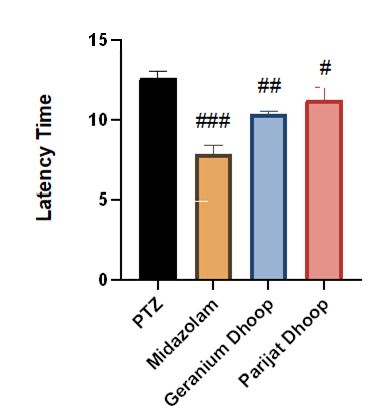
Figure 1: Effect of geranium and Parijat dhoop on the PTZ induced seizure model in rat
The values represented in the form of mean± SD; N=6; # (p<0.05), ## (p<0.01), ### (p<0.001) significantly different compared to PTZ group. Comparison between the groups was made by Oneway analysis of variance (ANOVA) followed by Dunnet multiple comparison.
FIGURE 2
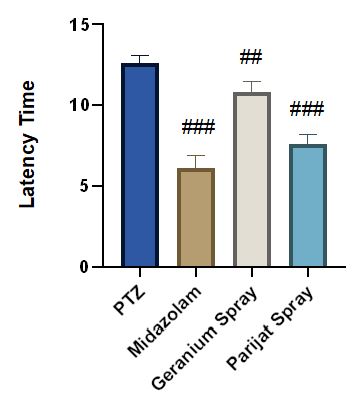
Figure 2: Effect of Geranium and Parijat Spray on the PTZ induced seizure model in rat
Tables at a glance
Figures at a glance