quickly absorbed from the digestive system, reaching its peak plasma concentration (Cmax) in one to two hours.
Zhang, Y., et al. (2020). Pharmacokinetics and bioequivalence of ibuprofen tablets in healthy volunteers. European Journal of Pharmaceutical Sciences (25)
Bioavailability
minimal first-pass metabolism; 80–90% after oral administration.
Kolesar, J. M., et al. (2019). Pharmacokinetics of ibuprofen after oral administration in healthy adults. Journal of Pharmacy and Pharmacology (26).
Effect of Food
Food has no discernible effect on bioavailability but delays Tmax by 30 to 60 minutes.
Patel, D., et al. (2020). Effect of food on the pharmacokinetics of ibuprofen in healthy volunteers. Journal of Clinical Pharmacology (27).
Deosarkar S. Et al (2020) Volumetric and ultraacoustic properties of sodium salts of ibuprofen/diclofenac drugs in aqueous and aqueous-β-cyclodextrin solution (28).
Plasma Protein Binding
99% of plasma proteins are highly bound, mostly to albumin.
Müller, N., et al. (2018). Plasma protein binding of ibuprofen and its enantiomers in human plasma (29).
Metabolism
Cytochrome P450 enzymes (CYP2C9) extensively metabolize it in the liver, producing inactive metabolites.
Shi, S., et al. (2022). Pharmacokinetics, Pharmacodynamics, and Pharmacogenetics of Ibuprofen. European Journal of Drug Metabolism and Pharmacokinetics (30).
Elimination Half-life (T½)
1.8-2.5 hours in healthy adults.
M. Ershad et al. (2024) Ibuprofen Toxicity (31).
Excretion
70–80% of the drug is primarily eliminated by the kidneys, with less than 1% remaining unaltered.
Mohammad H . et. al. (2022). The Intestinal and Biliary Metabolites of Ibuprofen in the Rat with Experimental Hyperglycemia (32).
Effect of Renal Impairment
Reduced clearance and a longer half-life in individuals with renal dysfunction.
Huerta, C., et al. (2017). Risk of acute kidney injury associated with nonsteroidal anti-inflammatory drugs. Journal of Clinical Pharmacology (33).
Effect of Hepatic Impairment
may lead to a slower metabolism and more exposure to drugs.
Zhang, Y., et al. (2020). Dose adjustment of ibuprofen in patients with hepatic impairment. European Journal of Clinical Pharmacology (34)
Table 1: Pharmacokinetic Profile of Ibuprofen
Table 2
Parameter
Description
Reference
Mechanism of Action
The enzymes cyclooxygenase (COX-1 and COX-2), which catalyze the transformation of arachidonic acid into prostaglandins, which are mediators of pain and inflammation, are inhibited by ibuprofen.
F. Gervasoni et. al. (2022) Pain management with paracetamol and ibuprofen in combination (35).
Target Receptor
receptors for COX-1 and COX-2. While COX-2 is produced during inflammation, COX-1 is involved in preserving physiological processes (such as the protection of the stomach mucosa).
Smith, W. L., et al. (2019). Cyclooxygenases and prostaglandin synthesis. Journal of Biological Chemistry(36)
Receptor Affinity
strong affinity for both COX-1 and COX-2 receptors, with a marginally higher affinity for COX-1. Its analgesic and anti-inflammatory properties are facilitated by this selective inhibition of COX-2.
Kalgutkar, A. S., et al. (2020). Mechanism-based inhibition of cyclooxygenases by nonsteroidal anti-inflammatory drugs. Journal of Medicinal Chemistry(37)
Therapeutic Window
The therapeutic window for ibuprofen is broad; most adults find that doses of 200–400 mg are effective, and at recommended dosages, there is little chance of toxicity. Depending on the dosage and application location, TDP is effective for 12 to 24 hours.
Olvera R. Et. al. (2024)Development and evaluation of ibuprofen-loaded chitosan nanoparticles for pulmonary therapy(38)
Pharmacological Effects
Antipyretic, analgesic, and anti-inflammatory: inhibits the production of prostaglandins, lowers fever, and lessens inflammation.
Z. Ju et al (2022) Recent development on COX-2 inhibitors as promising anti-inflammatory agents: The past 10 years(39)
Table 2: Pharmacodynamic Profile of Ibuprofen
Table 3
S.N.
Ingredients
Activity
F1
F2
F3
F4
1
Ibuprofen (mg)
Active Ingredient (Drug)
100
100
100
100
2
Quercetin (mg)
Bioenhancer
0.5
0.5
0.5
0.5
3
HPMC (mg)
Polymer
400
400
400
400
4
Polyvinyl Pyrrolidine
Copolymer
300
300
300
300
5
Polyethylene glycol
Plasticizer
0.3ml
0.3ml
0.3ml
0.3ml
6
Toluene: Ethanol
Solvent
16:4ml
16:4ml
16:4ml
16:4ml
Table 3: Composition of Ibuprofen Transdermal Patch in Different Ratio
Table 4
S.N.
Physical Appearance
Result
1
Color
Transparent Yellow
2
Surface texture
Smooth
3
Shape
Round
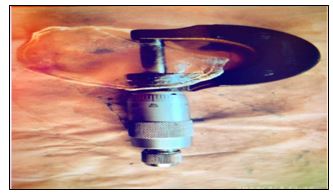
Table 4: Determination of Physical appearance of Patch
Table 5
S.N.
SAMPLE
THICKNESS (MM)
1
F1
0.29
2
F2
0.26
3
F3
0.27
4
F4
0.22
5
(Marketed Patch)
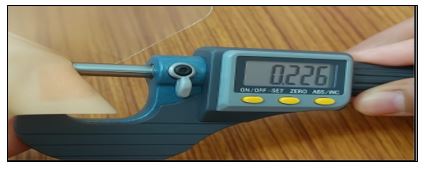
0.22
Table 5: Determination of Thickness of Patch
Table 6
S.N.
SAMPLE
WT. VARIATION
1
F1
591
2
F2
593
3
F3
597
4
F4
590
5
F5(Marketed Patch)
595
Table 6: Determination of Uniformity of Weight
Table 7
S.N.
SAMPLE
FOLDING ENDURANCE
1
F1
27
2
F2
30
3
F3
28
4
F4
26
5
F5 (marketed Patch)
25
Table 7: Determination of Folding Endurance
Table 8
S.N
SAMPLE
MOISTURE UPTAKE
1
F1
2.68
2
F2
2.75
3
F3
2.12
4
F4
2.4
5
F5 (marketed Patch)
2.01
Table 8: Determination of moisture uptake
Table 9
S.N
SAMPLE
MOISTURE LOSS
1
F1
0.68
2
F2
0.75
3
F3
0.8
4
F4
0.9
5
F5 (marketed Patch)
0.76
Table 9: Determination of moisture loss
Table 10
Group No.
Group Name
Description
No. of Rats
Group I
Normal Group
No arthritis induction, no treatment (Food, water- serves as healthy control)
6
Group II
Standard Group
Arthritis induced + standard drug treatment (e.g., Diclofenac patch)
Tables at a glance
Figures at a glance